 This entry goes back to the top of the gueue in light of a new study of sertraline (Zoloft). Read the comment.
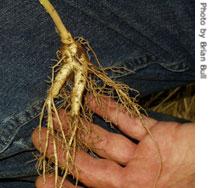
This is the first study to evaluate the Wisconsin species of American ginseng as a possible treatment for cancer-related fatigue.
This entry goes back to the top of the gueue in light of a new study of sertraline (Zoloft). Read the comment.
This is the first study to evaluate the Wisconsin species of American ginseng as a possible treatment for cancer-related fatigue.
 Several academics and clinicians from Miami decided it was time to test Bach Original Flower Essence (BFE) Rescue Remedy. After all, it’s been sold since 1930.
Guess what? It reduced anxiety. Continue reading Putting Bach Flower Essence to the test
 Adequate calcium intake (along with adequate vitamin D status) reduces bone loss in peri- and postmenopausal women and reduces fractures in postmenopausal women older than age 60 with low calcium intake.
It’s a key component of any bone-protective treatment.
And the recommendations are?
Continue reading Latest recommendations for calcium during peri- and postmenopause
 In 2002, the Parkinson Study Group reported that CoQ10 (coenzyme Q 10) slowed deterioration in patients with early Parkinson’s disease even though it failed to postpone the start of levodopa (Dopar) treatment.
Now, a study in patients with midstage Parkinson’s disease without changes on muscle function and control reports disappointing results. Continue reading New study disputes the value of CoQ10 to treat Parkinson’s disease
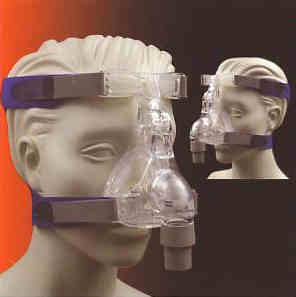 Sleep apnea occurs when people fail to breath while sleeping. Untreated, it can cause high blood pressure and other cardiovascular disease, memory problems, weight gain, impotency, and headaches.
Continuous positive pressure breathing (CPAP) is effective treatment. But it’s uncomfortable to use (photo).
Now, a study shows that cognitive behavioral therapy (CBT) improves acceptance of CPAP. Continue reading Cognitive behavioral therapy used to improve treatment of sleep apnea
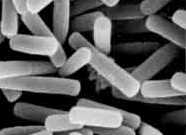 In about 25% of people, the usual triple drug therapy fails to kill the bacteria Helicobacter pylori — the cause of the inflamed stomach and ulcer.
In this study, triple drug therapy was complemented by a probiotic capsule (Probinul) and lactoferrin. Continue reading Probiotics and lactoferrin improve treatment of gastritis and peptic ulcer
 Schisandra sphenanthera (Nan Wu Wei Zi, lemon-wood) is “commonly used in Chinese herbalism, where it is considered to be one of the 50 fundamental herbs.” I found no clinical study in humans to support the many claims for this Chinese herbal medicine.
Now, there’s a report of a drug interaction with tacrolimus (Prograf) — a drug used to suppress the immune system in order to prevent organ rejection of liver, kidney, or heart transplants. Continue reading Transplant patients are cautioned about taking Schisandra
Radiation therapy can disturb bacterial colonies in the intestines and cause radiation-induced enteritis and colitis, leading to diarrhea in cancer patients.
In this study, researchers at the San Camillo Hospital in Rome, Italy used probiotics to reduce this complication. Continue reading Using probiotics to lessen diarrhea after radiation therapy
 The Zoft Gum Company, which makes several herbal supplement chewing gums (eg, breast enlargement, weight reduction) has introduced a new gum to help manage the symptoms of menopause.
There are no studies of this gum for treating menopausal symptoms in women. And the discussion of the gum’s ingredients on the Zoft website is misleading.
This summary should provide balance. Continue reading Zoft Menopause Gum
 A news release promotes this product as a “natural cholesterol supplement [that is] effective without side effects.”
And on the LipidShield website there is an unpublished study in 30 men and women to prove it. Continue reading LipidShield: The rest of the story
It’s used to treat a broad range of diseases, but nobody believes enough in the formula to do a controlled clinical study.
Why not? Continue reading The Myers’ formula treats what ails ya
 The former produces skin inflammation and muscle weakness. People with the later condition get weakness of limb and neck muscles, with muscle pain and swelling. Continue reading Using creatine to treat dermatomyositis and polymyositis
 Several were effective. Continue reading Probiotics to prevent traveler’s diarrhea
 That’s the conclusion from two researchers who reviewed 15 studies.
Here’s what they found.
Dr. Irene asks, “What was included with the MBSR? MBSR is not used in isolation of other treatments ” Unfortunately, the abstract doesn’t say.
If you’re interested, here’s a link with background on mindfulness therapies.
5/22/07 20:48 JR
The Cochrane Collaboration review of 7 studies suggests the following.
Continue reading Chinese herbal medicine plus antipsychotic medication to treat schizophrenia
 A 10-minute segment on attention deficit hyperactivity disorder (ADHD) will appear in late May on the PBS program, To The Contrary. Continue reading Transcendental Meditation and ADHD
 I received some emails promoting Nature Made CholestOff. It contains plant extracts called phytonutrients, specifically phytosterols and phytostanols. They work by reducing the absorption of LDL “bad” cholesterol and total cholesterol from the intestines.
The ad emphasizes a 24% reduction in LDL cholesterol when combined with diet and exercise. However… Continue reading CholestOff reduces cholesterol, but not as much as advertised
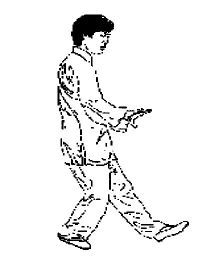 Qigong (pronounced chee-kung) is an energy practice or low-impact exercise program that generally encompassing simple movements and postures. Some qigong systems also emphasize breathing techniques.
Here’s a summary of three qigong studies in patients published last year.
 Here is an update to the Cochrane Review of echinacea summarized here in July.
Their consensus was that taking echinacea after the onset might shorten the cold, but does not prevent the onset of the common cold. Even at this, the experts were skeptical.
Now another analysis of clinical trials has come to a different conclusion.
Continue reading Positive news for echinacea and the common cold
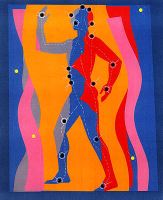 About 2 years ago, there was news that acupuncture lowered blood pressure in rats. I usually avoid reporting animal studies. It’s along way from the lab to the clinic.
Here’s a case in point.
Continue reading Acupuncture not effective in lowering blood pressure