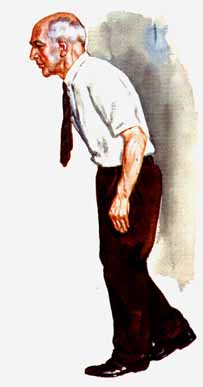
Patients with Parkinson’s disease have impaired balance, which affects function and increases the risk of falling. Exercise is routinely encouraged by healthcare providers, but few programs have been proven effective.
A couple of years ago, researchers at the University of Florence, in Italy, reviewed the effects of the Mediterranean diet on the risk of death and the occurrence of Parkinson’s or Alzheimer’s diseases.
Products derived from the black chokeberry, Aronia melanocarpa, are claimed to be beneficial in disorders or diseases associated with oxidative stress. But these claims are based primarily on laboratory and animal research.
CoQ10 and its activated form, ubiquinol, are popular supplements for treating or preventing a range of conditions including congestive heart failure, migraine headache, high blood pressure, and Parkinson’s disease — although none of the evidence is conclusive.
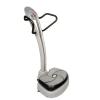
Whole-body vibration (WBV) is a treatment where a patient stands on a platform that oscillates at a particular frequency and amplitude, causing muscle contractions through stimulation of sensory receptors.
These devices are available over the Internet and generally viewed as a fad.
8 companies of over-the-counter (OTC) chelation products were told that they are selling unapproved drugs and devices and are violating federal law with respect to unproven claims about these products.
These products purport to treat a range of diseases by removing toxic metals from the body. Some also claim to treat autism spectrum disorder, cardiovascular diseases, Parkinson’s disease, Alzheimer’s disease, macular degeneration, and other serious conditions. Continue reading Consumer Alert: FDA warns about OTC chelation products→
Professor Ernst from the Peninsula Medical School, Universities of Exeter & Plymouth UK has reviewed the literature and concludes that studies of “tai chi for PD (Parkinson’s disease) are feasible but scarce.” Continue reading Tai chi in Parkinson’s disease→
 Patients with Parkinson’s disease have impaired balance, which affects function and increases the risk of falling. Exercise is routinely encouraged by healthcare providers, but few programs have been proven effective.


 Cough helps remove material that cannot be adequately removed by normal physiological processes.
 Dr. Manouchehr Saljoughian from the Alta Bates Summit Medical Center in Berkeley, California has
 This

 Patients with Parkinson’s disease have gait disturbances that can be improved with the use of appropriate visual and auditory cues.
 Small improvement is
 The Institute of Food Research in the UK
 Professor Ernst from the Peninsula Medical School, Universities of Exeter & Plymouth UK has reviewed the literature and concludes that studies of “tai chi for PD (Parkinson’s disease) are feasible but scarce.”
 Another
 Researchers from Florence, Italy