An article in the Archives of Internal Medicine reports that patients who see general practitioners and receive a “low intensity of care” recover from their injuries more quickly compared with those who see general practitioners for more intensive care.
Patients who see chiropractors and a medical practitioner have slower recoveries.
Those who see only chiropractors and receive a high intensity of care have the slowest recovery.
In other words, the more intensive care provided by a more specialized healthcare provider results in the slowest recover.
Necrotizing enterocolitis is a serious intestinal disorder. It affects 7% to 15% of very low-birth-weight (less than 1500-gram; 3.3 pound) infants. Death occurs in about 12 per 100,000 affected babies.
Researchers from the Medical University of Vienna reviewed and reanalyzed the results from 25 studies of the treatment of the climacteric syndrome (menopause).
For infants who must be feed using nutrition injected directly into a large blood vessel, the development of liver disease is a life-threatening long-term complication.
Researchers from the University of Chicago report that a minor one-time adjustment of the Atlas, or C1 vertebra in the neck, can lower blood pressure by the same amount as the combination of two blood pressure medicines at once.
Many people dislike needle-sticks. But once the fear becomes persistent, excessive, and unreasonable, it’s a phobia (belonephobia, needle-phobia, trypanophobia). Although not well recognized, belonephobia affects up to 10% of people.
In a Medscape article, Dr. Mary Muscari, who is Professor and Director of Forensic Health/Nursing at the University of Scranton in Pennsylvania, discusses the signs and symptoms, diagnosis, and treatments — which emphasize CAM. Continue reading A 3-step program to manage belonephobia→
Ms. Jennifer Rheingans is a nurse educator for pediatrics at Sarasota Memorial Hospital in Florida. In the Journal of Pediatric Oncology Nursing she reviews nonpharmacological therapies as a potential source of assistance for children with symptoms due to cancer treatment.
Earlier posts here, here, and here, discussed biofeedback and constipation. Here’s a study in people with incontinence where more than 70% demonstrated improvement.
The researchers start by telling us “biofeedback is well established as a treatment for fecal incontinence.” This study assessed short-term outcomes and predictors of treatment success.”
First the details.
The researchers at the Royal Prince Alfred Hospital in Sydney, Australia reviewed 513 consecutive patients treated with biofeedback over 10 years.
And the results.
Each outcome improved for more than 70% of patients.
Incontinence scores decreased 32%.
Quality of life improved by 89%.
Maximum anal sphincter pressure increased 12 mmHg (14%).
Treatment success was more likely in women, older people, and people with more severe incontinence.
5/5/07 15:57 JR
Complementary and Alternative Medicine: Fair, Balanced, and to the Point
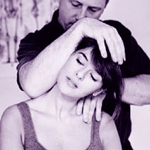 An article in the Archives of Internal Medicine reports that patients who see general practitioners and receive a “low intensity of care” recover from their injuries more quickly compared with those who see general practitioners for more intensive care.
 First question. What are avocado/soybean unsaponifiables (ASU)?
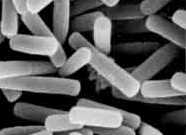 Necrotizing enterocolitis is a serious intestinal disorder. It affects 7% to 15% of very low-birth-weight (less than 1500-gram; 3.3 pound) infants. Death occurs in about 12 per 100,000 affected babies.
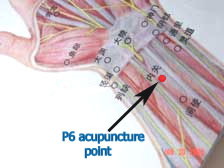 This
 Researchers from the Medical University of Vienna reviewed and reanalyzed the
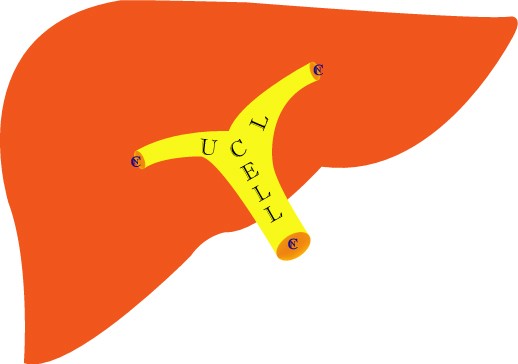 For infants who must be feed using nutrition injected directly into a large blood vessel, the development of liver disease is a life-threatening long-term
 I originally emphasized the substance (smoking) use aspect of this study, but have edited this summary based on a reader’s comment shown below.
 Researchers from the University of Chicago report that a minor one-time adjustment of the Atlas, or C1 vertebra in the neck, can lower blood pressure by the same amount as the combination of two blood pressure medicines at once.
 It’s business as usual. Market a product to enhance virility, illegally add Viagra, and sell it without a prescription as a “natural” product.
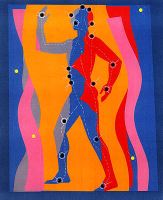 It’s better than sham acupuncture or no additional treatment.
 Yes, but not in the way you might think.
 Many people dislike needle-sticks. But once the fear becomes persistent, excessive, and unreasonable, it’s a phobia (belonephobia, needle-phobia, trypanophobia). Although not well recognized, belonephobia affects up to 10% of people.
 Health Canada
 Rubbing on arnica provides pain relief in people with osteoarthritis that affects their hands.
 Ms. Jennifer Rheingans is a nurse educator for pediatrics at Sarasota Memorial Hospital in Florida. In the Journal of Pediatric Oncology Nursing she
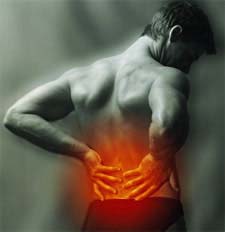 Dr. Scott Kinkade from University of Texas Southwestern Medical School in Dallas has
 Dave in Minnesota writes, “Does it prevent colds?”
 Earlier posts