The National Center for Complementary and Alternative Medicine has published a survey on the extent of insomnia and use of CAM in Americans. WebMD summarizes the findings here.
35 million adults regularly had insomnia in 2002
1.6 million of them tried CAM to get some sleep
Most often they used herbs and vitamins, or mind-body therapies. Most CAM treatments for insomnia are not well studied, although two studies of inhaled lavender oil have been published, and are reviewed here.
Six people with early primary open angle glaucoma or ocular hypertension were treated with a single dose of delta-9-tetrahydrocannabinol 5 mg (Delta-9-THC), cannabidiol (CBD) 20 mg and 40 mg, and placebo placed under the tongue on separate occasions.
The aims of balneotherapy (treatment of disease by bathing) are to soothe the pain, improve joint motion, and as a consequence, relieve people’s suffering and make them feel well.
Although most studies report positive outcomes, the trials are so poorly designed that “positive findings” should be viewed with caution, according to the Cochrane Collaboration, which included studies up to 2002.
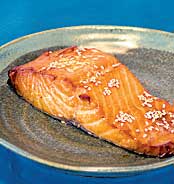
A study of 61,000 adult women in Sweden reports that eating fatty fish lowers a woman’s risk of kidney cancer. Fatty fish included salmon, herring, sardines, and mackerel. Lean fish included cod, tuna, and sweet water fish.
A previous post reported the American Heart Association’s (AHA) position that soy as a dietary factor has unproven or uncertain effects on cardiovascular disease.
Now, a review of 42 well-designed clinical trials from 1982 through 2004 reports the following positive effects about soy.
In addition to Ayurvedic medicines, certain traditional or folk medications used in East Indian, Middle Eastern, West Asian, and Hispanic cultures contain lead. The “logic” supporting the addition of lead to medicine was summarized in an earlier post.
Now it’s reported that lead is more toxic than we thought. People with lead blood levels well below those previously considered safe (less than 10 mcg/dL) are at increased risk for heart attack and stroke.
Two companies in Germany, BASF and Organo Balance, are collaborating to develop products based on probiotics that, if successful, could be marketed to improve dental hygiene.
In an earlier post, the effectiveness of butterbur (Ze 339) was reviewed and found to be as effective as the antihistamines, citirizine (Zyrtec) and fexofenadine (Allegra) to treat the runny nose; sneezing; congestion; and irritation in the nose, eyes, throat, and ears associated with allergic rhinitis.
Now, here are the results of a survey of 580 patients with seasonal allergic rhinitis treated with an average of 2 tablets of Ze 339 daily for 2 weeks.
“The main voices in favor of DHEA as a miracle drug are those who are selling it or who make a good living selling books or programs advocating ‘natural cures’.” That’s the conclusion from the Skeptics Dictionary. But look for yourself, and you will agree.
Here is another reason to be skeptical of DHEA [dehydroepiandrosterone].
Johrei (pronounced Jo-ray) is a non-touch healing method similar to reiki. It involves channeling of “universal healing energy” to influence the health of another person. Three studies in the past 15 months have attempted to correlate subjective changes with other objective outcomes.
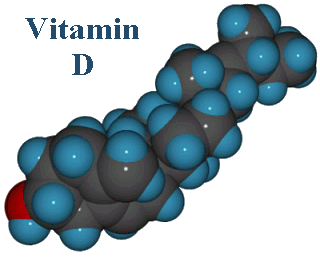
Laboratory studies show that there are up to three times more vitamin D receptors on pancreatic cancer cells than on normal pancreas cells. Moreover, the exposure to high concentrations of vitamin D(3) reduces the number of pancreatic cancer cells.
Now, the results from an epidemiological survey confirm the relationship between vitamin D and cancer of the pancreas.
“We believe [the ionized bracelet] affects the body’s bio-electric balance of positive and negative ions (Yin and Yang), so as to achieve Chi.”
That’s the claim. In addition the bracelets “optimize your bio-energy, to promotion [sic] better performance and an overall sense of health and well-being.”
It’s hard to believe anyone would take such claims seriously. But they do.
The Mayo Clinic tested the bracelets in more than 600 adults. Here are the results.
The vagus nerve stimulator (VNS), “would have been unimaginable only a generation ago. After being implanted in a patient’s chest, … research suggests that repeated electronic stimulation of the vagus nerve can help treat severe depression”, saysThe New York Times.
It’s an interesting article, but here’s what you need know.
Jerky, uncontrolled movements, an unsteady walk, and grimaces gave Huntington’s disease (HD) its original common name – Huntington’s chorea (Old Greek for “dance”). It’s an uncommon and incurable disease that is passed on among family members. There are about 8,000 cases in Germany, and 30,000 people have HD in the U.S.
In 1993, scientists discovered that a mutation in a gene causes HD. Now, the first steps in developing treatment are being made with a component in green tea.
A new book by medical writer, Susan Allport, contends that a little-known family of polyunsaturated fatty acids called omega-6s has permeated the Western diet and nullified the impact of heart disease-fighting omega-3s. You will probably hear more about this book, “The Queen of Fats,” over the next few weeks.
How do these two essential fatty acids compare? Here are some highlights according to the University of Maryland Medical Center website.
Three or four short, brisk walks during the day are more helpful to people watching their blood pressure than one continuous 40-minute work-out in a gym.
 The National Center for Complementary and Alternative Medicine has published a survey on the extent of insomnia and use of CAM in Americans. WebMD summarizes the findings here.
 Six people with early primary open angle glaucoma or ocular hypertension were
 The aims of balneotherapy (treatment of disease by bathing) are to soothe the pain, improve joint motion, and as a consequence, relieve people’s suffering and make them feel well.
 I signed up for the Harvard Health Letter last night. This morning they sent a free report titled, Living to 100: What’s the Secret?
 A
 A previous
 In addition to Ayurvedic medicines, certain traditional or folk medications used in East Indian, Middle Eastern, West Asian, and Hispanic cultures contain lead. The “logic” supporting the addition of lead to medicine was summarized in an earlier
 In
 Two companies in Germany, BASF and Organo Balance, are collaborating to develop products based on probiotics that, if successful, could be marketed to improve dental hygiene.
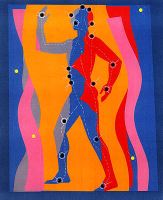 Two studies published in the British Medical Journal provide a little more support for using acupuncture to treat chronic low back pain.
 “The main voices in favor of DHEA as a miracle drug are those who are selling it or who make a good living selling books or programs advocating ‘natural cures’.” That’s the
 Johrei (pronounced Jo-ray) is a non-touch healing
 Laboratory studies
 “We believe [the ionized bracelet] affects the body’s bio-electric balance of positive and negative ions (Yin and Yang), so as to achieve Chi.”
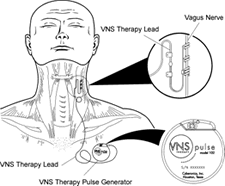 The vagus nerve stimulator (VNS), “would have been unimaginable only a generation ago. After being implanted in a patient’s chest, … research suggests that repeated electronic stimulation of the vagus nerve can help treat severe depression”,
 Jerky, uncontrolled movements, an unsteady walk, and grimaces gave Huntington’s disease (HD) its original common name – Huntington’s chorea (Old Greek for “dance”). It’s an uncommon and incurable disease that is passed on among family members. There are about 8,000 cases in Germany, and 30,000 people have HD in the U.S.
 A new book by medical writer, Susan Allport, contends that a little-known family of polyunsaturated fatty acids called omega-6s has permeated the Western diet and nullified the impact of heart disease-fighting omega-3s. You will probably hear more about this book, “The Queen of Fats,” over the next few weeks.
 Three or four short, brisk walks during the day are more helpful to people watching their blood pressure than one continuous 40-minute work-out in a gym.