An algorithm for treating type 2 diabetes appears in Diabetes Care this month. Here’s a summary of the impressive effects of weight control ? if you can maintain it over the long-term.
The risk of gastroesophageal reflux disease (GERD) is directly linked to a woman’s body mass index (BMI), according to the results of a study published in The New England Journal of Medicine. Continue reading Got GERD? Watch your weight.→
Around 1990, two studies here and here suggested that artificial sweeteners had little satiating capacity compared to glucose or sucrose. It raised the question, if they didn’t make you feel full (or keep you feeling full) compared to sugar, how could they help lose weight?
This is the source of the rumor that artificial sweeteners cause weight gain.
The latest recommendations for the routine care of people with pre-existing cardiovascular disease were published last month in the Journal of the American College of Cardiology.
If you have coronary heart disease, here is what you can expect to hear from your primary care physician or cardiologist.
The Massachusetts Department of Public Health reports that, regardless of brand, the amount of nicotine that is actually delivered to the smoker’s lungs has increased significantly over the past 6 years.
Here are some findings on magnesium levels in drinking water that suggest more magnesium (harder water) is healthier. The data have implications for the calcium/magnesium ratio in supplements.
Here is another in our ongoing series on recent marijuana-related medical research.
Cannabidiol (CBD) is a major product of the marijuana plant. It lacks marijuana’s psychological effects, and it has been suggested that CBD might be effective as an antipsychotic. The aim of this study was to investigate the response to CBD in treatment-resistant schizophrenia.
For this study, researchers created a computer-simulated community of 100,000 people that resembled the population of Olmsted County, Minnesota, in 2000.
By raising omega-3 fatty acid levels among all the Olmsted cyber-citizens, the researchers estimated that the overall death rate could be reduced 6.4%. By contrast, automated external defibrillators (AEDs) reduced death rates by 0.8%, and implanted defibrillators reduced deaths by 3.3%.
Don’t laugh. Computer-simulated research could be the next big thing, especially where the cost of healthcare is concerned.
This is a bit technical, but I think it’s important because it documents the ability of peppermint to act as an antispasmodic agent in the small intestine.
Diets rich in lutein plus zeaxanthin may protect against intermediate age-related macular degeneration (AMD) in healthy women younger than 75 years, according to a study just published in the Archives of Ophthalmology.
The findings are significant because there is no cure for AMD, only limited treatments are available, and there is no established means of prevention. Therefore, any intervention that lowers the risk for AMD is potentially important.
But what are lutein and zeaxanthin, and where can you get them?
According to the distributor’s website, “Raindrop combines the art of aromatherapy with the techniques of Vita Flex and massage in the application of essential oils to various areas of the body to bring structural and electrical alignment.” A description of the treatment is described here.
The latest issue of the International Journal of Impotence Research included several articles of interest from a CAM perspective, here and here. Here’s one more.
Men in Hong Kong who smoked more than 20 cigarettes daily had a significantly greater risk of erectile dysfunction than men who never smoked. Nothing new here. Similar results have been reported in other groups.
However, it raises the question of just how smoking can cause erectile dysfunction.
A just published survey of the medical literature found that moderate to high physical activity was associated with a lower risk of erectile dysfunction (ED).
The authors rightly caution, “the apparent ‘protective’ effect of physical activity on ED should be further investigated.” But, considering the many benefits of increased physical activity, it’s probably not too early to reconsider the disadvantages of a sedentary lifestyle.
In an earlier post, the positive effect of the Mediterranean diet on erectile dysfunction in men with the metabolic syndrome was discussed. Now, another positive study has appeared.
There is evidence that abnormal concentrations of positively-charged metal ions (eg, copper, iron, and zinc) interact with beta-amyloid in the brain during the development of Alzheimer’s disease. Therefore, correcting these abnormal levels might help people with this disease. (The photo shows yellow amyloid plaque surrounded by black neurofibrillary tangles.)
The New York Times Magazinepublished a travelogue by a San Francisco woman who spent time In India as an “ayurveda tourist.” The goal of the trip was to “immerse [herself] in ayurveda, the 3,500-year-old herb-based healing tradition that still flourishes in the daily life of India.”
As might be expected of a San Franciscan writing in NYT, she managed to insert a dig at Dick Cheney, but not once in 2900 words mentions the problem of lead poisoning associated with ayurvedic medicines.
Making the rounds this morning is a Newswire release from MD Anderson Cancer Center about Cherie Perez. She’s a research nurse who teaches aromatherapy to cancer patients during their treatment at the Cancer Center. You can read it here.
Since my background is based in traditional medicine, the involvement of this prestigious medical center sparks my interest to learn more about aromatherapy. I start by looking for structure.
It turns out, there are lots of ways to use oils.
Here, from Psychology Today are the five common types of aromatherapy.
In the Polarity model, “health is experienced when energy systems function in their natural state,” according to the “American Polarity Therapy Association (APTA).
Sounds good. And in a study of 15 women undergoing radiation therapy for breast cancer there was a statistically significant improvement in cancer-related fatigue and health-related quality of life.
Two studies published this summer showed positive health effects of curry. One looked at brain function, the other at the colon.
First, the brain.
Mini-Mental State Examination (MMSE) scores were compared among 1010 elderly Asians, aged 60 to 93 years. The MMSE is used to determine the extent of dementia in adults. The results of the test were then compared to categories of curry consumption: “often” (more than once a month), “occasionally” (once or more in 6 months but less than once a month), and “never or rarely.”
 An algorithm for treating type 2 diabetes appears in Diabetes Care this month. Here’s a summary of the impressive effects of weight control ? if you can maintain it over the long-term.
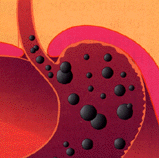 The risk of gastroesophageal reflux disease (GERD) is directly linked to a woman’s body mass index (
 Around 1990, two studies
 The latest recommendations for the routine care of people with pre-existing cardiovascular disease were
 The Massachusetts Department of Public Health
 Advocates of imagery
 Here are some
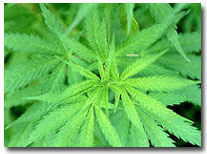 Here is another in our ongoing series on recent marijuana-related medical research.
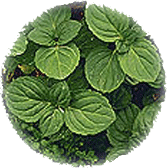 This is a bit technical, but I think it’s important because it documents the ability of peppermint to act as an antispasmodic agent in the small intestine.
 Diets rich in lutein plus zeaxanthin may protect against intermediate age-related macular degeneration (
 According to the distributor’s
 The latest issue of the International Journal of Impotence Research included several articles of interest from a CAM perspective,
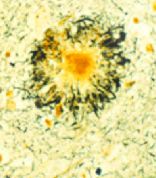 There is evidence that abnormal concentrations of positively-charged metal ions (eg, copper, iron, and zinc) interact with beta-amyloid in the brain during the development of Alzheimer’s disease. Therefore, correcting these abnormal levels might help people with this disease. (The photo shows yellow amyloid plaque surrounded by black neurofibrillary tangles.)
 The New York Times Magazine
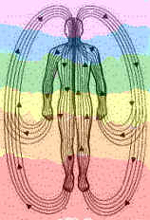 In the Polarity model, “health is experienced when energy systems function in their natural state,”
 Two studies published this summer showed positive health effects of curry. One looked at brain function, the other at the colon.