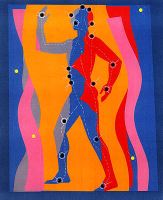
 Professor Ernst presents an overview of Cochrane reviews on acupuncture. Continue reading Acupuncture: What’s the evidence
Category Archives: Headache/Migraine
New perspective on acupuncture for headache
 As you read this summary of a study conducted at Charité Medical Centre in Berlin, consider an earlier post that presents Prof. Ernst’s view of the A + B vs B study design. Continue reading New perspective on acupuncture for headache
Oxygen for migraine and cluster headaches
 The supporting evidence is marginal according to this Cochrane Library review. Continue reading Oxygen for migraine and cluster headaches
Rantings from a burned out resident
 Panda Bear is a blog maintained by an emergency department resident physician. His views on CAM make Dr. Wallace Sampson seem like a believer.
Caution: You are about to enter a stomach-wrenching zone. Continue reading Rantings from a burned out resident
Response to Ayurvedic herbal supplements among 9/11 survivors
 Here are the results of a study of Ayurvedic herbal treatment for health problems caused by exposure to the toxic chemicals at Ground Zero and in lower Manhattan following the September 11 attack on the World Trade Center.
Improvement during Ayurvedic herbal treatment was reported. Continue reading Response to Ayurvedic herbal supplements among 9/11 survivors
Peppermint oil is “probably effective”
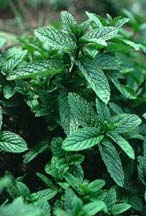 No consistent, good-quality patient-oriented evidence is available on peppermint oil (Mentha piperita). So, the authors based their conclusions on the criteria in the strength of recommendation taxonomy (SORT). Continue reading Peppermint oil is “probably effective”
Evidence supports mind-body therapies for headache
A review published in American Family Physician reveals that mind-body therapies, alone or in combination, significantly reduce symptoms of migraine, tension, and mixed-type headaches.
Here’s the bottom line. Continue reading Evidence supports mind-body therapies for headache
Rating the value of biofeedback to treat diseases
 Alternative & Complementary Therapies has a review of biofeedback by Dr. Sala Horowitz. In it she includes a table that rates the value of biofeedback to treat selected conditions based on the available research.
Continue reading Rating the value of biofeedback to treat diseases
The status of acupuncture to treat migraine
Several years ago, a Cochrane review concluded, “Overall, the existing evidence supports the value of acupuncture for the treatment of idiopathic headaches. However, the quality and amount of evidence are not fully convincing.”
In the past year, 2 studies and another literature review have provided further support for acupuncture to reduce the risk of migraine. Continue reading The status of acupuncture to treat migraine
Is CAM cost effective treatment?
 Three criteria determine drug reimbursement decisions: therapeutic value, cost effectiveness, and burden of disease. Now, an article from Erasmus University in The Netherlands questions whether it’s sufficient for a drug to meet these criteria, and proposes a 4th hurdle.
Consider how CAM would hold up under such scrutiny based on what we know today. Continue reading Is CAM cost effective treatment?
Indian Head Massage: aka Champissage
 Let’s start by stating that neither of the above terms — Indian Head Massage, nor the trademarked term Champissage — results in an article on PubMed.
So, what’s it good for? Continue reading Indian Head Massage: aka Champissage
Butterbur for prevention of childhood migraine
 Proponents say butterbur (Petadolex; Petasites hybridus) reduces the frequency of migraines in adults, although it doesn’t treat them once they occur.
Here are the results of a study in children. Continue reading Butterbur for prevention of childhood migraine
Using CAM to complement conventional pain treatments
 Researchers from Bastyr University in Seattle, Washington survey the use of CAM among people with chronic pain and wonder “whether opioids can be reduced by introducing such therapies.” Continue reading Using CAM to complement conventional pain treatments
Cognitive behavioral therapy used to improve treatment of sleep apnea
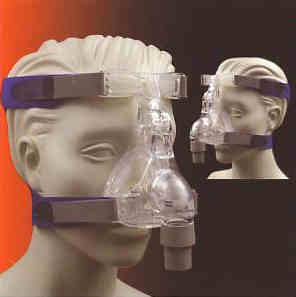 Sleep apnea occurs when people fail to breath while sleeping. Untreated, it can cause high blood pressure and other cardiovascular disease, memory problems, weight gain, impotency, and headaches.
Continuous positive pressure breathing (CPAP) is effective treatment. But it’s uncomfortable to use (photo).
Now, a study shows that cognitive behavioral therapy (CBT) improves acceptance of CPAP. Continue reading Cognitive behavioral therapy used to improve treatment of sleep apnea
Transplant patients are cautioned about taking Schisandra
 Schisandra sphenanthera (Nan Wu Wei Zi, lemon-wood) is “commonly used in Chinese herbalism, where it is considered to be one of the 50 fundamental herbs.” I found no clinical study in humans to support the many claims for this Chinese herbal medicine.
Now, there’s a report of a drug interaction with tacrolimus (Prograf) — a drug used to suppress the immune system in order to prevent organ rejection of liver, kidney, or heart transplants. Continue reading Transplant patients are cautioned about taking Schisandra
The Myers’ formula treats what ails ya
 It’s used to treat a broad range of diseases, but nobody believes enough in the formula to do a controlled clinical study.
Why not? Continue reading The Myers’ formula treats what ails ya
Consumer alert: Chinese herbal medicine Joy of Love is recalled
The U.S. Food and Drug Administration has announced a nationwide recall of H S Joy of Love dietary supplement because it could interact with prescription drugs. Continue reading Consumer alert: Chinese herbal medicine Joy of Love is recalled
Defining a role for CAM in migraine
Two recently published reviews on the treatment of migraine outline the role for CAM. Continue reading Defining a role for CAM in migraine
Got signs and symptoms of mercury poisoning?
 The pros and cons of compact fluorescent lamps (CFLs) can be found here and here. Concern over massive switching from incandescent to CFLs in order to save the environment centers on the risk of toxicity from mercury used in the manufacture of CFLs.
The risk of mercury toxicity is also relevant to CAM in light of the inclusion of mercury in Ayurvedic medicines. Continue reading Got signs and symptoms of mercury poisoning?
Tai chi for tension headaches?
 Tai chi is a form of traditional Chinese exercise. Unlike the hard martial arts, tai chi is characterized by soft, slow, flowing movements that emphasize force rather than brute strength.
Now, a study in 47 adults claims that tai chi can have significant positive effects in people with tension-type headache.