Canola oil and products that contain canola oil can now place the following statement on the label.
“Limited and not conclusive scientific evidence suggests that eating about 1 1/2 tablespoons (19 grams) of canola oil daily may reduce the risk of coronary heart disease due to the unsaturated fat content in canola oil. To achieve this possible benefit, canola oil is to replace a similar amount of saturated fat and not increase the total number of calories you eat in a day.”
Companies must stop manufacturing and distributing trimethobenzamide hydrochloride (Tigan, Tebamide, T-Gen, Trimazide, and Trimethobenz) suppositories.
Heartwire reports, “high-risk patients who have survived a first MI [myocardial infarction] can reduce their risk of subsequent cardiovascular events by eating either a Mediterranean-style diet or the low-fat diet recommended by the AHA [American Heart Association], with no differences in risk reduction between the two diets.” Continue reading Comparing 2 heart-healthy diets→
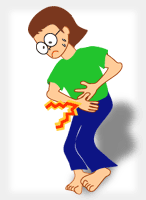
Novartis Pharmaceuticals will stop selling Zelnorm (tegaserod), which was used to treat irritable bowel syndrome (IBS). The decision was made because of an increased risk for serious cardiovascular events.
Perhaps IBS sufferers should start at the beginning.
Of course we don’t know for sure if it does improve mood, but just in case, Dr. Sarah Conklin from the department of psychiatry at the University of Pittsburgh has a possible mechanism.
She presented the results of this study during the American Psychosomatic Society’s Annual Meeting in Budapest, Hungary.
According to 2 studies summarized earlier, modifying the dietary intake of omega-3 and -6 fatty acids during early childhood does not change the risk of getting asthma later on.
Now, we have a study of fish, butter, and margarine consumption during pregnancy and development of allergy in the offspring.
Dr. Sheila Wilhelm and two colleagues at the Eugene Applebaum College of Pharmacy and Health Sciences in Detroit have published a review in The Annals of Pharmacotherapy on preventing nausea and vomiting following surgery (ie, postoperative nausea and vomiting; PONY).
Dr. Richard MacDermott is head of the division of gastroenterology at Albany Medical College in New York. He has specialized in inflammatory bowel disease (IBD) for 30 years and has an impressive resume.
Meniere’s disease is characterized by deafness, ringing in the ears, dizziness, and nausea. Because the precise cause is unknown, most treatments are limited to treating symptoms.
Here’s a summary of CAM options from a review in The Internet Journal of Otorhinolaryngology.
 Canola oil and products that contain canola oil can now place the following statement on the label.
 Companies must
 In a
 Since we don’t synthesize trans fatty acids, any amount found in red blood cells was put there as a result of dietary choices.
 Novartis Pharmaceuticals will
 The link is
 Of course we don’t know for sure if it does improve mood, but just in case, Dr. Sarah Conklin from the department of psychiatry at the University of Pittsburgh has a possible mechanism.
 According to 2 studies
 Dr. Richard MacDermott is head of the division of gastroenterology at Albany Medical College in New York. He has specialized in inflammatory bowel disease (IBD) for 30 years and has an impressive
 In pre-menopausal women, total fiber intake protects against breast cancer.
 Infant formulas are designed to lower the chances of developing allergy or food intolerance.
 Specifically, we’re talking about women with lung cancer and people with diabetes.
 Meniere’s disease is characterized by deafness, ringing in the ears, dizziness, and nausea. Because the precise cause is unknown, most treatments are limited to treating symptoms.