The Oncology Nursing Society has posted a table that summarizes CAM studies on the treatment of nausea and vomiting in cancer patients. The studies were published between 1988 and 2005.
These researchers observed an association between anxiety disorders and substance abuse. They also observed that substance abusers tend to have poor dietary habits.
Arnica (Arnica montana) is used in herbal medicine for relief of bruises, stiffness, and muscle soreness.
Here’s a study that looked at the potential for homeopathic arnica to reduce swelling and pain following 3 different operations in patients who required knee surgery.
The details.
Prior to surgery, 300 patients were given a homeopathic dilution of arnica or placebo.
300 patients received one of 3 operations (arthroscopy, artificial knee joint implantation, and cruciate ligament reconstruction).
More arnica (or placebo) was given after surgery.
The researchers used knee circumference as the measure of arnica’s effectiveness.
When measured 2 days following surgery, significantly less swelling was seen only in the 57 patients who had the cruciate ligament reconstruction.
It’s not clear to me why it worked in one group but not in the other two.
Using soy foods to replace foods high in animal protein that contain fat and cholesterol might help improve cholesterol levels and confer benefits to cardiovascular health in postmenopausal women.
Lipids Online has a good summary of a study just published in the journal, Menopause.
Policosanol is available in the United States as a nutritional supplement with claims that it lowers cholesterol levels. It has been covered extensively on this blog.
With the increase in combination therapy to control hypercholesterolemia, its now been tried and failed when used in combination with atorvastatin (Lipitor).
Generalized anxiety disorder (GAD) is characterized by chronic anxiety and exaggerated worry and tension even when there is little or nothing to provoke it.
Based on the results of clinical studies, psychological therapy based on cognitive behavioral therapy (CBT) principles is effective treatment for (GAD) — at least short-term.
Agitated behavior occurs in nearly half of patients with dementia. It can be the difference between a person qualifying for different levels (and cost) of nursing home care.
The problem is that the nursing staff is limited in using drugs to control it.
Now, the results of a small study at the National Yang-Ming University in Taipei, Taiwan suggest that acupressure might be a useful alternative.
A recent study in The Lancet medical journal found that over the long term, it appears that taking folic acid improves cognitive function (eg, perception, memory, judgment, and reasoning) in older adults.
During the most recent meeting of the American College of Chest Physicians Dr. Paul Blanc from the University of California at San Francisco reported that half of all people with asthma use CAM.
Omega-3 fatty acid consumption has been linked to reductions in the risk of death from heart disease.
Now, researchers from the University of Missouri-Kansas City School of Medicine report that omega-3 acts directly on the heart rather than acting through the vagus nerve, which normally regulates the heart rhythm.
Research conducted in Malaysia and at Brandeis University shows that a new method of modifying fat in commercial products to replace unhealthy trans fats actually raises blood sugar levels and lowers insulin in humans — common precursors to diabetes.
Chronic pancreatitis is most often caused by alcoholism and alcohol abuse. The ability to get these patients to commit and stick with yoga classes twice weekly for 12 weeks is a major accomplishment. Improved quality of life is a bonus.
A quick Google search (“soy” and “blood pressure”) reveals the predominant view that soy has positive effects on the heart and significant (but mild) blood pressure lowering action in people with high blood pressure.
Helicobacter pylori is a common infection of the stomach. Although most people have no symptoms, it’s related to the development of ulcers and is probably related to cancers involving the stomach.
Currently, H pylori infection is treated with a proton pump inhibitor plus two antibiotics — called triple therapy. Adding a probiotic food to triple therapy does not appear to help eliminate this bacteria in children.
 The Oncology Nursing Society has posted a table that summarizes CAM studies on the treatment of nausea and vomiting in cancer patients. The studies were published between 1988 and 2005.
 Researchers from the department of complementary medicine at the University of Exeter in the UK evaluated the results of 91 studies.
 Revista Brasileira de Psiquiatria has an exhaustive
 These researchers
 Arnica (Arnica montana) is used in herbal medicine for relief of bruises, stiffness, and muscle soreness.
 Using soy foods to replace foods high in animal protein that contain fat and cholesterol might help improve cholesterol levels and confer benefits to cardiovascular health in postmenopausal women.
 Policosanol is available in the United States as a nutritional supplement with claims that it lowers cholesterol levels. It has been
 Agitated behavior occurs in nearly half of patients with dementia. It can be the difference between a person qualifying for different levels (and cost) of nursing home care.
 A recent
 There’s evidence that blood levels of
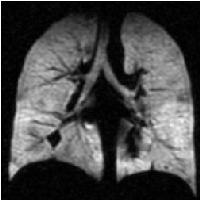 During the most recent meeting of the American College of Chest Physicians Dr. Paul Blanc from the University of California at San Francisco reported that half of all people with asthma use CAM.
 Research conducted in Malaysia and at Brandeis University shows that a new method of modifying fat in commercial products to replace unhealthy trans fats actually raises blood sugar levels and lowers insulin in humans — common precursors to diabetes.
 Medical News Today has the 10 most common myths about diet and exercise.
 Chronic
 This is the first study of this form of acupuncture in patients having surgery in an outpatient setting.
 Helicobacter pylori is a common infection of the stomach. Although most people have no symptoms, it’s related to the development of ulcers and is probably related to cancers involving the stomach.