Any time there is a change in the availability of a statin drug to treat high lipid blood levels, discussions of potential options to these prescription drugs abound.
As Zocor (simvastatin) goes off patent, here is my contribution to the discussion: red yeast rice.
For as long as I’ve followed the ConsumerLab.com website, I don’t remember them ever testing a supplement and reporting that the contents of all brands tested contained what was on the label.
Now, they report that among 12 zinc lozenges and supplements tested, all contained the amounts listed on the label. But some of the lozenges did not provide a dosage known to be effective for treating colds.
Here in Orange County New York with its “black earth’ and proud agricultural heritage there are festivals this time of year honoring just about every food you grow in the ground or herd on the range.
My town, Monroe, has its cheese festival (although no one actually sells cheese). And the local newspaper lists many more, with the notable exception of beets. This is especially strange considering how close we are to the Borscht Belt.
The movement to ban trans fats in restaurants and fast food outlets picked up more support earlier this week. The New York City Board of Health voted to move forward with plans to prohibit the city’s 20,000 restaurants from serving food that contains more than a minute amount of trans fats.
The next steps are a public hearing on October 30th and a final vote in December. The board is authorized to adopt the plan without the consent of any other agency. So, it’s likely that life in NYC will be come a bit healthier by 2007.
You can track back to other related posts starting here.
Medscape just published an article on the benefits of lowering triglycerides, and the use of omega-3 fatty acids. Read it if you’re so inclined, or if you’re an MD and need the continuing education credits. If not, here’s the take-home info.
Pre-eclampsia is a serious complication of pregnancy. It occurs in up to 8% of women who experience increased blood pressure and protein in the urine. It’s possible that garlic may lower blood pressure and help reduce the risk of pre-eclampsia.
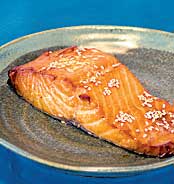
A study of 61,000 adult women in Sweden reports that eating fatty fish lowers a woman’s risk of kidney cancer. Fatty fish included salmon, herring, sardines, and mackerel. Lean fish included cod, tuna, and sweet water fish.
A previous post reported the American Heart Association’s (AHA) position that soy as a dietary factor has unproven or uncertain effects on cardiovascular disease.
Now, a review of 42 well-designed clinical trials from 1982 through 2004 reports the following positive effects about soy.
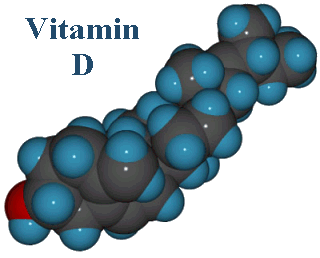
Laboratory studies show that there are up to three times more vitamin D receptors on pancreatic cancer cells than on normal pancreas cells. Moreover, the exposure to high concentrations of vitamin D(3) reduces the number of pancreatic cancer cells.
Now, the results from an epidemiological survey confirm the relationship between vitamin D and cancer of the pancreas.
Jerky, uncontrolled movements, an unsteady walk, and grimaces gave Huntington’s disease (HD) its original common name – Huntington’s chorea (Old Greek for “dance”). It’s an uncommon and incurable disease that is passed on among family members. There are about 8,000 cases in Germany, and 30,000 people have HD in the U.S.
In 1993, scientists discovered that a mutation in a gene causes HD. Now, the first steps in developing treatment are being made with a component in green tea.
A new book by medical writer, Susan Allport, contends that a little-known family of polyunsaturated fatty acids called omega-6s has permeated the Western diet and nullified the impact of heart disease-fighting omega-3s. You will probably hear more about this book, “The Queen of Fats,” over the next few weeks.
How do these two essential fatty acids compare? Here are some highlights according to the University of Maryland Medical Center website.
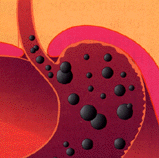
The risk of gastroesophageal reflux disease (GERD) is directly linked to a woman’s body mass index (BMI), according to the results of a study published in The New England Journal of Medicine. Continue reading Got GERD? Watch your weight.→
Around 1990, two studies here and here suggested that artificial sweeteners had little satiating capacity compared to glucose or sucrose. It raised the question, if they didn’t make you feel full (or keep you feeling full) compared to sugar, how could they help lose weight?
This is the source of the rumor that artificial sweeteners cause weight gain.
In advance of National Mushroom Month came news that a single serving of white button mushrooms – the most commonly sold mushroom – could contain 869% of the daily vitamin D requirement when exposed to five minutes of UV light after being harvested.
Here are some findings on magnesium levels in drinking water that suggest more magnesium (harder water) is healthier. The data have implications for the calcium/magnesium ratio in supplements.
For this study, researchers created a computer-simulated community of 100,000 people that resembled the population of Olmsted County, Minnesota, in 2000.
By raising omega-3 fatty acid levels among all the Olmsted cyber-citizens, the researchers estimated that the overall death rate could be reduced 6.4%. By contrast, automated external defibrillators (AEDs) reduced death rates by 0.8%, and implanted defibrillators reduced deaths by 3.3%.
Don’t laugh. Computer-simulated research could be the next big thing, especially where the cost of healthcare is concerned.
 For as long as I’ve followed the ConsumerLab.com
 Â People with HIV/AIDS commonly take herbals and vitamins, often without the knowledge of their doctor.
 Here in Orange County New York with its “black earth’ and proud agricultural heritage there are festivals this time of year honoring just about every food you grow in the ground or herd on the range.
 The movement to ban trans fats in restaurants and fast food outlets picked up more support earlier this week. The New York City Board of Health
 Medscape just published an
 Rat
 Pre-eclampsia is a serious complication of pregnancy. It occurs in up to 8% of women who experience increased blood pressure and protein in the urine. It’s possible that garlic may lower blood pressure and help reduce the risk of pre-eclampsia.
 I signed up for the Harvard Health Letter last night. This morning they sent a free report titled, Living to 100: What’s the Secret?
 A
 A previous
 Laboratory studies
 Jerky, uncontrolled movements, an unsteady walk, and grimaces gave Huntington’s disease (HD) its original common name – Huntington’s chorea (Old Greek for “dance”). It’s an uncommon and incurable disease that is passed on among family members. There are about 8,000 cases in Germany, and 30,000 people have HD in the U.S.
 A new book by medical writer, Susan Allport, contends that a little-known family of polyunsaturated fatty acids called omega-6s has permeated the Western diet and nullified the impact of heart disease-fighting omega-3s. You will probably hear more about this book, “The Queen of Fats,” over the next few weeks.
 The risk of gastroesophageal reflux disease (GERD) is directly linked to a woman’s body mass index (
 Around 1990, two studies
 In advance of National Mushroom Month came
 Not in Barcelona, apparently.
 For this study, researchers created a computer-simulated community of 100,000 people that resembled the population of Olmsted County, Minnesota, in 2000.