 It has been reported in 3 people. Continue reading Acute liver disease associated with taking aloe vera by mouth
Category Archives: G. BOTANICALS
Allergic reactions associated with the use of pelargonium
 Pelargonium is a genus of flowering plants, which includes about 200 species. Extracts have been used to treat respiratory tract and gastrointestinal infections.
Now, more about the allergic reactions to Pelargonium sidoides DC and P. reniforme Curtis, which reportedly have immune modulating properties and antibacterial activity. Continue reading Allergic reactions associated with the use of pelargonium
Herb-drug interaction between baicalin and rosuvastatin
 Baicalin (Chinese skullcap) comes from Scutellaria baicalensis Georgi. This anti-inflammatory herbal is used in traditional Chinese medicine to treat cancer, liver disease, allergies, skin conditions, and epilepsy. Rosuvastatin (Crestor) is a member of the stain class of drugs used to lower LDL (bad) cholesterol. Continue reading Herb-drug interaction between baicalin and rosuvastatin
Sunflower therapy for dyslexia
 It seems to improve self-esteem but not cognition (eg, perception, memory, judgment, and reasoning) or literacy, according to a recent study of 70 dyslexic children aged 6 to 13 years.
Call me skeptical, but…
Two herbals compare favorably to Vioxx to treat low back pain
 Merck, the pharmaceutical company, announced a voluntary worldwide withdrawal of Vioxx (rofecoxib) in 2004. It was effective for relieving signs and symptoms of arthritis, acute pain in adults, and painful menstrual cycles. But the risk of heart attack or stroke related to Vioxx was high enough to cause Merck to stop selling the drug.
Now, a review of the literature suggests that Harpagophytum procumbens (Devil’s claw) and Salix alba (White willow bark) are as effective.
Continue reading Two herbals compare favorably to Vioxx to treat low back pain
Allopathic and CAM update on diabetes treatment in young people
 The review article is posted on the American Family Physician website. In addition to diagnosis and pharmacological treatment, it covers diet and exercise.
CAM options are not included. Continue reading Allopathic and CAM update on diabetes treatment in young people
Little support for milk thistle in liver disease
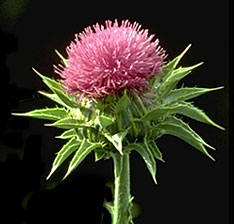 A friend asked me to look into CAM treatments for fatty liver disease. I did, but found little to support milk thistle — the most often discussed CAM treatment.
Continue reading Little support for milk thistle in liver disease
Limits of long-term narcotic use to treat back pain and CAM options
Narcotic drugs (opioids) are commonly prescribed for short-term relief of chronic back pain, but their long-term (greater than 16 weeks) effectiveness has never been proved.
Also, opioid abuse occurs in 24% of cases.
What’s this got to do with CAM?
Continue reading Limits of long-term narcotic use to treat back pain and CAM options
Danshen safety and effectiveness to treat stroke
 Danshen (Salvia miltiorrhiza) is used in traditional Chinese medicine (TCM) to treat stroke, as well as heart disease, atherosclerosis, and blood clotting abnormalities.
The Cochrane Collaboration updated an earlier review of danshen to treat ischemic stroke — the most common kind of stroke, caused by an interruption in blood flow to the brain (as when a clot blocks a blood vessel). Continue reading Danshen safety and effectiveness to treat stroke
Essential tools improve the quality of Ginkgo biloba research
 The National Institute of Standards and Technology (NIST) has issued Standard Reference Materials (SRMs) for Ginkgo biloba.
The NIST reference materials will help researchers validate the accuracy of measurements for flavonoids and terpene lactones (plant constituents associated with the effectiveness of ginkgo) as well as toxic elements in ginkgo. Continue reading Essential tools improve the quality of Ginkgo biloba research
Safety report on cannabis oral spray
 A spray has been developed from the major components of marijuana (cannabis), including tetrahydrocannabinol (THC) and cannabidiol (CBD) in alcohol. The formulation is sprayed under the tongue or in the cheek to relieve pain in multiple sclerosis.
This small study examined effects on the mucus membrane of the mouth. Continue reading Safety report on cannabis oral spray
Contaminated botanicals and dietary supplements
Almost all supplements tested in this study contained measurable amounts of genistein and/or daidzein — known estrogenic agents. Continue reading Contaminated botanicals and dietary supplements
Consumer Alert: 3 red yeast products
 The FDA warns to avoid these “natural” treatments for high cholesterol. Continue reading Consumer Alert: 3 red yeast products
Differing point of view on black cohosh and liver toxicity
 Drs. Luigi Gori and Fabio Firenzuoli from the Center of Natural Medicine, S. Giuseppe Hospital in Italy think the European Medicines Agency (EMEA) and the Committee on Herbal Medicinal Products (HMPC) erred in their assessment of the risk of liver toxicity to Cimicifugae racemosae rhizoma (black cohosh, root). Continue reading Differing point of view on black cohosh and liver toxicity
The next big issue facing dietary supplements — You be the CEO
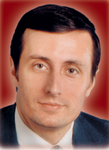 Dr. Mark Moyad (photo) is Director of Preventive and Alternative Medicine at the University of Michigan Medical Center in Ann Arbor. His thoughts about the FDA’s plan to establish good manufacturing regulations for dietary supplements are published in Urology Times.
He also looks to the next big issue that will confront the supplement industry.
Once you know the issues, you can play the role of the pharmaceutical executive and decide if your product “Best Prostate Health” should be withdrawn from the market. Continue reading The next big issue facing dietary supplements — You be the CEO
Phototoxicity from rue when used as a mosquito repellent
 Ruta graveolens (rue, witchbane) is used as a mosquito repellant. Pick the flowering plant, crush it, and rub the oils over your skin.
But when the psoralens from rue come in contact with human skin and are exposed to ultraviolet A light, a photoirritant reaction can occur. Continue reading Phototoxicity from rue when used as a mosquito repellent
Withania somnifera and its potential role in cancer treatment
 Withania somnifera Dunal, commonly known as ashwagandha and Indian ginseng, has a long list of uses in Ayurvedic medicine.
In the treatment of cancer, here’s what we know.
Continue reading Withania somnifera and its potential role in cancer treatment
Butterbur for prevention of childhood migraine
 Proponents say butterbur (Petadolex; Petasites hybridus) reduces the frequency of migraines in adults, although it doesn’t treat them once they occur.
Here are the results of a study in children. Continue reading Butterbur for prevention of childhood migraine
Anael, his tumors, and the Hippocrates Health Institute
 Anael L’Esperance-Nascimento (photo) is the little boy from Quebec whose parents refused a second round of chemotherapy for his brain and spinal cord tumors. Instead, Anael will be treated at the Hippocrates Health Institute in Florida.
The intent of this post is to review wheatgrass, “an integral part” of the Hippocrates treatment. Continue reading Anael, his tumors, and the Hippocrates Health Institute
Natural Products Association will test Chinese raw materials
David Seckman, executive director and CEO of the Natural Products Association (NPA) announced. “By testing raw materials in China, we’re adding another layer of consumer protection.” Continue reading Natural Products Association will test Chinese raw materials