At least when the herbalists who did the study use them. Continue reading Herbal therapy reduces menopausal symptoms
Monthly Archives: November 2007
Evidence supports mind-body therapies for headache
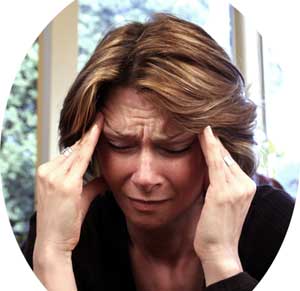 A review published in American Family Physician reveals that mind-body therapies, alone or in combination, significantly reduce symptoms of migraine, tension, and mixed-type headaches.
Here’s the bottom line. Continue reading Evidence supports mind-body therapies for headache
Can homeopathy bring additional benefits to thalassemic patients?
 The researchers say yes, particularly in the developing world where blood transfusions suffer from inadequate screening and fall short of the stringent safety standards followed in the developed countries. Continue reading Can homeopathy bring additional benefits to thalassemic patients?
Reviewing the benefits and dosing recommendations for omega-3
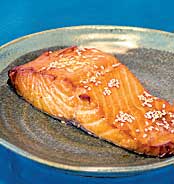 Two omega-3 fatty acids, eicosapentaenoic acid (EPA) and docosahexaenoic acid (DHA) have a number of positive actions against atherosclerosis (hardening of the arteries) and its complications.
An article by the Nutrition Committee of the American Heart Association documents the benefits, with dosing details.
Continue reading Reviewing the benefits and dosing recommendations for omega-3
Arteries relax after smoking cessation, but it takes awhile
 Smokers have stiffer arteries than nonsmokers, but whether smoking cessation might lead to reduced arterial stiffness was not known, until now.
Continue reading Arteries relax after smoking cessation, but it takes awhile
Anthroposophy is no better than conventional treatment for low back pain
 Anthroposophy is a philosophy that maintains your response to your surroundings can be modified by virtue of a prescribed method of self-discipline.
OK, but my conclusion about the results of this study of anthroposophy differs from that of the researchers.
Here’s why. Continue reading Anthroposophy is no better than conventional treatment for low back pain
Using a probiotic to reduce 5-FU related diarrhea
 Fluorouracil (5-FU) is a drug that’s been used to treat cancer for about 40 years.
Researchers from Helsinki University Central Hospital in Finland tested the value of a probiotic (Lactobacillus) and fiber supplementation on 5-FU side effects. Continue reading Using a probiotic to reduce 5-FU related diarrhea
Using fiber to lower C-reactive protein blood levels
 Most studies show that the risk of having a heart attack increases as blood levels of C-reactive protein (CRP) get higher. In fact, in any group of people the risk for heart attack is twice as high for those in the upper third of CRP levels compared to those whose CRP is in the lower third.
This study shows that taking about 30 grams of fiber per day can significantly lower blood levels of CRP.
Continue reading Using fiber to lower C-reactive protein blood levels
Black cohosh, menopausal symptoms, and the risk of breast cancer and heart disease
 Hormone replacement therapy may increase breast cancer and cardiovascular disease risk in menopausal women. But what is the effect of black cohosh extract — a popular alternative for reducing menopausal symptoms? Continue reading Black cohosh, menopausal symptoms, and the risk of breast cancer and heart disease
CAM recommendations to treat chronic constipation
Dr. Brooks Cash from the National Naval Medical Center in Bethesda, Maryland has published a detailed review on Medscape.
There are some surprising conclusions regarding common treatments, including fluids, dietary fiber, physical activity, education, enema, and biofeedback. Continue reading CAM recommendations to treat chronic constipation
Lowering LDL-cholesterol with concentrated oat beta-glucan
 Taking concentrated oat beta-glucan per day for 6 weeks produced a significant reduction from baseline in total and LDL (bad) cholesterol.
But is that enough to achieve any real benefit in protecting from heart disease?
Continue reading Lowering LDL-cholesterol with concentrated oat beta-glucan
Spinal manipulation vs diclofenac for acute low back pain
 Neither treatment appreciably reduced the number of days until recovery according to this study by Australian researchers published in The Lancet.
However, a reader shares a different perspective. Continue reading Spinal manipulation vs diclofenac for acute low back pain
Effects of acupuncture plus relaxation response on quality of life in HIV
 Treatment advances have transformed HIV/AIDS into a chronic manageable disease in which quality of life has become an important health outcome.
This study by researchers from Boston University reports on the benefits of combined relaxation response achieved using soft music plus acupuncture in patients with HIV/AIDS. Continue reading Effects of acupuncture plus relaxation response on quality of life in HIV
Photodynamic therapy treats acne
 Photodynamic therapy (PDT) — also called photo radiation therapy, phototherapy, or photo chemotherapy — involves using a drug called a photosensitizing agent, which is activated by being exposed to a specific wave length of light. It’s often used to treat certain cancers. Now it’s being used to treat acne too.
Two studies (here and here) of similar design concluded that topical methyl aminolaevulinate (MAL)-PDT is effective for moderate to severe inflammatory facial acne.
It’s also very painful.
Update on soy, isoflavones, and the risk of prostate cancer
 The effect of genistein, daidzein, miso soup, and soy food on the risk of prostate cancer differs based on the stage of the disease.
Continue reading Update on soy, isoflavones, and the risk of prostate cancer
No interaction between goldenseal or kava kava and digoxin
 This seems to be the first time the potential for these interactions has been studied.
Continue reading No interaction between goldenseal or kava kava and digoxin
Omega-3 fatty acid supplementation and the risk of asthma in children
 Recently, 2 studies (here and here) showed that increasing the amount of omega-3 fatty acids in the diet of pregnant women had many benefits for their children years later.
Unfortunately, modifying the dietary intake of omega-3 and -6 fatty acids during early childhood does not change the risk of getting asthma later on.
Continue reading Omega-3 fatty acid supplementation and the risk of asthma in children
Another look at acupuncture for rheumatoid arthritis
 Earlier this year, a review of CAM for rheumatoid arthritis concluded that despite earlier positive reports, marked differences among studies precluded recommendations for a specific acupuncture treatment course.
Now, there’s another study. Continue reading Another look at acupuncture for rheumatoid arthritis
Mesotherapy
 In mesotherapy, medications are injected into the skin and underlying tissue. The objective is to improve musculoskeletal, neurologic, and cosmetic conditions.
Not many clinical studies, but there was a safety alert in 2005.
Update on acupuncture treatment for hot flashes
There are more than 475 million menopausal women in the world. And as if that’s not scary enough, it can last 6 to 13 years and lead to side effects such as night sweats and hot flashes. Up to 75% of menopausal women experience some form of hot flashes.
A small study in England in 2003 found that acupuncture reduced the frequency and severity of hot flashes in 47 women treated with tamoxifen for breast cancer. The mean reduction in hot flashes was 42% at the end of 8 treatments, and 34% at 1-month following the last treatment.
But wait!
Continue reading Update on acupuncture treatment for hot flashes