Schisandra sphenanthera (Nan Wu Wei Zi, lemon-wood) is “commonly used in Chinese herbalism, where it is considered to be one of the 50 fundamental herbs.” I found no clinical study in humans to support the many claims for this Chinese herbal medicine.
Radiation therapy can disturb bacterial colonies in the intestines and cause radiation-induced enteritis and colitis, leading to diarrhea in cancer patients.
The Zoft Gum Company, which makes several herbal supplement chewing gums (eg, breast enlargement, weight reduction) has introduced a new gum to help manage the symptoms of menopause.
There are no studies of this gum for treating menopausal symptoms in women. And the discussion of the gum’s ingredients on the Zoft website is misleading.
Here is an update to an earlier post where many scientists and advocates of evidence-based medicine claimed that giving homeopathy scientific status in the UK is unjustified.
The premise of this study is that longer consultation times — as is typical of anthroposophic care — will improve the health of patients with chronic diseases.
An article in Mayo Clinic Proceedings recently reported a disconnect between consumers’ use of herbals to treat certain conditions and the scientific support for their use.
That’s the conclusion from two researchers who reviewed 15 studies.
Here’s what they found.
Evidence for a beneficial effect of mindfulness-based stress reduction (MBSR) on depression and anxiety was equivocal.
When active control groups were used, MBSR did not show an effect on depression and anxiety.
Adherence to the MBSR program was infrequently assessed. When it was, the relation between practicing mindfulness and changes in depression and anxiety was equivocal.
Dr. Irene asks, “What was included with the MBSR? MBSR is not used in isolation of other treatments ” Unfortunately, the abstract doesn’t say.
If you’re interested, here’s a link with background on mindfulness therapies.
 Schisandra sphenanthera (Nan Wu Wei Zi, lemon-wood) is “commonly used in Chinese herbalism, where it is considered to be one of the 50 fundamental herbs.” I found no clinical study in humans to support the many claims for this Chinese herbal medicine.
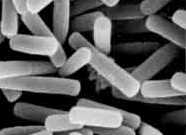 Radiation therapy can disturb bacterial colonies in the intestines and cause radiation-induced enteritis and colitis, leading to diarrhea in cancer patients.
 The Zoft Gum Company, which makes several herbal supplement chewing gums (eg, breast enlargement, weight reduction) has
 A news
 It’s used to treat a broad range of diseases, but nobody believes enough in the formula to do a controlled clinical study.
 The former produces skin inflammation and muscle weakness. People with the later condition get weakness of limb and neck muscles, with muscle pain and swelling.
 The US House of Representatives has passed legislation to expedite expansion of chiropractic benefits through the Department of Veterans Affairs (VA) health care system. The bill was approved 421:1.
 Several were effective.
 Here is an update to an earlier
 An
 That’s the
 The FDA regulations will affect supplements makers and be published in a few weeks, according to an
 The FDA has recalled some shark cartilage capsules.
 Motivational