Transcendental meditation in the classroom

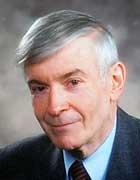
David Lynch (The Elephant Man, Twin Peaks, and others) is funding the inclusion of TM in the classroom. The July/August 2006 issue of AARP The Magazine (Yes, I am a member.) reports his foundation has launched or is planning to launch meditation programs in six cities.

According to Mr. Lynch, “In the classroom where meditation is taught, you’d see students much happier, much brighter, eager to learn.”

It sounds like a good idea to me, but when you add new activities to a fixed time period, what is lost? Not reading, writing, and arithmetic, I hope.

7/1/06 10:00 JR

Pycnogenol: pine bark discord

Six years ago I wrote an article about pycnogenol. It was a story about a man (Dr. Jacques Masquelier), his invention (the extraction process), and alleged trademark infringement, which prevents him from selling his product in the United States.

Pycnogenol is a scavenger of oxygen free radicals, and Dr. Masquelier’s website presents a long list of benefits attributed to pycnogenol. We await the supporting clinical trial results, however.

The point of this post is to update that original article. Dr. Masquelier (in his late 80s) is retired. His successors continue to defend the extraction process and their product.

7/1/06 9:33 JR

Treating herbal products as medicines in Spain

The latest issue of Functional Foods & Nutraceuticals e-newsletter is out. In it, we learn that Spanish authorities treat herbal products as medicines. They require such products to be withdrawn from the market and to obtain medicinal marketing authorizations.

In contrast to this, the European Commission considers that the absence of adequate procedures to assess the risk to public health that such products allegedly pose is an unjustified barrier to trade.

As a result of complaints from companies that want to market herbals in Spain, the European Commission is pursuing infringement procedures against Spain for hampering the free movement of goods in the market.

6/29/06 21:22 JR

Who is Wallace Sampson, and why does he dislike NCCAM?

Based on his recently published editorial discussed in a previous entry here, it seems appropriate to introduce Wallace Sampson, MD to anyone who has not crossed his path before. Dr. Sampson is an outspoken critic of CAM and the National Center for Complementary and Alternative Medicine (NCCAM). In 2005, Dr. Sampson wrote it is time for Congress to defund the NCCAM. “After ten years of existence and over $200 million in expenditures, it has not proved effectiveness for any ‘alternative’ method. It has added to proof of ineffectiveness of some methods, but we had that disproof before NCCAM was formed.”

Please Dr. Sampson, don’t hold back. Tell us what you really think.

He continues, “They [NCCAM] would supplant objectivity and reason with myths, feelings, hunches, and sophistry.”

Well, o-kay then.

Wallace Sampson is a clinical professor emeritus of medicine at Stanford University and editor-in-chief at the Scientific Review of Alternative Medicine. He studies and teaches about unscientific medical systems and aberrant medical claims. He sits on the board of directors of the National Council Against Health Fraud.

6/22/06 9:32 JR

National Center for Complementary and Alternative Medicine (NCCAM) criticized for bias

In a video taped editorial, Dr. Wallace Sampson complains that the NCCAM on its website, “links to trade and unscientific occupational organizations, and presents anomalous methods in a ‘neutral’ light.” Furthermore, Dr. Wallace states, “It contains minimal cautionary, negative information.” This is all the more disturbing because we expect more from a government-sponsored information resource.

The NCCAM counters “while some scientific evidence exists regarding some CAM therapies, for most there are key questions that are yet to be answered through well-designed scientific studies, questions such as whether these therapies are safe and whether they work for the diseases or medical conditions for which they are used.”

As a clinical professor of medicine (emeritus) at Stanford University, and editor of The Scientific Review of Alternative Medicine, Dr. Sampson’s assessment must not be dismissed. Is it reasonable to expect that studies of CAM be as well designed as those of conventional medicine? I think so.

NCCAM provides a useful service in making CAM data available, but studies of ginseng, Ginkgo biloba, garlic supplements, coffee enemas, and glucosamine, for example, should be held to high study design standards.

6/21/06 22:14 JR

Looking or a qualified CAM practitioner?

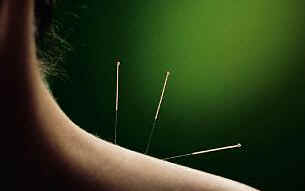
Try the The National Certification Commission for Acupuncture and Oriental Medicine (NCCAOM) online directory, which lists practitioners who meet national requirements for board certification in one or more practice areas such as oriental medicine, acupuncture, Chinese herbology, or Asian bodywork therapy. These practitioners have met all requirements for NCCAOM certification in the specific program area.

It’s a start.

6/20/06 21:00 JR

Complementary and Alternative Medicine: Fair, Balanced, and to the Point