Category Archives: G. BOTANICALS

Cannabidiol not effective in treatment-resistant schizophrenia

Here is another in our ongoing series on recent marijuana-related medical research.

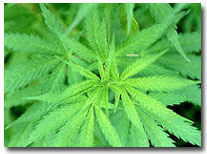
Cannabidiol (CBD) is a major product of the marijuana plant. It lacks marijuana’s psychological effects, and it has been suggested that CBD might be effective as an antipsychotic. The aim of this study was to investigate the response to CBD in treatment-resistant schizophrenia.

Continue reading Cannabidiol not effective in treatment-resistant schizophrenia →

How policosanol lowers cholesterol and implications for your safety

In a previous post I reviewed policosanol, which can lower LDL (bad) cholesterol levels by 20% to 30%.

The source of policosanol seems to influence its activity, with Cuban sugar cane-based policosanol being most effective. It’s available on the Internet and in stores. In fact, One-A-Day Cholesterol Plus contains sugar cane-based policosanol.

Now, a study conducted at the University of Kentucky College of Pharmacy shows how it works.

Continue reading How policosanol lowers cholesterol and implications for your safety →

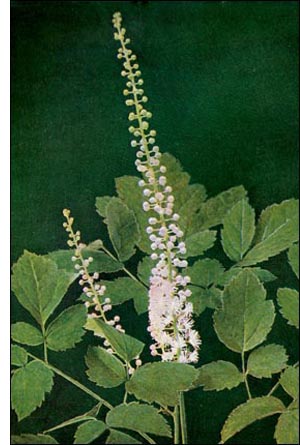
Black cohosh warnings

This site has followed the growing safety concerns over black cohosh here and here.

Now, The Medicines and Healthcare Products Regulatory Agency of the U.K. will issue new labeling regulations with warnings. And the European Medicines Agency (EMEA) and its Committee on Herbal Medicinal Products have issued a public statement that warns of the potential connection between herbal medicinal products containing black cohosh root (Cimicifugae racemosae rhizome) and hepatotoxicity.

The statement includes the following advice.

Continue reading Black cohosh warnings →

Starchild Abraham Cherrix’s legal victory

CancerBlog reports that Starchild Abraham Cherrix, a 16-year-old cancer patient, will be permitted to avoid a second round of cancer treatment in favor of CAM. The court ruled that a board-certified radiation oncologist of his choice who is interested in alternative treatments must treat him.

The young man is taking the Hoxsey method, an herbal treatment that is illegal in the United States but can be obtained in Mexico.

Abraham got his legal victory. What he really needs is a medical victory. Don’t bet the farm on Hoxsey.

Continue reading Starchild Abraham Cherrix’s legal victory →

Cyclosporine, herbals, and immunosupressive therapy

Cyclosporine (Sandimmune, Neoral) is used to prevent organ rejection following kidney, liver, and heart transplants. It may also be used to treat chronic rejection in patients previously treated with other immunosuppressive agents.

The information in this article should be valuable for people taking cyclosporine for its immunosuppressant effect, and for pharmacists and other healthcare professionals who are monitoring this therapy.

Interactions between cyclosporine and St. John’s wort and rosemary are discussed. In addition, it reviews the purported immunostimulating effects of certain herbals and herbal medicines that are potential nephrotoxins.

Illustration: University of Texas

8/11/06 20:38 JR

Recall of a camphor, eucalyptus oil, and menthol patch product

It’s called WellPatch Cough & Cold Soothing Vapor Pads.

It was intended to be applied to the throat or chest of children two years of age and older so they could inhale the vapors. Unfortunately, it was easy for the munchkins to remove the patch and place it in their mouths.

Continue reading Recall of a camphor, eucalyptus oil, and menthol patch product →

ConsumerLab.com tests cholesterol-lowering supplements

Three of 16 products failed the content analysis test. One product did not release its ingredients and two others had less than half the expected ingredients.

That’s less than a 20% failure rate, which is better than often reported by this lab.

An article in Functional Foods & Nutraceuticals reports that the following supplements were tested: sterols, policosanol, guggulsterones, fish oil, garlic, niacin, soy protein, red yeast rice, and stanols. I highlighted the supplements discussed at this blog.

Continue reading ConsumerLab.com tests cholesterol-lowering supplements →

Know the source: Policosanol and cholesterol

The advertisement claims that policosanol (or polycosanol) — a pure extract of sugar cane wax — has been the subject of many clinical trials, even more than most pharmaceutical drugs. And it has outperformed some of popular prescription drugs.

But the positive studies have been primarily sponsored by one company in Cuba and conducted by one research center in Havana.

Continue reading Know the source: Policosanol and cholesterol →

Not your typical vacation

Do you have vacation time coming in 2006? Herbalgram.org has listed the 2006 events calendar. Rather than the same Caribbean vacation or week at the Jersey shore, consider linking your vacation to a CAM meeting.

Here’s one that makes my tastebuds tingle.
July 30-Aug 5: Wild Foods Mountain Retreat. A week-long program in Virginia’s Blue Ridge Mountains. Forage for wild edible and medicinal plants, and prepare tasty and nutritional meals.

Hmm, Hmm, Hmm.

Other must attend meetings.

October 16-17: First International Symposium on Pomegranate and Minor Mediterranean Fruits. Adana, Turkey.

or

October 28-30: The 2nd Internatiomal Symposium on Saffron Biology and Technology (ISSBT). Mashhad, Iran.

Do you think CAM is becoming too specialized?

Want to see more? Go to the Herbalgram.org website.

7/18/06 13:20 JR

Lack of a direct association between marijuana and lung cancer

A newly published review in the Archives of Internal Medicine confirms what has been known since 1988. Epidemiological and clinical data do not show a direct cause and effect relationship between marijuana smoking and the development of lung cancer.

Possible reasons that studies detect lung damage but not cancer in marijuana smokers include the young age of the smokers studied, the small number of people included in each study, and the lack of long-term monitoring.

What was found in marijuana smokers included the following:

  • The lungs are exposed to tar (the solid residue of tobacco smoke containing byproducts of combustion)
  • The macrophage cells in the alveoli (the oxygen exchange cells) that should protect against noxious substances do not work properly
  • There is increased oxidative stress
  • Cells in the bronchi (the air passages) show an increase in abnormal and precancerous findings

Since some bronchial cell changes appear to be precancerous, an increased risk of cancer among frequent marijuana smokers is possible.

7/15/06 14:20 JR

Cannabis club banned at Fisherman’s Warf

This site reported previously about the growing resistance to medical cannabis clubs in San Francisco. Apparently, it is having an effect.

Now, The New York Times reports, “Marijuana cannot be sold alongside the cracked crab and souvenirs of Fisherman?s Wharf, the San Francisco Planning Commission decided late Thursday.” One commissioner stated, “the neighborhood was adamantly opposed to the dispensary?.

The cracked crabs will appeal.

7/14/06 09:30 JR

Court suppresses report on herbal treatment of tinnitus

In April 2006 Schwabe Pharma (Australia) launched a marketing campaign promoting Tebonin for “tinnitus and vertigo relief.” Tebonin is an extract of Ginkgo biloba leaves called EGB761.

Now, the British Medical Journal reports that a federal court in Australia has granted an injunction sought by the company to temporarily suppress a report by a consumer watchdog group called AusPharm Consumer Health Watch that is critical of this product.

The advertisement for Tebonin states that it has shown “through clinical research to be an effective treatment for a range of conditions relating to microcirculation including tinnitus, vertigo, peripheral circulation and cognitive function.”

It continues, “Tebonin optimizes the flow properties of the blood through capillaries increasing the amount of oxygen supplied to all organs, tissues and individual cells throughout the human body, effectively reducing the amount of free radicals within cells and enabling optimum cell function.”

A detailed review published in The Journal of the American Botanical Association makes no mention of EGB research on tinnitus or vertigo.

7/13/06 21:36 JR
CAM options to treat Alzheimer’s disease

Several herbal remedies and other dietary supplements are promoted as effective treatments for Alzheimer’s disease and related disorders. The Alzheimer’s Association summarizes the supporting data for the following treatments.

  • Coenzyme Q10
  • Ginkgo biloba
  • Huperzine A
  • Phosphatidylserine
  • Coral calcium

A review of ginkgo biloba is also available here.

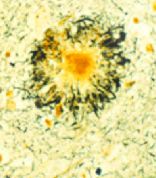
Illustration: Neurofibrillary tangles and fiberlike processes of neurons (black) surround an amyloid plaque. Source: Chemical and Engineering News

7/8/06 15:50 JR

Status of ginkgo to treat Alzheimer’s disease

The problem with available prescription drugs used to treat Alzheimer’s disease is that none of them reverse the process of dementia. This graph showing the response during treatment with Aricept (donepezil) is typical (see figure 1). Following initial improvement, the response to active treatments as well as placebo declines. Following discontinuation, the level of dementia rapidly declines (gets worse) until drug-treated patients and placebo-treated patients are about the same. Continue reading Status of ginkgo to treat Alzheimer’s disease →