 Adriane Fugh-Berman, associate professor in the complementary medicine program at Georgetown University has chronicled the lack of good treatment alternatives for hot flashes.
Category Archives: G. BOTANICALS
Saw palmetto withdrawn from the market in Denmark
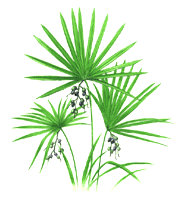 In February, the Danish Ministry for Family and Consumer Affairs withdrew food supplements containing saw palmetto because of concerns about its effect on the hormone system coupled with a lack of data about its safety in long-term use.
Dr. Kirsten Pilegaard, PhD, senior advisor for the Danish Institute for Food and Veterinary Research stated, “On the basis of the information available, it is not possible to establish a dose that does not give rise to concern.”
Continue reading Saw palmetto withdrawn from the market in Denmark
Ayurvedic drug reported effective to treat osteoarthritis of the knee
 RA-11 (Artrex, Mendar) is a standardized multiplant Ayurvedic drug that contains Withania somnifera, Boswellia serrata, Zingiber officinale, and Curcuma longa. In a 32-week study of 90 people with osteoarthritis of the knee, it was more effective than placebo for pain relief.
OK, but I have some questions.
Continue reading Ayurvedic drug reported effective to treat osteoarthritis of the knee
The use of CAM among poor Central Americans
Reported earlier on the site was a study from the Centers for Disease Control and Prevention, which found that 36% of Americans use CAM ? 62% if prayer is included.
Now, here is an estimate of the use of CAM in one Central American country.
Continue reading The use of CAM among poor Central Americans
St. John’s wort for depression
 A review article published in 2001 identified 8 clinical studies in which St. John’s wort was more effective than placebo in treating mild to moderate depression. “The absolute increased response rate with the use of St. John’s wort ranged from 23% to 55% higher than with placebo, but ranged from 6% to 18% lower compared with tricyclic antidepressants.”
Horny goat weed
 “Behind the funny name of horny goat weed stands a time-tested aphrodisiac that increases libido in men and women, and improves erectile function in men.” so starts a pleasant story by Chris Kilham published on the Discovery Health Channel website.
Risk of herbals and vitamins in HIV/AIDS
 Â People with HIV/AIDS commonly take herbals and vitamins, often without the knowledge of their doctor.
Here are examples of interactions with antiretroviral drugs that might be harmful. Continue reading Risk of herbals and vitamins in HIV/AIDS
Effects of policosanol in patients with ischemic stroke
 This blog has chronicled the lipid-lowering effects of policosanol, which lowers LDL (bad) cholesterol levels by 20% to 30%. Its mechanism of action differs from statins. However, it’s close enough that for safety, I would be cautious taking policosanol and a statin at the same time. One-A-Day Cholesterol Plus contains policosanol.
Now, a new study reports that policosanol has a positive effect on recovery in patients with ischemic stroke. This might be an overstatement, but let’s take a closer look.
Continue reading Effects of policosanol in patients with ischemic stroke
U.K. concludes kava is not safe
In 2002, the FDA advised consumers of the potential risk of severe liver injury associated with the use of kava-containing (Piper methysticum) dietary supplements.
In 2003, the U.K.’s medicines regulatory body banned kava when it was linked to a number of deaths and liver damage around the world.
So, where are we today?
Black cohosh: The new bad boy of supplements
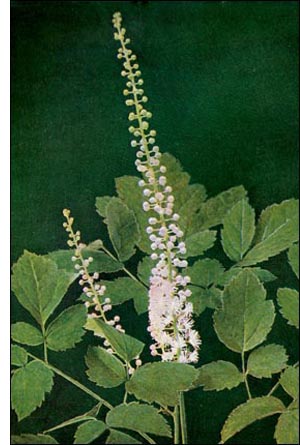 Every time I turn around, another agency is warning its constituents to beware of black cohosh.
Japan’s Ministry of Health, Labour and Welfare has now issued a warning to Japanese users of black cohosh. While there are no actual examples of the herb causing health problems in Japan, care should be exercised regarding its intake.
The risk of liver toxicity with black cohosh was reviewed here in an earlier post.
9/26/06 21:08 JR
Horse chestnuts to treat chronic venous insufficiency
 When your leg veins can’t pump enough blood back to your heart, you have chronic venous insufficiency (CVI). Today, standardized horse chestnut seed extract (HCSE) is a well-established treatment for CVI and edema. It’s a common ingredient in lotions, creams, massage oils, and other skin care products, often in combination with other herbal ingredients.
How does it work?
Continue reading Horse chestnuts to treat chronic venous insufficiency
Herbal interactions with immunosuppressive drugs
 Dr. James Beaulieu, a clinical pharmacist specialist at Rhode Island Hospital in Providence, has published an excellent review of this topic.
If you are receiving immunosuppressive treatments and taking or considering taking any herbal medicine, consult this article first.
Immunosuppressive therapy is used for the following reasons.
- Prevent rejection of transplanted organs and tissues (eg, bone marrow, heart, kidney, liver)
- Treat autoimmune diseases or diseases that are most likely of autoimmune origin (eg, rheumatoid arthritis, myasthenia gravis, systemic lupus erythematosus, Crohn’s disease, and ulcerative colitis)
A list and overview of immunosuppressive drugs are available here.
9/24/06 11:18 JR
Might aromatherapy massage improve sleep in children with autism?
 In an earlier post it was concluded that lavender oil treatments might be helpful for treating insomnia in adults. Children with autism often have sleep difficulties. But this latest study suggests it does not appear that their sleep patterns are altered by this treatment.
Here are the details of the study. Do you agree with the conclusions?
Continue reading Might aromatherapy massage improve sleep in children with autism?
Lavender oil treatment for insomnia
 The National Center for Complementary and Alternative Medicine has published a survey on the extent of insomnia and use of CAM in Americans. WebMD summarizes the findings here.
- 35 million adults regularly had insomnia in 2002
- 1.6 million of them tried CAM to get some sleep
Most often they used herbs and vitamins, or mind-body therapies. Most CAM treatments for insomnia are not well studied, although two studies of inhaled lavender oil have been published, and are reviewed here.
Effect of sublingual cannabinoids on glaucoma
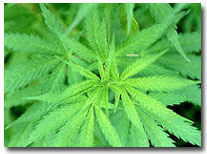 Six people with early primary open angle glaucoma or ocular hypertension were treated with a single dose of delta-9-tetrahydrocannabinol 5 mg (Delta-9-THC), cannabidiol (CBD) 20 mg and 40 mg, and placebo placed under the tongue on separate occasions.
Here are the results.
Continue reading Effect of sublingual cannabinoids on glaucoma
Butterbur complements treatment of asthmatic patients
 In atopic asthmatic patients butterbur provides complementary activity when combined with other treatments.
Continue reading Butterbur complements treatment of asthmatic patients
Butterbur root for allergic rhinitis: More good news
In an earlier post, the effectiveness of butterbur (Ze 339) was reviewed and found to be as effective as the antihistamines, citirizine (Zyrtec) and fexofenadine (Allegra) to treat the runny nose; sneezing; congestion; and irritation in the nose, eyes, throat, and ears associated with allergic rhinitis.
Now, here are the results of a survey of 580 patients with seasonal allergic rhinitis treated with an average of 2 tablets of Ze 339 daily for 2 weeks.
Continue reading Butterbur root for allergic rhinitis: More good news
Court rules, ephedrine is illegal
No dosage of dietary supplements containing ephedrine alkaloids is safe, and the sale of these products in the United States is illegal and subject to FDA enforcement action.
This ruling by the Court of Appeals for the Tenth Circuit in Denver overrules an earlier decision by the District Court in Utah.
Good news about marijuana
Herbal tincture kit: just add vodka
 It’s hard to believe they’re serious, but go to the website and see for yourself.
Sleep Well Formula Sweet Dreams contains
- Wild jujube seed
- Cortex alizziae
- Chinese red sage root
- Wolfberry bark
- Polygaae radix
- Capejasmine fruit
- Immature bitter orange
You just add the vodka!
Caution during pregnancy.
9/3/06 2:30 JR