The “gateway theory” says that each type of drug is associated with certain specific risk factors that can lead to subsequent drug abuse. For example, cigarettes or alcohol lead to marijuana, which leads to cocaine, etc.
A study by Dr. Ralph Tarter from the University of Pittsburgh suggests that environmental factors have a stronger influence on which type of substance is used. For example, if it’s easier for a teens to get marijuana than beer, then they will be more likely to smoke pot.
As a follow-up to an earlier post about horny goat weed here is a positive clinical study using horny goat weed in the management of erectile dysfunction.
One caveat: this study has not been published in a peer-reviewed journal, but on a website that sells horny goat weed. That said, the study design and results are interesting.
During a seminar at the American Heart Association 2006 meeting titled “The Science Behind Popular Nutrition Claims,” medical researchers summarized the research on a number of complementary options to “help maintain a healthy heart.”
Here is a summary of the Medscape article. Links to more info are highlighted.
Most tobacco smokers have a decline in fertility. In some the decline is significant.
A study presented during the 2006 American Society of Reproductive Medicine meeting reported that for smokers who can’t quit, a synthetic cannabinoid called AM-1346 might improve their fertilizing capacity.
In the treatment of severe malaria, injecting artesunate directly into a vein results in more rapid action than quinine given the same way. It’s safer and simpler to administer. And a clinical study also shows it reduces the risk of death from this disease.
Artesunate comes from qinghaosu, the sweet wormwood bush (Artemisia annua). It’s a fast-acting antimalarial drug discovered by Chinese scientists in the early 1970s.
Artesunate is often referred to as the most efficient malaria parasite killer ever discovered.
The Handbook of Clinically Tested Herbal Remedies is an excellent reference source on herbal medicines. Writing in the International Society for Complementary Medicine Research Newsletter (go here and click the volume 2 number 4 issue), the reviewer states that editor Marilyn Barrett and her contributors, “take a rigorous look at both the nature of the herbal evidence base, and how it [the evidence base] is and should be generated.”
During their meeting this month in Seoul, Korea, the Codex Committee for Asia will discuss standards for ginseng products. At issue is whether to regulate several species of ginseng in one global Codex standard or focus on Panax ginseng only.
The Food and Drug Administration issued a statement in April that no sound scientific studies support the medicinal use of marijuana for treatment. This lead to a seemingly endless list of editorials and articles assailing the FDA for political bias – here, here, here, here, and here.
There’s one hospital in Sweden where anthroposophic medicine is practiced. Here is a study of its effect in 60 women who received conventional breast cancer treatment with and without anthroposophic care.
The Centers for Disease Control has just published the latest data on the prevalence of diabetes in the US.
11% of adults aged 40 to 59 years
23% of those 60 and older have diabetes
Is it any wonder that so many CAM therapies are studied in people with diabetes?
A quick listing of CAM entries for diabetes on this blog is provided below. Or, click the button on the right sidebar to see all of the diabetes entries.
The use of marijuana early in life increases the risk of less adequate performance on some developmental tasks that are important to becoming an independent young adult.
More than 1000 African American and Puerto Rican young people completed questionnaires in their classrooms. Five years later they were each interviewed.
Early users of marijuana were more likely to have the following experiences.
A new study adds to the mystery of policosanol. Past posts here have summarized the ongoing debate over its effectiveness as a treatment for high cholesterol levels. Studies conducted by the Center of Natural Products at the National Center for Scientific Research in Havana report a dose-dependent reduction in LDL (bad) cholesterol of up to 29%.
Outside of Cuba, the results are inconsistent. One proposed reason is the source of the policosanol.
One of the major complications of diabetes mellitus is the change in small blood vessels called microangiopathy. It’s associated with kidney failure and blindness, as well as other conditions such as diabetic ulcers.
Here are the results of a study of pycnogenol in people with diabetic ulcers.
Here are the results from two studies that support the role of pycnogenol (pronounced pick-nah-geh-nol) to treat ADHD (attention deficit/hyperactivity disorder).
Legislation has been submitted in Ontario, Canada to regulate acupuncture and traditional Chinese medicine. This is the culmination of an ongoing process that started in Canada in 1994. The proposed legislation would create a self-governing regulatory college, and restrict the practice of acupuncture to members of the profession who would be able to use title, doctor.
In North America, it’s the latest event in the growth of acupuncture, which was virtually unknown here until 1972 when China opened its doors to the West.
Researchers from Vanderbilt University and the Shanghai Cancer Institute in China have reported on the effects of ginseng in 1455 patients with breast cancer who were followed for 4 to 6 years.
 The “gateway theory” says that each type of drug is associated with certain specific risk factors that can lead to subsequent drug abuse. For example, cigarettes or alcohol lead to marijuana, which leads to cocaine, etc.
 As a follow-up to an earlier
 During a seminar at the American Heart Association 2006 meeting titled “The Science Behind Popular Nutrition Claims,” medical researchers summarized the research on a number of complementary options to “help maintain a healthy heart.”
 Here are the results. Would you say that aromatherapy was effective?
 In the treatment of severe malaria, injecting artesunate directly into a vein results in more rapid action than quinine given the same way. It’s safer and simpler to administer. And a clinical study also
 The Handbook of Clinically Tested Herbal Remedies is an excellent reference source on herbal medicines. Writing in the International Society for Complementary Medicine Research Newsletter (go
 There’s one hospital in Sweden where anthroposophic medicine is practiced. Here is a
 A new study adds to the mystery of policosanol. Past posts
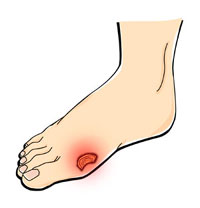 One of the major complications of diabetes mellitus is the change in small blood vessels called
 Here are the results from two studies that support the role of pycnogenol (pronounced pick-nah-geh-nol) to treat ADHD (attention deficit/hyperactivity disorder).
 Legislation has been
 Researchers from Vanderbilt University and the Shanghai Cancer Institute in China have