Researchers at Harvard Medical School, in Boston surveyed the nation about CAM use for back pain. Continue reading Perceived benefit from CAM in people with back pain →
Ernst sees encouraging evidence for some treatments .
But does it matter? Continue reading CAM use among US adolescents →
surveyed the use of CAM in residents of Singapore who had head and neck cancer.
Here are their findings compared to other countries where similar studies have been conducted. Continue reading Use of CAM in patients with head and neck cancer →
Researchers from Princess Margaret Hospital, in Toronto, Ontario think it might be due to contamination of these products Continue reading Searching for contamination in herbals used to treat benign prostatic hyperplasia →
Continue reading Survey of American medical students about CAM →
results of the British Medical Journal survey.
88% of respondents came from the UK, with the rest coming from 10 countries. Continue reading UK doctors rate their knowledge of herbal medicines →
study was conducted at the University of Sofia in Bulgaria using local herbals.
I don’t know the relevance to herbals in other parts of the world, but the results are disturbing. Continue reading Arsenic, cadmium and lead in medicinal herbs →
studied the association among herbal use, adherence to prescribed inhaled corticosteroids, and the effect on disease control. Continue reading Herbal use and adherence to steroids during asthma treatment →
measured levels in Asian traditional herbal preparations that are available on the Dutch market. Continue reading Mercury, arsenic, and lead levels in herbals →
tells us “Traditional herbal substances may contain highly toxic chemicals and heavy metals.”
Then, he goes on to catalog all the ways this can happen. Continue reading Sources of risk when taking traditional herbal medicines →
examined the association among the use of herbals and patients’ adherence to prescribed inhaled steroids, and drug treatment and disease beliefs. Continue reading Negative effects of herbals on asthma control →
views during the American Holistic Nurses Association Annual Conference.
Her comments reflect issues posted and discussed frequently on this site. Continue reading A holistic nurse’s view of herbals →
according to researchers from the University of Ottawa in Ontario. Continue reading CAM treatments for irritable bowel syndrome →
evaluated the evidence for adding nutritional and herbal medicines to antidepressants, mood stabilizers, and benzodiazepines. Continue reading Should we add CAM to Rx treatments? →
written a continuing education article on herbals.
Here are the author’s take-away points, with additional references added. Continue reading Key points about commonly used herbals →
in vitro fertilization (IVF) procedures are taking herbal medicines.
That’s my conclusion based on the results of this survey of women in an Irish infertility treatment center by researchers at BC Women’s Hospital, in Vancouver, Canada. Continue reading Use of herbals in women undergoing IVF →
Herbal preparations are commonly used alternatives for drug treatment, surgery, or both. Now, Cochrane has reviewed the evidence. Continue reading Using herbals to treat uterine fibroids →
department . Entries on this blog related to studies and perspective by its faculty can be found here .
Now, researchers from Sloan-Kettering have categorized the beneficial and the potentially hazardous CAM options used by patients with cancer. Continue reading CAM: A Sloan-Kettering perspective →
Sinupret is a popular herbal product in Germany.
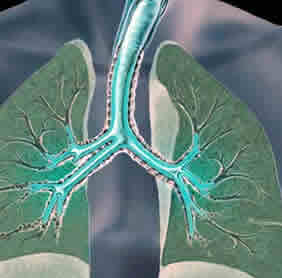
Here’s a summary from Medical News Today , based on a monograph by the American Botanical Council (ABC). Continue reading A multi-herb formula for respiratory tract health →
here , here , and here on the use of CAM in the US as surveyed by the National Center for Complementary and Alternative Medicine (NCCAM). Continue reading Most commonly used CAM in the US →
Posts navigation
Complementary and Alternative Medicine: Fair, Balanced, and to the Point
 Back pain is the second most common reason patients seek ambulatory medical care in the United States.





 This
 Dr. Merrily Kuhn presented her
 Several can be recommended as part of an evidence-based approach to treating irritable bowel syndrome (IBS),
 Â Researchers from the University of Queensland, in Australia
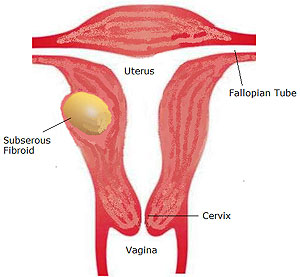 Â Uterine fibroids are benign (non cancerous) growths in the uterus.
 Memorial Sloan-Kettering Cancer Center in New York City has an active integrative medicine
 Here’s a follow-up to earlier posts