 Medical students have a long-standing interest in learning more about CAM.
Here’s what they think at Georgetown University School of Medicine in Washington, DC.
Medical students have a long-standing interest in learning more about CAM.
Here’s what they think at Georgetown University School of Medicine in Washington, DC.
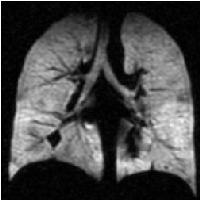 During the most recent meeting of the American College of Chest Physicians Dr. Paul Blanc from the University of California at San Francisco reported that half of all people with asthma use CAM.
Here are the highlights from Medscape.
 I was surprised to learn of the popularity of homeopathy among today’s luminaries.
Here’s a list.
 The Handbook of Clinically Tested Herbal Remedies is an excellent reference source on herbal medicines. Writing in the International Society for Complementary Medicine Research Newsletter (go here and click the volume 2 number 4 issue), the reviewer states that editor Marilyn Barrett and her contributors, “take a rigorous look at both the nature of the herbal evidence base, and how it [the evidence base] is and should be generated.”
Continue reading The importance of defining the active ingredients in herbal medicines
These data are from a telephone survey of more than 2500 randomly sampled noninstitutionalized Americans, which was published in 2002. The tables can also be found here. Continue reading The most commonly used vitamins and herbals
 Legislation has been submitted in Ontario, Canada to regulate acupuncture and traditional Chinese medicine. This is the culmination of an ongoing process that started in Canada in 1994. The proposed legislation would create a self-governing regulatory college, and restrict the practice of acupuncture to members of the profession who would be able to use title, doctor.
In North America, it’s the latest event in the growth of acupuncture, which was virtually unknown here until 1972 when China opened its doors to the West.
Continue reading The growth of acupuncture and traditional Chinese medicine in North America
 Â People with HIV/AIDS commonly take herbals and vitamins, often without the knowledge of their doctor.
Here are examples of interactions with antiretroviral drugs that might be harmful. Continue reading Risk of herbals and vitamins in HIV/AIDS
 Dr. James Beaulieu, a clinical pharmacist specialist at Rhode Island Hospital in Providence, has published an excellent review of this topic.
If you are receiving immunosuppressive treatments and taking or considering taking any herbal medicine, consult this article first.
Immunosuppressive therapy is used for the following reasons.
A list and overview of immunosuppressive drugs are available here.
9/24/06 11:18 JR
 It’s hard to believe they’re serious, but go to the website and see for yourself.
Sleep Well Formula Sweet Dreams contains
You just add the vodka!
Caution during pregnancy.
9/3/06 2:30 JR
 CancerBlog reports that Starchild Abraham Cherrix, a 16-year-old cancer patient, will be permitted to avoid a second round of cancer treatment in favor of CAM. The court ruled that a board-certified radiation oncologist of his choice who is interested in alternative treatments must treat him.
The young man is taking the Hoxsey method, an herbal treatment that is illegal in the United States but can be obtained in Mexico.
Abraham got his legal victory. What he really needs is a medical victory. Don’t bet the farm on Hoxsey.
 Cyclosporine (Sandimmune, Neoral) is used to prevent organ rejection following kidney, liver, and heart transplants. It may also be used to treat chronic rejection in patients previously treated with other immunosuppressive agents.
The information in this article should be valuable for people taking cyclosporine for its immunosuppressant effect, and for pharmacists and other healthcare professionals who are monitoring this therapy.
Interactions between cyclosporine and St. John’s wort and rosemary are discussed. In addition, it reviews the purported immunostimulating effects of certain herbals and herbal medicines that are potential nephrotoxins.
Illustration: University of Texas
8/11/06 20:38 JR
 The University of Pennsylvania Schools of Medicine and Nursing will sponsor a symposium on September 19th and 20th. It’s titled “Herbal Medicine: Perception, Practice, and Rational Use” Looks like an excellent program. Herbaphiles in the Philadelphia area might want to attend.
Americans tend to assume that if a drug is sold either by prescription in a pharmacy or off the shelf in a convenience store that it is safe. Otherwise, the label would list the cautions that must be taken to use it safely.
In fact, this is not how the rest of the world views herbal medicines.
In April 2006 Schwabe Pharma (Australia) launched a marketing campaign promoting Tebonin for “tinnitus and vertigo relief.” Tebonin is an extract of Ginkgo biloba leaves called EGB761.
Now, the British Medical Journal reports that a federal court in Australia has granted an injunction sought by the company to temporarily suppress a report by a consumer watchdog group called AusPharm Consumer Health Watch that is critical of this product.
The advertisement for Tebonin states that it has shown “through clinical research to be an effective treatment for a range of conditions relating to microcirculation including tinnitus, vertigo, peripheral circulation and cognitive function.”
It continues, “Tebonin optimizes the flow properties of the blood through capillaries increasing the amount of oxygen supplied to all organs, tissues and individual cells throughout the human body, effectively reducing the amount of free radicals within cells and enabling optimum cell function.”
A detailed review published in The Journal of the American Botanical Association makes no mention of EGB research on tinnitus or vertigo.
7/13/06 21:36 JR
The latest issue of Functional Foods & Nutraceuticals e-newsletter is out. In it, we learn that Spanish authorities treat herbal products as medicines. They require such products to be withdrawn from the market and to obtain medicinal marketing authorizations.
In contrast to this, the European Commission considers that the absence of adequate procedures to assess the risk to public health that such products allegedly pose is an unjustified barrier to trade.
As a result of complaints from companies that want to market herbals in Spain, the European Commission is pursuing infringement procedures against Spain for hampering the free movement of goods in the market.
6/29/06 21:22 JR