Generalized anxiety disorder (GAD) is characterized by chronic anxiety and exaggerated worry and tension even when there is little or nothing to provoke it.
Based on the results of clinical studies, psychological therapy based on cognitive behavioral therapy (CBT) principles is effective treatment for (GAD) — at least short-term.
During the most recent meeting of the American College of Chest Physicians Dr. Paul Blanc from the University of California at San Francisco reported that half of all people with asthma use CAM.
Chronic pancreatitis is most often caused by alcoholism and alcohol abuse. The ability to get these patients to commit and stick with yoga classes twice weekly for 12 weeks is a major accomplishment. Improved quality of life is a bonus.
Fibromyalgia is a pain syndrome caused by the brain’s inability to accurately interpret pain sensations due to the presence of psychosocial and behavioral factors. About 3.7 million adult Americans are afflicted. It primarily occurs in women of childbearing age, but children, the elderly, and men may also be affected.
Because of these psychosocial and behavioral factors, complementary treatments such as cognitive behavioral therapy (CBT) are recommended here and here to optimize treatment.
Heathereen Cochran, MS, RN, an adult nurse practitioner at Oncology Care Associates in St. Joseph, Michigan, has published an informative review on non-drug treatment options for insomnia.
In light of the recent JAMA publication (discussed here) showing the superiority of cognitive behavioral therapy (CBT) over Imovane (zopiclone), it’s interesting to review the status of these non-drug treatment options.
When I first graduated from pharmacy school I worked for a short time at Columbus Hospital in Newark, NJ. There was nothing fancy about this hospital except that it had rugs on all the floors and original art hung on the walls. It was unlike anything I had seen in other New Jersey hospitals.
This small private hospital was apparently 30 years ahead of its time.
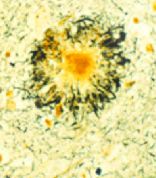
The results of the Advanced Cognitive Training for Independent and Vital Elderly (ACTIVE) study were summarized here recently.
Now, Dr. Sally Shumaker, professor of public health sciences and associate dean for research at Wake Forest University Medical School, writes about the study’s implications in the Journal of the American Medical Association.
Abdominal massage using two drops of lavender (Lavandula officinalis), one drop of clary sage (Salvia sclarea), and one drop of rose (Rosa centifolia) in 5 mL of almond oil was more effective than no treatment or almond oil alone.
The “gateway theory” says that each type of drug is associated with certain specific risk factors that can lead to subsequent drug abuse. For example, cigarettes or alcohol lead to marijuana, which leads to cocaine, etc.
A study by Dr. Ralph Tarter from the University of Pittsburgh suggests that environmental factors have a stronger influence on which type of substance is used. For example, if it’s easier for a teens to get marijuana than beer, then they will be more likely to smoke pot.
Radical prostatectomy is an operation to remove the prostate gland and some of the tissue around it. It is done to treat prostate cancer, and up to half of all men who have a radical prostatectomy develop urinary incontinence.
Preoperative pelvic floor training (PFT) is used to strengthen the muscles and improve recovery of continence following the operation.
There’s one hospital in Sweden where anthroposophic medicine is practiced. Here is a study of its effect in 60 women who received conventional breast cancer treatment with and without anthroposophic care.
A recent review of published studies concludes that practicing biofeedback is associated with a reduction in the frequency of migraine attacks. And better results are achieved when biofeedback is combined with home sessions.
Largely associated with Buddhism, the practice of mindfulness has been advocated by medical researchers such as Dr. Jon Kabat-Zinn who developed the Mindfulness-Based Stress Reduction (MBSR) program. MBSR is a form of complementary medicine offered in over 200 U.S. hospitals.
In 2003, Dr. Kabat-Zinn and colleagues published the results of a study where an eight-week program of mindfulness meditation produced demonstrable effects on brain and immune function.
 Generalized anxiety disorder (GAD) is characterized by chronic anxiety and exaggerated worry and tension even when there is little or nothing to provoke it.
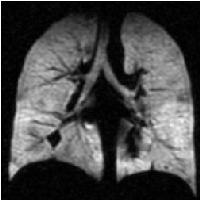 During the most recent meeting of the American College of Chest Physicians Dr. Paul Blanc from the University of California at San Francisco reported that half of all people with asthma use CAM.
 Chronic
 Fibromyalgia is a pain syndrome caused by the brain’s inability to accurately interpret pain sensations due to the presence of psychosocial and behavioral factors. About 3.7 million adult Americans are afflicted. It primarily occurs in women of childbearing age, but children, the elderly, and men may also be affected.
 Heathereen Cochran, MS, RN, an adult nurse practitioner at Oncology Care Associates in St. Joseph, Michigan, has published an informative
 When I first graduated from pharmacy school I worked for a short time at Columbus Hospital in Newark, NJ. There was nothing fancy about this hospital except that it had rugs on all the floors and original art hung on the walls. It was unlike anything I had seen in other New Jersey hospitals.
 The results of the Advanced Cognitive Training for Independent and Vital Elderly (ACTIVE) study were summarized
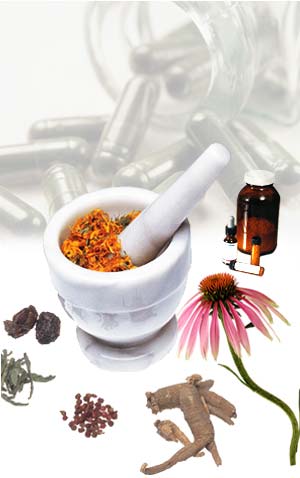 I was surprised to learn of the popularity of homeopathy among today’s luminaries.
 Abdominal massage using two drops of lavender (Lavandula officinalis), one drop of clary sage (Salvia sclarea), and one drop of rose (Rosa centifolia) in 5 mL of almond oil was
 Rumination is the voluntary or involuntary regurgitation and rechewing of partially digested food that is either reswallowed or expelled.
 As part of an integrative program there are three options for psychosocial support.
 The “gateway theory” says that each type of drug is associated with certain specific risk factors that can lead to subsequent drug abuse. For example, cigarettes or alcohol lead to marijuana, which leads to cocaine, etc.
 Here are the results. Would you say that aromatherapy was effective?
 Radical
 A survey of more than a thousand people trying to quit smoking
 There’s one hospital in Sweden where anthroposophic medicine is practiced. Here is a
 In an earlier post, Director David Lynch’s plan to fund the inclusion of transcendental meditation TM in the classroom was
 A recent review of published studies
 Largely associated with Buddhism, the practice of mindfulness has been