Adriane Fugh-Berman, associate professor in the complementary medicine program at Georgetown University has chronicled the lack of good treatment alternatives for hot flashes.
An article in the Archives of Internal Medicine reports that trancendental meditation (also known as TM) may alter the physiological response to stress and improve risk factors in patients with coronary heart disease. In this randomized, placebo-controlled clinical trial, 16 weeks of TM or active control treatment (health education) resulted in improved blood pressure and insulin resistance (two components of the metabolic syndrome) among patients using TM.
The Dana-Farber Cancer Institute in Boston forbids pet visits, because of their concern about infection and allergic reactions. I’s a reasonable position. However, I am unable to find any reports where infections increased in hospitals when animal-assisted activity (AAA) or animal-assisted therapy (AAT) was used.
In an earlier post it was concluded that lavender oil treatments might be helpful for treating insomnia in adults. Children with autism often have sleep difficulties. But this latest study suggests it does not appear that their sleep patterns are altered by this treatment.
According to the distributor’s website, “Raindrop combines the art of aromatherapy with the techniques of Vita Flex and massage in the application of essential oils to various areas of the body to bring structural and electrical alignment.” A description of the treatment is described here.
Making the rounds this morning is a Newswire release from MD Anderson Cancer Center about Cherie Perez. She’s a research nurse who teaches aromatherapy to cancer patients during their treatment at the Cancer Center. You can read it here.
Since my background is based in traditional medicine, the involvement of this prestigious medical center sparks my interest to learn more about aromatherapy. I start by looking for structure.
It turns out, there are lots of ways to use oils.
Here, from Psychology Today are the five common types of aromatherapy.
An article in Yoga Journalstates, “Some yogis eschew the use of all caffeine, while others adopt a policy of moderate consumption. Caffeine can temporarily enliven the body, but dependence on it could hinder your yoga practice.”
For those who want to stop using caffeine-containing products, the article recommends adding Yogi tea or specific medicinal herbs to your diet to help ease the transition.
I have no idea if any of this stuff helps. It is clear however, that caffeine withdrawal is well documented and is included in DSM-IV-TR (the 4th text revision of Diagnostic and Statistical Manual of Mental Disorders), considered the bible of mental disorders.
Here are details of the caffeine withdrawal symptoms.
WebMD and CBS News (which uses WebMD news releases) used a little common sense when summarizing the results of a new study on transcendental meditation (T M). The article appears in the August issue of NeuroReport.
In 1995, the American Medical Student Association prepared an introductory guide to complementary medicine.
It is available online at no charge. And it’s still the first place to turn for introductory information on everything from art therapy, to osteopathy, chiropractic, chelation therapy, and more.
After just posting about the benefits of the Mediterranean diet for Alzheimer’s disease yesterday, imagine my surprise to wake up this morning to another study about the benefits of the Mediterranean diet … this time for erectile dysfunction in men with the metabolic syndrome.
Here are age-adjusted percentages of American adults 18 years and older that used complementary and alternative medicine in 2002. Continue reading Users of CAM→
I am usually disappointed when I read descriptions of music therapy and the job description of a music therapist. For example, The American Music Therapy Association defines music therapy as “clinical and evidence-based use of music interventions to accomplish individualized goals within a therapeutic relationship by a credentialed professional who has completed an approved music therapy program.”
What does that mean, exactly? I want to know what actually changes when music therapy is included in patient care? To find out, I searched PubMed for all articles on “music therapy” published in 2006. I found two articles that help me understand what to expect, here in post cardiac surgery patients, and here in patients with Alzheimer’s disease. The second study is especially clinically relevant.
 A study of 30 patients found that regular classes of tai chi gave patients with heart failure better movement and significantly reduced BNP levels.
 Adriane Fugh-Berman, associate professor in the complementary medicine program at Georgetown University has
 An
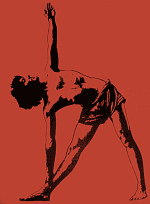 Yoga practice is associated with positive
 The Dana-Farber Cancer Institute in Boston
 In an earlier
 Advocates of imagery
 According to the distributor’s
 An article in Yoga Journal
 In 1995, the American Medical Student Association prepared an introductory
 Attention-deficit/hyperactivity disorder (ADHD) affects about 5% to 10% of school-age children in the United States.
 A just published
 Under what conditions are patients likely to benefit from behavior therapy?
 After just
 I am usually disappointed when I read descriptions of music therapy and the job description of a music therapist. For example, The American Music Therapy Association