The National Healthy Mothers, Healthy Babies Coalition has summarized the recommendations from official groups, worldwide. Their website should be essential reading for pregnant, breastfeeding, and postpartum women, and women thinking of becoming pregnant.
Fifteen years after enrollment of more than 600 people between 18 and 30 years of age, researchers from the Department of Preventive Medicine at the Feinberg School of Medicine, Northwestern University, Chicago report that higher magnesium intake is associated with a lower risk of the metabolic syndrome.
The results are interesting, but what’s the action plan for the average person?
Results from the Invecchiare in Chianti (InCHIANTI) Study indicate that low selenium blood levels are independently associated with poor skeletal muscle strength — at least in Tuscany.
A recently published study concluded, “Selenium supplementation does not seem to prevent type 2 diabetes, and it may increase risk for the disease.”
The study was summarized here. Now, an article on HealthNotesNewswire by Dr. Allan Gaby, a specialist in nutrition and preventive medicine, lists criticisms of the research. Dr. Gaby’s article is instructive because in addition to the relevance of the criticisms to the selenium study, it provides a checklist of basic questions to ask when reading any retrospective review. Continue reading More thoughts on the role of selenium in preventing diabetes→
Researchers from Harvard School of Public Health in Boston believe, “the United States Food and Drug Administration and corresponding agencies in other countries should require heavy metal testing for all imported dietary supplements.”
Cananga odorata (common name, ylang-ylang; pronounced ee-lang ee-lang) is among the most celebrated flowering trees in the world. It was made famous by Coco Chanel in 1923 with the introduction of Chanel No.5 perfume,
Read on to find out why ylang-ylang oil is more than just an expensive scent.
These recommendations, from a group of experts, take a narrow view of Alzheimer’s disease. They focus on early detection and the use of existing prescription drugs.
That’s fine as far as it goes, but what about those with advanced Alzheimer’s? Why not develop a more comprehensive approach?
The pros and cons of compact fluorescent lamps (CFLs) can be found here and here. Concern over massive switching from incandescent to CFLs in order to save the environment centers on the risk of toxicity from mercury used in the manufacture of CFLs.
That’s right. Treatment with beta-carotene, vitamin A, and vitamin E might increase mortality. The potential roles of vitamin C and selenium on mortality need further study.
These are the findings from the latest literature review and analysis published in The Journal of the American Medical Association (JAMA).
The University of Arizona Cooperative Extension has an excellent review of calcium supplements. It is well written, thorough, and concise — just 4 pages long. The part I like best is the discussion of the difference between elemental and total calcium.
A study in northern India shows that milk fortified with specific micronutrients lowers the risk of diarrhea and acute lower respiratory illness in children.
The Centers for Disease Control has just published the latest data on the prevalence of diabetes in the US.
11% of adults aged 40 to 59 years
23% of those 60 and older have diabetes
Is it any wonder that so many CAM therapies are studied in people with diabetes?
A quick listing of CAM entries for diabetes on this blog is provided below. Or, click the button on the right sidebar to see all of the diabetes entries.
Chromium contributes to the action of insulin to control blood sugar levels. In addition, chromium blood levels tend to be low in people with diabetes. Now, conventional wisdom of the role of supplemental chromium is being re-evaluated.
Now that new UVA blockers are being marketed, it’s not surprising to see more research in this area. The UVA sunscreen issue has been discussed here and here.
Modest consumption of fish — one to two servings a week — may reduce the risk of coronary death by 36% and the actual death rate by 17%, according to Harvard researchers.
 The National Healthy Mothers, Healthy Babies Coalition has summarized the recommendations from official groups, worldwide. Their website should be essential reading for pregnant, breastfeeding, and postpartum women, and women thinking of becoming pregnant.
 Fifteen years after enrollment of more than 600 people between 18 and 30 years of age, researchers from the Department of Preventive Medicine at the Feinberg School of Medicine, Northwestern University, Chicago
 Results from the Invecchiare in Chianti (InCHIANTI)
 This
 A recently published
 Researchers from Harvard School of Public Health in Boston believe, “the United States Food and Drug Administration and corresponding agencies in other countries should require heavy metal testing for all imported dietary supplements.”
 Cananga odorata (common name, ylang-ylang; pronounced ee-lang ee-lang) is among the most
 These
 A news
 The pros and cons of compact fluorescent lamps (CFLs) can be found
 MayoClinic.com has
 The University of Arizona Cooperative Extension has an excellent
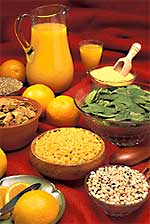 A study in northern India
 Chromium contributes to the action of insulin to control blood sugar levels. In addition, chromium blood levels tend to be low in people with diabetes. Now, conventional wisdom of the role of supplemental chromium is being re-evaluated.
 Now that new UVA blockers are being marketed, it’s not surprising to see more research in this area. The UVA sunscreen issue has been discussed