Category Archives: H. CHEMICALS

Death after using selenium to treat suspected prostate cancer

Here’s a disturbing report.

After a single test showing a raised level of prostate-specific antigen, a 75-year-old man became concerned about prostate cancer. He researched prostate cancer on the Internet and discovered that selenium may have a role in its prevention and treatment. He purchased sodium selenite powder and tablets from two separate pharmacies. Overdosed himself, and died in the hospital intensive care unit about 5 hours later.

What are we to learn from this sad case?

Continue reading Death after using selenium to treat suspected prostate cancer →

Recommending a UVA sunscreen

Earlier this year, the FDA approved Anthelios SX, an over-the-counter product that contains a camphor derivative (ecamsule/Mexoryl SX), which is photostable and targets UVA radiation. In addition, Neutrogena has added a stabilizer, Helioplex, to several of its products containing avobenzone and other UVA blockers, which might boost their efficacy in protecting against a spectrum of UVA wavelengths.

The questions are, “How good are they? Which is better?” asks Dr. DeLeo from St. Luke’s-Roosevelt and Beth Israel Medical Centers in New York City.

Continue reading Recommending a UVA sunscreen →

Another reason to use lots of sunscreen

When sunscreen is applied, its UV filters reduce the amount of UV radiation that penetrates the skin. Over time however, the filters themselves penetrate below the surface of the outer layer of skin, leaving the body vulnerable to UV radiation.

In fact, when commonly used sunscreens (octylmethoxycinnamate, benzophenone-3 and octocrylene) are abasorbed, they actually generate reactive oxygen species (ROS) that cause oxidative damage. This leads to skin damage and increases in the visible signs of aging, according to researchers at the University of California, Riverside.

Continue reading Another reason to use lots of sunscreen →

Chelation therapy meets nanotechnology

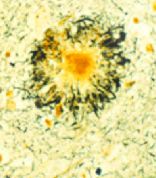
There is evidence that abnormal concentrations of positively-charged metal ions (eg, copper, iron, and zinc) interact with beta-amyloid in the brain during the development of Alzheimer’s disease. Therefore, correcting these abnormal levels might help people with this disease. (The photo shows yellow amyloid plaque surrounded by black neurofibrillary tangles.)

One option for treatment is chelation.

Continue reading Chelation therapy meets nanotechnology →

Starchild Abraham Cherrix’s legal victory

CancerBlog reports that Starchild Abraham Cherrix, a 16-year-old cancer patient, will be permitted to avoid a second round of cancer treatment in favor of CAM. The court ruled that a board-certified radiation oncologist of his choice who is interested in alternative treatments must treat him.

The young man is taking the Hoxsey method, an herbal treatment that is illegal in the United States but can be obtained in Mexico.

Abraham got his legal victory. What he really needs is a medical victory. Don’t bet the farm on Hoxsey.

Continue reading Starchild Abraham Cherrix’s legal victory →

Recall of a camphor, eucalyptus oil, and menthol patch product

It’s called WellPatch Cough & Cold Soothing Vapor Pads.

It was intended to be applied to the throat or chest of children two years of age and older so they could inhale the vapors. Unfortunately, it was easy for the munchkins to remove the patch and place it in their mouths.

Continue reading Recall of a camphor, eucalyptus oil, and menthol patch product →

Salt water to treat cystic fibrosis

The Blogs are abuzz today with talk of nebulized hypertonic saline to treat cystic fibrosis (CF). Glenn Reynolds at Instapundit has a comment and links to Dean Barnett of SoxBlog who reports his experience with saline from a patient’s perspective. The historical perspective on the treatment is interesting as well.

Saline is not new therapy, but it has assumed a higher profile since publication of a study in The New England Journal of Medicine early this year. The authors concluded, “Hypertonic saline preceded by a bronchodilator is an inexpensive, safe, and effective additional therapy for patients with cystic fibrosis.” The accompanying editorial (summarized on Medscape) was less impressed.

Recently, the Cochrane Collaboration reviewed the results of nine trials of nebulized hypertonic saline for CF. The reviewers concluded it “improves mucociliary clearance in short-term clinical trials and appears to increase lung function compared to control.” However, “In comparison to recombinant deoxyribonuclease it may be less effective at improving lung function after three months.”

Maybe so, but Dean’s perspective is encouraging. “This seems like if not a miracle, something damn close to it. For years good people, the world’s best, have been pouring their hearts, souls and money into finding effective treatments for CF and generally coming up with very little. And all of a sudden, a super-promising new treatment comes along. And it’s salt water!”

7/9/06 09:56 JR