 For pregnant women, researchers at Utrecht University in the Netherlands identified eating nut products (not nuts) as a potential risk factor for allergy in their children. Continue reading Nut products, pregnancy, and allergy risk
Category Archives: J. CONDITIONS TO TREAT
CAM for psychiatric disorders in kids
 Researchers from the University of Sydney in Australia have reviewed the evidence in children and adolescents.
The authors include data from adults, because if they limited the discussion to children and adolescents it would be a very short article.
That’s not a problem here. Continue reading CAM for psychiatric disorders in kids
Home remedies to treat alopecia areata
 Alopecia areata is an autoimmune disease that afflicts fewer than 2% of people younger than 50 years. It often starts in the 20s and 30s. In about 6% of these patients the disease progresses to a total loss of scalp hair.
Here are two studies using garlic gel and onion juice.
Ranking supplements and herbals for cholesterol control
Healthnotes has a good review of nutritional supplements and herbals that have been studied as cholesterol-lowering options. Continue reading Ranking supplements and herbals for cholesterol control
What to do about high cholesterol in kids
 Have you heard the new recommendations from the American Academy of Pediatrics (AAP) for cholesterol screening and treatment for children? Continue reading What to do about high cholesterol in kids
Acupuncture for Parkinson’s disease
The evidence is not convincing according to Prof. Ernst and colleagues from the Peninsula Medical School in the UK.
But that’s not to say that the lack of evidence is decisive. Continue reading Acupuncture for Parkinson’s disease
BrainStim
 Dr. Iris Penner from the University of Basel in Switzerland has reported the results of a computer-based cognitive training program called BrainStim that appears to increase working memory in healthy elderly people.
Here are the highlights based on the Medscape report from the European Neurological Society meeting. Continue reading BrainStim
Rebiana: The new stevia-derived sweetener.
 A series of published studies support the safety of rebiana, which is the trade name for a stevia-derived sweetener being developed by The Coca-Cola Company and Cargill. Truvia is Cargill’s brand name for the same product.
Wikipedia has a good overview of stevia and it’s relationship to rebiana.
Here’s what we know from recently published studies. Continue reading Rebiana: The new stevia-derived sweetener.
Treating anxiety before surgery with passionflower
Also known as Maypop (Passiflora incarnata), the purple passionflower has antianxiety and sedative effects.
Most studies of Passiflora incarnata have been in animals. Here’s a study in humans. Continue reading Treating anxiety before surgery with passionflower
Saw palmetto-induced pancreatitis?
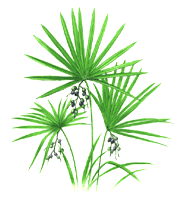 A case of pancreatitis in a 55-year-old man with alcoholism who had been sober for more than 15 years was published in the Southern Medical Journal. The authors make a circumstantial case for his ongoing use of saw palmetto and the occurrence of pancreatitis.
Historical perspective on flavonoids
 Dietary sources of flavonoids in Western societies include onions (flavonols); cocoa (proanthocyanidins); tea, apples, and red wine (flavonols and catechins); citrus fruit (flavanones); berries and cherries (anthocyanidins); and soy (isoflavones).
Here’s how far we’ve come. Continue reading Historical perspective on flavonoids
Pram walking to treat postpartum depression
 A pram is a baby carriage and an abbreviation of “perambulator” — a person who tours on foot.
Anyway, pram walking is popular in Australia as a way for groups of women with postpartum depression to go out with their babies, get some exercise, talk, and hopefully make progress to resolve their depression. Continue reading Pram walking to treat postpartum depression
A review of probiotics to treat IBS
 Recently, the use of tegaserod (Zelnorm) and alosetron (Lotronex) to treat irritable bowel syndrome (IBS) was restricted because of adverse events.
Here’s what we know about probiotics for the relief of symptoms of IBS. Continue reading A review of probiotics to treat IBS
The value of CBT in children and adolescence
 Prof. Craig Whittington from the National Collaborating Centre for Mental Health in London has reviewed the value of cognitive behavioral therapy (CBT) to treat children and adolescents with mental health problems. Continue reading The value of CBT in children and adolescence
Acupuncture and breast cancer rehabilitation
 Researchers from the Universidade Estadual de Campinas UNICAMP in Brazil report that acupuncture was useful for improving movement, reducing lymphoedema (swelling and accumulation of lymph around the lymph nodes), and reducing heaviness and tightness in the upper arm of patients with breast cancer. Continue reading Acupuncture and breast cancer rehabilitation
Allergy prevention in children
It turns out that Australia has one of the highest rates of allergic disease (hay fever, asthma, hives) in the world.
So, Australian Family Physician reviewed current recommendations. Continue reading Allergy prevention in children
Stress, heart disease, and what to do about it
 Research published in the Archives of Internal Medicine shows that psychosocial factors, such as cynical distrust, chronic stress, and depression are associated with higher blood levels of C-reactive protein (associated with acute inflammatory reactions), interleukin-6 (stimulates an immune response to tissue damage), and fibrinogen (causes blood to clot).
All are related to an increased risk of heart disease.
What can we do about this?
Continue reading Stress, heart disease, and what to do about it
Cannabis use in hepatitis C
 Cannabis use should be discouraged in patients with chronic hepatitis C (CHC), according to researchers in France.
First, the details.
- 315 patients with untreated CHC and having a liver biopsy were studied.
- Detailed histories of recent marijuana, alcohol, and tobacco use were recorded.
- The biopsies were examined using METAVIR — a scoring system that gives an indication of the activity or amount of inflammation and amount of fibrosis or scarring in the liver.
And, the results.
There were 6 predictors of marked steatosis (accumulation of fat in the liver).
- Daily cannabis users compared to occasional users and nonusers
- Viral activity grade of the disease (greater or equal to A2)
- Genotype 3 (one of the genetic variations and stains of hepatitis C)
- Body mass index (BMI) greater than 27 kg/m2
- High blood sugar levels or diabetes
- HCV RNA load in the blood (associated with a worse outcome of disease) or alcohol intake (greater than 30 g/day)
The bottom line?
Steatosis is important because a build up of fat in the liver worsens liver damage and makes CHC harder to treat.
The authors concluded that daily cannabis smoking is a “predictor of steatosis severity during CHC.” And they recommend that “cannabis use should be discouraged in patients with CHC.”
Among the 6 predictors of steatosis reported in this study, marijuana use is a comparatively easy risk factor to modify and thereby reduce the severity of this disease.
7/6/08 11:05 JR
The Tomatis Method in autism
 Dr Alfred Tomatis developed a technique using modified music to stimulate connections between the ear and the nervous system in order to affect aspects of human development and behavior.
His research suggested that the hearing of many people with autism is severely sensitized to the point that even normal classroom noises are painful and disorienting.
But, is it worth the effort? Continue reading The Tomatis Method in autism
Positive effects of selenium in patients with HIV
 Selenium is a simple, inexpensive, and safe adjunct therapy in HIV spectrum disease.
That’s the conclusion from a study from the University of Miami.
Here’s the study.
Continue reading Positive effects of selenium in patients with HIV