 Â That’s the conclusion by reviewers from Oxleas NHS Foundation Trust in Kent, UK. Continue reading Lack of evidence for aromatherapy in dementia
Category Archives: Alzheimer’s Dementia
DASH diet and its effect on cognitive decline
 Â The Dietary Approaches to Stop Hypertension (DASH) is a diet rich in fruits and vegetables and low in salt, sweets, and red meats.
During the International Conference on Alzheimer’s Disease, researchers from Utah State University, in Logan reported it appears to slow cognitive decline — if you can stick with it. Continue reading DASH diet and its effect on cognitive decline
No to Ginkgo to prevent dementia
 Results from the Ginkgo Evaluation of Memory (GEM) Study were published today.
It was designed to determine if Ginkgo biloba is better than placebo in preventing dementia and Alzheimer’s disease in the elderly. Continue reading No to Ginkgo to prevent dementia
DHA effective in some people with Alzheimer’s disease
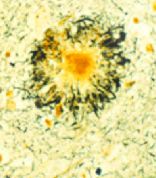 Â During the Alzheimer’s Association 2009 International Conference on Alzheimer’s Disease, researchers from Oregon Health & Sciences University, in Portland reported that the benefits of docosahexaenoic acid (DHA), an omega-3 essential fatty acid, were influenced by a patient’s genetic makeup. Continue reading DHA effective in some people with Alzheimer’s disease
Key points about commonly used herbals
 Dr. Darrell Hulisz from Case Western Reserve University School of Medicine in Cleveland, Ohio has written a continuing education article on herbals.
Here are the author’s take-away points, with additional references added. Continue reading Key points about commonly used herbals
Acupuncture for Alzheimer’s disease?
 Â Acupuncture is often used as a treatment for dementia.
Prof. Ernst has reviewed the evidence for acupuncture to treat Alzheimer’s disease. Continue reading Acupuncture for Alzheimer’s disease?
Physical activity for dementia
When it comes to behavior, depression, and mortality in people with dementia, does physical activity make a difference?
Researchers from the University of Western Ontario in London, Canada searched the medical literature for answers. Continue reading Physical activity for dementia
Bright light, melatonin, and dementia
Researchers from the Netherlands set about to determine whether the progressive changes in symptoms seen in dementia might be affected by the 2 major synchronizers of the circadian timing system: bright light and melatonin. Continue reading Bright light, melatonin, and dementia
Food to prevent Alzheimer’s disease?
A new product deemed a “medical food” by the Food and Drug Administration is now available in the United States. Continue reading Food to prevent Alzheimer’s disease?
Preventing mild cognitive impairment
Mild cognitive impairment is forgetfulness that is worse than normal for one’s age but isn’t associated with dementia. Studies suggest however, that these people progress to Alzheimer’s disease at about 10% to 15% per year.
Researchers from the Mayo Clinic will report on factors that decrease this risk at the upcoming meeting of the American Academy of Neurology in April.
First, the details.
- 197 randomly selected elderly people attending the Mayo Clinic who were ultimately diagnosed with mild cognitive impairment were compared to 1124 randomly selected, cognitively intact people who served as controls.
- Everyone completed a survey on cognitive activities in late life (within the past year) and in midlife (between ages 50 and 65 years).
And, the results.
- Certain late-life activities were significantly associated with a 30% to 50% decreased risk for mild cognitive impairment.
- Reading books
- Playing games (including computer games)
- Craft activities (quilting or pottery)
- Watching less television (50% less risk for less than 7 hours vs more than 7 hours per day)
- Social activity, including going out with friends, was not significantly associated with a decreased mild cognitive impairment risk.
- Midlife activities significantly associated with a 42% decreased risk for mild cognitive impairment.
- Social activities
- Reading magazines
The bottom line?
“Our study confirms that engaging in intellectually stimulating activities is associated with a decreased risk of mild cognitive impairment,” said Dr. Yonas Endale Geda during a Medscape interview.
The reasons for these findings are unclear. Cognitive activity might have a direct effect on the brain to stimulate neuroprotective chemicals. Or, it might just be part of healthy lifestyle choices.
3/7/09 14:40 JR
Reviewing the effect of omega-3 on dementia
In seniors there’s a difference between the role of omega-3 fatty acids to slow cognitive decline vs preventing or treating dementia, according to researchers at Johns Hopkins School of Medicine in Baltimore, Maryland. Continue reading Reviewing the effect of omega-3 on dementia
Intake of omega-3 in nursing home residents
 Researchers from the University of Waterloo in Canada tell us that increased intake of omega-3 fatty acids “is associated with the decreased risk and incidence of several morbidities afflicting the elderly, including cognitive decline, dementia, rheumatoid arthritis, and macular degeneration.”
With that information, one would think maintaining omega-3 intake would be a priority. But is it? Continue reading Intake of omega-3 in nursing home residents
CAMophobia at Medscape
 Here’s the link to a brief review written by Dr. Jonathan Silver from New York University School of Medicine.
You need read no further than the first paragraph to see the bias. Continue reading CAMophobia at Medscape
Soy isoflavones in the elderly
 Â The benefits of isoflavone depend on converting soy foods and supplements to biologically active compounds such as equol, which occurs in the intestines and is altered by age-associated conditions.
Researchers from the University of Wisconsin in Madison studied the effects of soy in older nondemented men and women. Continue reading Soy isoflavones in the elderly
Benefits of omega-3 in Alzheimer’s disease
 An omega-3 fatty acid supplement enriched with docosahexaenoic acid (DHA) may positively affect weight and appetite in patients with mild to moderate Alzheimer’s disease, according to researchers at the Karolinska University Hospital Huddinge in Stockholm, Sweden. Continue reading Benefits of omega-3 in Alzheimer’s disease
COACHing people with dementia to better self care
Researchers from Canada and Scotland studied an automated system designed to assist people with dementia get through activities of daily living –- in this case hand washing -– and reduce caregiver burden. Continue reading COACHing people with dementia to better self care
Take B vitamins to reduce homocysteine in dementia?
Does it matter?
Prior studies in patients with Alzheimer’s disease were too small and too short in duration to assess their effect on cognitive (reasoning) decline, according to researchers in the Alzheimer Disease Cooperative Study. Continue reading Take B vitamins to reduce homocysteine in dementia?
Procaine fails to improve dementia
 More than 100 million people in over 70 countries use procaine preparations.
This Cochrane review tells us if it’s worth the effort. Continue reading Procaine fails to improve dementia
Mediterranean diet and the risk of death and disease
 Researchers from Florence, Italy tell us if it changes the risk of death and the occurrence of Parkinson’s or Alzheimer’s diseases. Continue reading Mediterranean diet and the risk of death and disease
Weak studies on huperzine A for Alzheimer’s disease
I’m surprised by the position of the Alzheimer’s Association regarding huperzine A (shuangyiping). “Evidence from small studies shows that the effectiveness of huperzine A may be comparable to that of the approved drugs.”
Really? Continue reading Weak studies on huperzine A for Alzheimer’s disease