 Researchers at INSERM (Institut National de la Santé et de la Recherche Medicale), in Montpellier, France, tell us lifestyle changes can more than offset the risk posed by genetics, which, of course, can’t be changed. Continue reading Relative importance of lifestyle changes on the risk of dementia
Category Archives: Alzheimer’s Dementia
Benefits of balance and tone exercise in older women
 Researchers at the University of British Columbia, in Vancouver, Canada studied the effects on cognitive function. Continue reading Benefits of balance and tone exercise in older women
Changes in memory afer drinking blueberry juice
 Blueberries contain anthocyanins, which have antioxidant and anti-inflammatory effects.
Researchers at Tufts University, in Boston studied the effects of drinking wild blueberry juice in older adults with early memory changes. Continue reading Changes in memory afer drinking blueberry juice
Vitamin D and the risk of dementia
 No prospective study has examined the association between vitamin D and cognitive decline or dementia,… until now.
Researchers in the US, UK, and Italy studied whether low blood levels of 25-hydroxyvitamin D (25[OH]D) are associated with an increased risk of substantial cognitive decline. Continue reading Vitamin D and the risk of dementia
A quick review of Ginkgo
 As part of the Charms & Harms series in the Journal of Primary Care, Dr. Joanne Barnes, from the University of Auckland, in New Zealand distilled the evidence.
Here’s what we know. Continue reading A quick review of Ginkgo
Music enhances memory in people with Azheimer’s disease
Researchers from Boston University School of Medicine, in Massachusetts report that the benefits include greater understanding of the pathophysiology of dementia. Continue reading Music enhances memory in people with Azheimer’s disease
Support for aromatherapy in patients with Alzheimer’s disease
It’s a controversial subject, but researchers at Tottori University, in Yonago, Japan, report positive results in a small study. Continue reading Support for aromatherapy in patients with Alzheimer’s disease
Modest exercise lowers dementia risk, modestly
 These findings are noteworthy considering the relatively modest amount of physical activity undertaken by study participants. Continue reading Modest exercise lowers dementia risk, modestly
Review of ginkgo to treat dementia
This one comes from researchers at Charite University Medicine, in Berlin, and Gottfried Wilhelm Leibniz University, in Hannover, Germany. Continue reading Review of ginkgo to treat dementia
Targeted exercise programs in geriatric institutionalized people
 Researchers from Faculté des Sciences du Sport, in Bordeaux, France compared the response to 2 exercise programs vs usual care. Continue reading Targeted exercise programs in geriatric institutionalized people
Yokukansan to treat dementia
 Yokukansan, a traditional Japanese medicine (kampo) used to treat behavioral and psychological symptoms of dementia, was studied by researchers from the University of Tsukuba, in Ibaraki, Japan. Continue reading Yokukansan to treat dementia
Pet therapy for sundowners
 Dr. Ann-Marie Wordley from the University of Adelaide in Australia presented the preliminary results during the Alzheimer’s Association Dementia Care Conference. Continue reading Pet therapy for sundowners
Cannabinoids and disturbed behavior in dementia
 The discovery of specific cannabinoid receptors in the central nervous system has lead to much research to determine the main effects of these compounds.
This Cochrane review reports on the clinical effectiveness of cannabinoids in the treatment of dementia. Continue reading Cannabinoids and disturbed behavior in dementia
Multisensory stimulation for patients with Alzheimer’s disease
 Researchers from the University of Missouri, Kansas City measured changes in inappropriate behavior. Continue reading Multisensory stimulation for patients with Alzheimer’s disease
Three studies of fatty acids in the elderly
 They appeared in an issue of the American Journal of Clinical Nutrition along with an editorial that helped put it all in perspective.
Let’s summarize the results. Continue reading Three studies of fatty acids in the elderly
Complementary treatments for Alzheimer’s
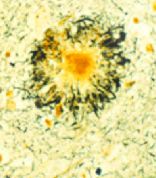 Dr. James Galvin from the Alzheimer’s Disease Research Center at Washington University School of Medicine in St. Louis, Missouri has written are review on Medscape.
Here are his thoughts on the value of nonpharmacologic strategies in support of drug treatment. Continue reading Complementary treatments for Alzheimer’s
Criticism of the latest Ginkgo study
I recently labeled G. biloba the “biggest loser in 2009” based on the results of The Ginkgo Evaluation of Memory (GEM) Study that was published in The Journal of the American Medical Association.”
Now, Mark Blumenthal, founder and executive director of the Austin, Texas-based American Botanical Council, has weighed with his criticism.
Non-drug treatments for dementia
 Researchers from the University of Leeds, in the UK reviewed the options for caregivers of patients with dementia. Continue reading Non-drug treatments for dementia
Mediterranean diet to delay dementia
 Elderly individuals who follow a Mediterranean diet are less likely to develop mild cognitive impairment (dementia) and to convert from it to Alzheimer’s disease, according to researchers at Columbia University Medical Center in New York. Continue reading Mediterranean diet to delay dementia
No human evidence that aequorin prevents dementia
 A company called Quincy Bioscience sells a product containing aequorin (Prevagen) that it promotes as “the first supplement to address aging through the restoration of calcium-binding proteins.”
A reader asked what I’ve heard about this product, which contains aequorin (Aequorea victoria), a calcium-binding protein found in the jellyfish. Continue reading No human evidence that aequorin prevents dementia