 Â More intense exercise appears to have greater benefits.
That the conclusion from this study at the University of Southern California, Los Angeles. Continue reading Benefits of exercise in early Parkinson’s disease
 More intense exercise appears to have greater benefits.
That the conclusion from this study at the University of Southern California, Los Angeles. Continue reading Benefits of exercise in early Parkinson’s disease
 Dr. Lisa Terre from the University of Missouri-Kansas City has published a review of the importance of physical activity counseling.
It turns out that greater cardio benefits occur among people who are aware that their activity is doing their body good. Continue reading The benefits of knowing that you are exercising
 The World Cancer Research Fund and the American Institute for Cancer Research have published a tome (517 pages) titled, Food, Nutrition, Physical Activity, and the Prevention of Cancer: A Global Perspective.
The goal is to reduce the global burden of cancer through healthier living.
Best of all, it can be accomplished in just 6 easy steps in addition to not smoking or chewing tobacco. Continue reading 6 easy steps to prevent cancer
 It’s controversial, but Dr. Steriani Elavsky, assistant professor of kinesiology at Penn State University, claims that a walking or yoga program can have a positive effect — including fewer hot flashes — in women in menopause.
Here is an article about the study and here is the abstract.
Continue reading Are walking and yoga beneficial during menopause?
 It’s axiomatic that exercise benefits your heart. Unless you have a note from your doctor, there’s no excuse to be inactive.
But what does exercise actually do that’s good for your heart?
Continue reading Why is exercise good for people with heart disease?
 Further research is needed, but Dr. Marlene Freeman from The University of Texas Southwestern Medical Center at Dallas brings us up to date. Continue reading CAM for perinatal depression
Vigorous exercise (running) at middle and older ages is associated with reduced disability in later life, according to this study by researchers at Stanford University School of Medicine in California.
Would you start running based on these results? Continue reading Benefits of running in the elderly
Researchers from Belgium and Norway reviewed the evidence for non-pharmacological management of orthostatic hypotension (low blood pressure upon standing) during the early rehabilitation of people with spinal cord injury.
Here’s what they found. Continue reading Treating orthostatic hypotension after spinal injury
 In this study, noseless saddles made it easier for police officers to ride their bikes.
But, what about erectile dysfunction? Continue reading Defining the penile benefits of a no-nose saddle
 Â Here are some CAM highlights for migraine and fibromyalgia from the American Academy of Pain Management (AAPM) 19th Annual Clinical Meeting. Continue reading Recommended CAM for chronic pain
Researchers from West Park Healthcare Centre Toronto in Ontario ask, is there any benefit from one-legged exercise, at half the load of two-legged exercise in people with chronic obstructive lung disease (COPD)? Continue reading One-legged exercise for COPD
Genetically identical twins showed no difference in anxious and depressive symptoms when one exercised more than the other, according to this study from VU University Amsterdam.
But don’t put away your running shoes just yet. Continue reading Exercise does not reduce anxiety and depression
 This study shows it can be done, with reductions that are relatively small. But read the comment to see what can be accomplished with diet, exercise, and omega-3.
Continue reading Lowering cholesterol with functional foods
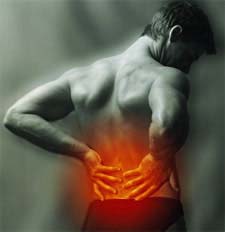 Few treatments for back pain are supported by strong scientific evidence. Conventional treatments have limited success and often result in dissatisfied patients who turn to CAM.
A review from the Cochrane Collaboration concluded, “massage might be beneficial for patients with subacute and chronic non-specific low-back pain, especially when combined with exercises and education.”
Continue reading Evidence for massage to treat low-back pain
 A pram is a baby carriage and an abbreviation of “perambulator” — a person who tours on foot.
Anyway, pram walking is popular in Australia as a way for groups of women with postpartum depression to go out with their babies, get some exercise, talk, and hopefully make progress to resolve their depression. Continue reading Pram walking to treat postpartum depression
Researchers at The University of Tulsa in Oklahoma compared different forms of very short rest periods on subsequent performance. Continue reading Rest periods and resistance exercise performance
The good news? There’s no risk of a positive test for doping. Continue reading Lack of effect of Tribulus terrestris on muscle strength in rugby league players
 Researchers from the University of Evora in Portugal studied the effects of 8 months of supervised exercise therapy in warm water on physical and mental health and physical fitness in women with fibromyalgia. Continue reading Effects of warm water exercise on fibromyalgia
The premise for the motor control approach is that simple functional exercise alone does not re-establish coordination of the trunk muscles. Continue reading Motor control exercise for chronic back pain
 Slow walking speed is a strong predictor of increased risk of incident ischemic stroke among postmenopausal women, according to researchers at Albert Einstein College of Medicine in New York City. Continue reading Walking speed and the risk of stroke