 Â The Journal of the American Medical Association (JAMA) reports 2 studies where vitamin E was not effective in preventing prostate cancer. Continue reading Bad news for vitamin E and cancer prevention
Category Archives: H. CHEMICALS
Nasal irrigation to treat rhinosinusitis
 Rhinosinusitis is an inflammation of the nose (rhinositis) and the sinuses (sinusitis).
The Cochrane Collaboration states, “The use of nasal irrigation for the treatment of nose and sinus complaints has its foundations in yogic and homeopathic traditions. It is often prescribed as an adjunct to other treatments such as intranasal steroids or antibiotics.” Continue reading Nasal irrigation to treat rhinosinusitis
No convincing evidence for vitamins A, C, E or selenium in treating arthritis

Making ayurveda an international medical system
 Dr. Raghunath Anant Mashelkar is the former Director General of the Council of Scientific & Industrial Research in India.
During the Second World Ayurveda Congress he shared his thoughts about bhasmas — the Ayurvedic “supplements” with the highest reported heavy metal (lead, tin, iron, arsenic) content. Continue reading Making ayurveda an international medical system
Does it make sense to take dietary supplements?
 Dr. Jamaluddin Moloo is Chief of the Department of Medicine at Palmetto Health Richland Memorial Hospital in Columbia, South Carolina. He has reviewed the evidence and finds it lacking.
Here are the highlights for beta-carotene, vitamin A, vitamin C, vitamin E, and selenium supplementation. Continue reading Does it make sense to take dietary supplements?
Arsenic in modern medicine
 HemOnc Today has reviewed the historic and current role of arsenic in the mainstream treatment of cancer today.
Here’s a brief summary of its current use. Continue reading Arsenic in modern medicine
CAM and diabetes: An update of recent studies
 The World Health Organization has predicted a 39% rise in the worldwide prevalence of diabetes by 2030. And an article in The Lancet indicates this might be an underestimation.
Since November is Diabetes Month, here’s a round-up of CAM options for people with diabetes from 2006 through March 2007.
Continue reading CAM and diabetes: An update of recent studies
Unforeseen consequences of drinking wine
 The aim of this study was to review the literature in order to determine the levels of potentially harmful metals in table wines.
We know red wine is healthy, but is it safe? Continue reading Unforeseen consequences of drinking wine
Vitamin E and selenium didn’t prevent prostate cancer
 Â Medscape reports that SELECT (Selenium and Vitamin E Cancer Prevention Trial) is asking more than 35,000 adult men to stop taking these supplements because of an apparent lack of benefit and a possibility of harm.
But are we sure about this? Continue reading Vitamin E and selenium didn’t prevent prostate cancer
Ayurvedic and the risk of heavy metal poisoning
 What’s been published recently suggests there’s likely to be a problem.
Have we reached a tipping point? Continue reading Ayurvedic and the risk of heavy metal poisoning
Christopher Columbus and the CAM connection
 The connection, of course, is bromelain, which comes from pineapples. Continue reading Christopher Columbus and the CAM connection
FDA acts against papain
 The US Food and Drug Administration (FDA) has ordered companies to stop marketing unapproved drug products that contain papain for topical application to the skin. Continue reading FDA acts against papain
A critical review of traditional Chinese and Indian medicine
I was shocked by a recent Cochrane Review that concluded, “There was no evidence that the Chinese medicinal herbal treatment caused harm” in women with breast cancer.
Anyone who has followed the pet food recalls or reviewed the safety literature on traditional Chinese medicine (TCM) and traditional Indian medicine (TIM) would come to a different conclusion. Continue reading A critical review of traditional Chinese and Indian medicine
Review of herbal medicines in gynecology
Dr. Cathi Dennehy from the Department of Clinical Pharmacy at the University of California San Francisco has reviewed the evidence.
I was surprised by her assessment of black cohosh for menopausal symptoms.
Here’s a summary of her findings.
Toxins in Ayurvedic meds on the web
Researchers from Boston and Bangalore, India ask, what’s the risk of getting lead, mercury, and arsenic in the Ayurvedic medicines purchased on the Internet? Continue reading Toxins in Ayurvedic meds on the web
CAM to augment anti-depressant drug effects
 A study published in the journal, eCAM, and summarized in an earlier post, reported a remission rate of 65% when Iyengar yoga was used to augment the effects of anti-depressant drugs in 20 adults with unipolar major depression in partial remission.
How do other forms of CAM compare when used to improve a less than complete response to pharmacologic treatment of depression? Continue reading CAM to augment anti-depressant drug effects
CAM for perinatal depression
 Further research is needed, but Dr. Marlene Freeman from The University of Texas Southwestern Medical Center at Dallas brings us up to date. Continue reading CAM for perinatal depression
Danger of aristolochic acid
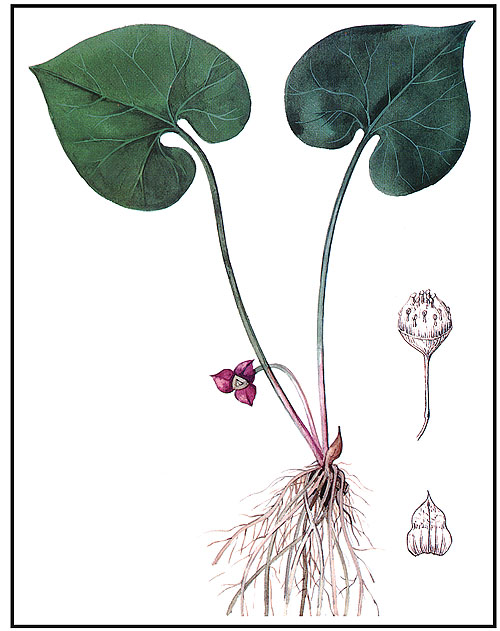 Since 1990 the U.S. Food and Drug Administration (FDA) has issued warnings about botanical products and dietary supplements containing aristolochic acid.
Now, The Lancet reports a 30 year-old Chinese man who was diagnosed with a bladder tumor after taking the Chinese herb Longdan Xieganwan for at least 5 years. (Use this link if you are not a subscriber to The Lancet.)
The NCCAM view of CAM for fibromyalgia
The National Center for CAM (NCCAM) has summarized the state of the science. Continue reading The NCCAM view of CAM for fibromyalgia
Stress, heart disease, and what to do about it
Research published in the Archives of Internal Medicine shows that psychosocial factors, such as cynical distrust, chronic stress, and depression are associated with higher blood levels of C-reactive protein (associated with acute inflammatory reactions), interleukin-6 (stimulates an immune response to tissue damage), and fibrinogen (causes blood to clot).
All are related to an increased risk of heart disease.
What can we do about this?
Continue reading Stress, heart disease, and what to do about it