 Functional Ingredients reports that a California-based juice and smoothie manufacturer, Naked Juice, is selling “the first 100% juice smoothie with probiotics that aid in digestive and immune health.” Continue reading Can I interest you in a probiotic smoothie?
Category Archives: Pre, Pro, Synbiotics
Comparing probiotics to treat diarrhea
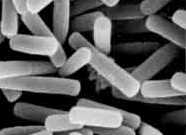 Not all commercially available probiotics are effective in children with acute diarrhea, according to this study from researchers at the University of Naples Federico II in Italy. Continue reading Comparing probiotics to treat diarrhea
High-dose probiotic + prebiotic to treat Crohn’s disease
Earlier study results have been inconsistent. In this study, researchers from Nippon Medical School in Tokyo use higher doses to treat active Crohn’s disease (CD). Continue reading High-dose probiotic + prebiotic to treat Crohn’s disease
Are you ready for probiotic chocolate?
 “We expect that the trend towards high-end [chocolate] products, especially those touting wellness benefits, will be the life force in this market for the next several years.”
That’s the conclusion from Tatjana Meerman, publisher of the report, The US Market for Chocolate.
What’s this got to do with probiotics? Continue reading Are you ready for probiotic chocolate?
Probiotics to treat and prevent bacterial vaginosis
The results using lactobacilli are mostly positive, but this is not the final word, based on a review of the medical literature by researchers at the Alfa Institute of Biomedical Sciences in Greece. Continue reading Probiotics to treat and prevent bacterial vaginosis
More positive results using probiotics to treat irritable bowel syndrome
Probiotics are now used by 35% to 40% of the US population routinely and with increasing frequency in patients with irritable bowel syndrome (IBS).
Dr. Brian Lacy from Dartmouth Medical School in New Hampshire reports on the latest probiotic research from the recent Digestive Diseases Week meeting. Continue reading More positive results using probiotics to treat irritable bowel syndrome
Caution when taking probiotics
There have been lots of posts on this blog about probiotics. None, however, on their safety.
Overall, they’re quite safe, but there is at least one group of patients where caution is advised. Continue reading Caution when taking probiotics
Moving to the next stage of research with probiotic treatment of diarrhea
Yes, probiotics are “generally regarded as safe,” say researchers from Vrije Universiteit Brussel in Belgium.
But although most studies show “statistical shortening of the duration of diarrhea,” evidence that the results are really beneficial to patients is missing.
Here’s what we know. Continue reading Moving to the next stage of research with probiotic treatment of diarrhea
Probiotics and lactoferrin improve treatment of gastritis and peptic ulcer
In about 25% of people, the usual triple drug therapy fails to kill the bacteria Helicobacter pylori — the cause of the inflamed stomach and ulcer.
In this study, triple drug therapy was complemented by a probiotic capsule (Probinul) and lactoferrin. Continue reading Probiotics and lactoferrin improve treatment of gastritis and peptic ulcer
Using probiotics to lessen diarrhea after radiation therapy
Radiation therapy can disturb bacterial colonies in the intestines and cause radiation-induced enteritis and colitis, leading to diarrhea in cancer patients.
In this study, researchers at the San Camillo Hospital in Rome, Italy used probiotics to reduce this complication. Continue reading Using probiotics to lessen diarrhea after radiation therapy
Probiotics to prevent traveler’s diarrhea
 Several were effective. Continue reading Probiotics to prevent traveler’s diarrhea
Probiotics effective in infants with enterocolitis
Necrotizing enterocolitis is a serious intestinal disorder. It affects 7% to 15% of very low-birth-weight (less than 1500-gram; 3.3 pound) infants. Death occurs in about 12 per 100,000 affected babies.
A review published in The Lancet concludes, “Probiotics might reduce the risk.” Although important questions remain. Continue reading Probiotics effective in infants with enterocolitis
Using synbiotics to lower infection rates in trauma patients
In this study of trauma patients at the University Medical Centre in Ljubljana, Slovenia, supplementing their diet with a synbiotic formula lead to fewer infections. Continue reading Using synbiotics to lower infection rates in trauma patients
Synbiotic 2000 fails to prevent a recurrence of Crohn’s disease following surgery
Complications of Crohn’s disease (CD) lead to surgery in 70% to 90% of patients, and most of them experience a relapse.
Synbiotic 2000 consists of a mixture of probiotics and prebiotics. The rationale for its use in this study was to alter the bacteria in the colon and hopefully lower the CD relapse rate after surgery. Continue reading Synbiotic 2000 fails to prevent a recurrence of Crohn’s disease following surgery
Probiotics: A research priority for urological care
The Ontario Neurotrauma Foundation asked experts from Canada and the United States to establish research priorities in the area of urological care following spinal cord injury (SCI).
Among their 5 priorities was the recommendation to study the value of probiotics to control the growth of bacteria and treat infections in the urinary tract.
Continue reading Probiotics: A research priority for urological care
Comments from our readers
Wow, I’m actually getting comments to my posts! Does that mean the site is getting popular, or that I’m in need of correction?
You be the judge.
Trying to treat stomach infections with probiotics
 Helicobacter pylori is a common infection of the stomach. Although most people have no symptoms, it’s related to the development of ulcers and is probably related to cancers involving the stomach.
Currently, H pylori infection is treated with a proton pump inhibitor plus two antibiotics — called triple therapy. Adding a probiotic food to triple therapy does not appear to help eliminate this bacteria in children.
Continue reading Trying to treat stomach infections with probiotics
Probiotic fails to produce a major change in serum lipids
There’s lots of interest in probiotics, so I guess it’s not surprising to see if Lactobacillus fermentum lowers LDL (bad) cholesterol levels.
Unfortunately, there’s no effect. More info here if you’re interested.
12/24/06 21:19 JR
Experience with a synbiotic formula in critically ill trauma patients
A study from the University of Thessaloniki in Greece reports that administering a synbiotic formula has beneficial effects in critically ill trauma patients.
Continue reading Experience with a synbiotic formula in critically ill trauma patients
Probiotics and early studies of abdominal pain control
Animal studies are usually too early in the drug development process to be of interest to this blog, but here’s an interesting study in the news.
Continue reading Probiotics and early studies of abdominal pain control