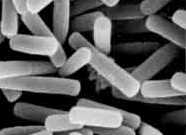
 Probiotics have been studied to prevent recurrences of vulvovaginal candidiasis (VVC).
Despite mixed reports on their effectiveness probiotics might have a role under limited circumstances.
Probiotics have been studied to prevent recurrences of vulvovaginal candidiasis (VVC).
Despite mixed reports on their effectiveness probiotics might have a role under limited circumstances.
 Seven out of 22 products tested had fewer viable organisms than claimed or generally known to be effective. And product was even contaminated with mold!
Continue reading Caution: Probiotic products often contain insufficient probiotics
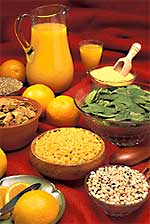 Functional Foods & Nutraceuticals has looked into the future and sees … new functional foods and nutraceuticals, of course.
Examples
Continue reading New calorie-burning and satiety foods for 2007
 Here are the highlights of the discussion on traditional Chinese medicine (TCM) and probiotics during the recent American College of Allergy, Asthma and Immunology meeting, thanks to Medical News Today.
Continue reading Status of TCM and probiotics to treat asthma
 Confections are not viewed as products you use to get health benefits.
Substituting non-caloric sweeteners makes candy less bad for you. But we’re interested in making candy healthy.
Continue reading Using prebiotics to improve the health benefits of candy
 Pouchitis? In people who require an ileostomy, surgeons can use the intestines to create a “pouch” (as shown in the drawing) to store stool and decrease the frequency of passing fecal material through the opening. The pouch eliminates the need for an external bag to collect the feces. The Mayo Clinic has a nice review.
What?s the role of probiotics?
 For the first time prebiotics lowered the risk atopic dermatitis in a high-risk population of infants.
More than 200 infants at risk for atopy (an allergy involving an inherited immunoglobulin of the IgE type) took part in the study. Those on bottle-feeding were randomly assigned to a prebiotic formula (a mixture of galacto- and long chain fructo-oligosaccharides) or maltodextrine as placebo.
Continue reading A prebiotic reduces the incidence of atopic dermatitis in high-risk infants
There have been lots of posts here on probiotics and their effects in a wide range of infections of the GI tract. Probiotics are an appealing concept given their favorable safety profiles.
Now, a summary of clinical trials has been published.
Here are the findings.
Continue reading Current status of probiotics to treat gastrointestinal infections
It’s not merely a matter of “the more the merrier” for therapeutic probiotic bacteria.
Preliminary evidence reported here and here supports the value of the probiotics Bifidobacterium infantis 35624 in treating irritable bowel syndrome (IBS). Now, a study in more than 350 women with IBS reports that the dose of B infantis 35624 has an effect on the ability to improve symptoms.
Continue reading The importance of proper dosing of probiotics
So many posts on probiotics have been written here that I made it a separate subcategory of entries.
Another site for information on probiotics and the intestines can be found here.
GutFlora.org is “a general and independent website for the advancement and dissemination of the knowledge about probiotics.”
Is that specialized enough for ya?
Illustration: Flora
9/29/06 15:28 JR
 Two companies in Germany, BASF and Organo Balance, are collaborating to develop products based on probiotics that, if successful, could be marketed to improve dental hygiene.
Here are the details.
Continue reading More probiotics being developed to prevent tooth decay
Probiotics reduce cholesterol absorption and increase cholesterol excretion. But it’s unclear if the effect has significance for patients with hypercholesterolemia.
 Soon to be on shelves of pharmacies and health food stores in the U.S. is a probiotic-multivitamin that contains three different probiotic strains, as well as vitamins and minerals. The probiotics are Lactobacillus gasseri PA 16/8, Bifidobacterium bifidum MF 20/5, Bifidobacterium longum SP 07/3.
The tablet has a protective coating for better tolerability, and the press release claims that “Multibionta Probiotic Multivitamin reduced the duration and severity of common cold symptoms by up to two days compared to taking a multivitamin alone.”
I couldn’t find that study on PubMed, but here are some considerations for the daily use of a probiotic.
 The term prebiotic was defined earlier here. Now, let’s look at the results from a short-term and long-term study where germinated barley foodstuff (GBF) was used as a prebiotic to treat ulcerative colitis (UC).
Continue reading Germinated barley: prebiotic treatment of ulcerative colitis
A growing list of products designed to improve dental health are being studied and marketed. Much of the interest is in Scandinavia. Less is shown in the U.S. at this time.
Here are the results of studies that have assessed the value of adding the probiotic Lactobacillus rhamnosus or Lactobacillus reuteri to the diet or personal dental hygiene regimens. The objective was to reduce dental caries or at least change some of the factors that increase the risk of tooth decay.
In women with irritable bowel syndrome (IBS), Bifidobacterium infantis 35624 at a dose of 1×10(8) cfu (colony forming units) is significantly better than placebo and other doses of bifidobacterium for controlling abdominal pain, bloating, bowel dysfunction, incomplete evacuation, straining, and the passage of gas. These are the findings from a study published last month in the American Journal of Gastroenterology. A nice review of the results is here.
Here is some background on Bifidobacterium infantis.
Continue reading Bifidobacterium infantis 35624 and the irritable bowel syndrome