A literature review by Dr. Guy Faulkner from the University of Toronto reveals that adding exercise to standard care (counseling and/or nicotine replacement therapy) increases short-term smoking abstinence.
Unfortunately, the evidence is not good for long-term abstinence. A Cochrane review concluded, “only one of 11 trials offered evidence for exercise aiding smoking cessation at a 12-month follow up.”
The Washington Postreports, “U.S. commercial supplies of long-grain rice [were] inadvertently contaminated with a genetically engineered (GE) variety not approved for human consumption.” There’s nothing new here. The group, Californians for GE-Free Agriculture has chronicled a series of these events.
The problem is that those who plant GE crops are supposed to keep the stuff in their own fields and products and not let it mix with other non-GE foods.
The International Council on Active Aging and AARP will sponsor Active Aging Week, September 25th to October 1st.
I mention it because one of the sponsors offers a locator for “age-friendly” fitness centers. It’s designed to help people over 50 find a gym or a health club. It’s unclear what they do to make themselves “age-friendly,” however.
European bilberry and its close relative blueberry have been a popular symptomatic treatment for a variety of eye disorders. Bilberry fruit and its extracts contain a number of biologically active components, including a class of compounds called anthocyanosides.
But is bilberry (or blueberry) effective for age-related macular degeneration (AMD) in humans?
“Facial restoration” might not be your typical form of complementary medicine, but for aging adults, as well as people with HIV/AIDS or diabetes, an enhanced appearance provides a psychological edge that may lead to positive thoughts and actions.
The fact is that real or perceived physical unattractiveness can result in insecurity, anxiety, and fear. It can alter intimate relationships and social interactions. It can even extract a “plainness penalty” in the labor market.
In July, two studies in well-respected ophthalmology journals came to different conclusions on this topic.
First, the good news. Then, the not so good news. Finally, news you can use.
Harvard researchers concluded that increased intake of fish reduced the risk of age-related macular degeneration (AMD) — particularly for 2 or more servings per week. Also, higher intake of dietary omega-3 fatty acid was associated with a lower risk of AMD. The study population came from the National Research Council World War II Veteran Twin Registry.
Contrary to this, researchers from the University of Ottawa reviewed 6 studies and concluded that the results were inconsistent and they couldn’t say for sure.
Nattokinase is promoted as a safe anticlotting agent. An email I received this morning described it as perhaps “among the most powerful of all methods to improve your heart health.” The source of nattokinase is natto, a vegetable cheese-like food made from fermented soybeans.
The story is similar to other “miracle” treatments from the orient ? except for the part about the horses. The Japanese have eaten natto for a thousand years. They have a lower prevalence of heart disease. And western drugs are poison.
Oops, I almost forgot. “Ancient Samurai … fed it to their horses to increase their speed and strength.”
Perhaps you’ve read the recent articles on the risks of eating bacon and hot dogs. A review published this month in the Journal of the National Cancer Institute concludes, “Increased consumption of processed meat is associated with an increased risk of stomach cancer.”
It also concludes, “the possibility that the association may be confounded or modified by other factors cannot be ruled out.”
Probiotics reduce cholesterol absorption and increase cholesterol excretion. But it’s unclear if the effect has significance for patients with hypercholesterolemia.
Here is another in an endless string of publications reporting associations between a lifestyle parameter and disease. This study of more than 125,000 patients published in the Archives of Internal Medicine concluded that there might be “an ingredient in coffee that protects against cirrhosis, especially alcoholic cirrhosis.” Furthermore, the absence of a relation of tea drinking to cirrhosis suggests that the relation is less likely due to caffeine than to some other coffee ingredient.”
Here is the take home message from this study. The authors concluded there are no clear therapeutic implications based on these findings. Even if coffee is protective, the primary approach to reduction of alcoholic cirrhosis is avoidance or cessation of heavy alcohol drinking.”
Soon to be on shelves of pharmacies and health food stores in the U.S. is a probiotic-multivitamin that contains three different probiotic strains, as well as vitamins and minerals. The probiotics are Lactobacillus gasseri PA 16/8, Bifidobacterium bifidum MF 20/5, Bifidobacterium longum SP 07/3.
The tablet has a protective coating for better tolerability, and the press release claims that “Multibionta Probiotic Multivitamin reduced the duration and severity of common cold symptoms by up to two days compared to taking a multivitamin alone.”
I couldn’t find that study on PubMed, but here are some considerations for the daily use of a probiotic.
CancerBlog reports that Starchild Abraham Cherrix, a 16-year-old cancer patient, will be permitted to avoid a second round of cancer treatment in favor of CAM. The court ruled that a board-certified radiation oncologist of his choice who is interested in alternative treatments must treat him.
The young man is taking the Hoxsey method, an herbal treatment that is illegal in the United States but can be obtained in Mexico.
Abraham got his legal victory. What he really needs is a medical victory. Don’t bet the farm on Hoxsey.
Dr. Wallace Sampson rants on about traditional Chinese medicine (TCM) in the latest video editorial at Medscape. With so much going on in medicine today, why does Medscape use valuable bandwidth to restate, and promote his well-known disregard for CAM?
Is Medscape CAMophobic? Why would this organization allow Dr. Sampson to state that TCM is worthless because it was “developed in a tradition of an authoritarian culture?”
Global biotech crop acreage grew to 222 million acres in 2005 from 7 million in 1996. Except for this, and the growth of anti-genetically modified (GM) foods websites, not much has changed pro or con.
The hyperbole continues. Last Sunday protesters damaged two GM maize testing fields in France. A few days earlier, Greenpeace activists chopped a giant cross through the maize. In case you don’t get the message, that’s the universal danger sign for “contamination.”
For some perspective, here is an article I wrote 6 years ago.
WebMD and CBS News (which uses WebMD news releases) used a little common sense when summarizing the results of a new study on transcendental meditation (T M). The article appears in the August issue of NeuroReport.
The term prebiotic was defined earlier here. Now, let’s look at the results from a short-term and long-term study where germinated barley foodstuff (GBF) was used as a prebiotic to treat ulcerative colitis (UC).
A growing list of products designed to improve dental health are being studied and marketed. Much of the interest is in Scandinavia. Less is shown in the U.S. at this time.
Here are the results of studies that have assessed the value of adding the probiotic Lactobacillus rhamnosus or Lactobacillusreuteri to the diet or personal dental hygiene regimens. The objective was to reduce dental caries or at least change some of the factors that increase the risk of tooth decay.
Repetitive transcranial magnetic stimulation (rTMS) as treatment for depression shows statistically significant effects. However, the clinical significance of these effects has been questioned.
 A literature review by Dr. Guy Faulkner from the University of Toronto reveals that adding exercise to standard care (counseling and/or nicotine replacement therapy) increases short-term smoking abstinence.
 The Washington Post
 The International Council on Active Aging and AARP will
 European bilberry and its close relative blueberry have been a popular symptomatic treatment for a variety of eye disorders. Bilberry fruit and its extracts contain a number of biologically active components, including a class of compounds called anthocyanosides.
 “Facial restoration” might not be your typical form of complementary medicine, but for aging adults, as well as people with HIV/AIDS or diabetes, an enhanced appearance provides a psychological edge that may lead to positive thoughts and actions.
 In July, two studies in well-respected ophthalmology journals came to different conclusions on this topic.
 Nattokinase is promoted as a safe anticlotting agent. An email I received this morning described it as perhaps “among the most powerful of all methods to improve your heart health.” The source of nattokinase is natto, a vegetable cheese-like food made from fermented soybeans.
 Perhaps you’ve read the recent articles on the risks of eating bacon and hot dogs. A review
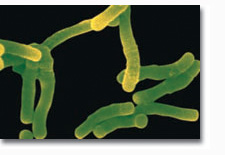 Probiotics
 Here is another in an endless string of publications reporting associations between a lifestyle parameter and disease. This
 Soon to be on shelves of pharmacies and health food stores in the U.S. is a probiotic-multivitamin that contains three different probiotic strains, as well as vitamins and minerals. The probiotics are Lactobacillus gasseri PA 16/8, Bifidobacterium bifidum MF 20/5, Bifidobacterium longum SP 07/3.
 CancerBlog
 Dr. Wallace Sampson rants on about traditional Chinese medicine (TCM) in the latest video
 Global biotech crop acreage

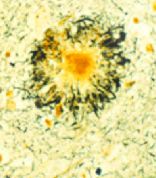 Results from two new studies advance the relationship between diet and Alzheimer’s disease (AD).
 The term prebiotic was defined earlier
 A growing list of products designed to improve dental health are being studied and marketed. Much of the interest is in Scandinavia. Less is shown in the U.S. at this time.
 Repetitive transcranial magnetic stimulation (rTMS) as treatment for depression shows statistically significant effects. However, the clinical significance of these effects has been questioned.