The New York Times Magazinepublished a travelogue by a San Francisco woman who spent time In India as an “ayurveda tourist.” The goal of the trip was to “immerse [herself] in ayurveda, the 3,500-year-old herb-based healing tradition that still flourishes in the daily life of India.”
As might be expected of a San Franciscan writing in NYT, she managed to insert a dig at Dick Cheney, but not once in 2900 words mentions the problem of lead poisoning associated with ayurvedic medicines.
Making the rounds this morning is a Newswire release from MD Anderson Cancer Center about Cherie Perez. She’s a research nurse who teaches aromatherapy to cancer patients during their treatment at the Cancer Center. You can read it here.
Since my background is based in traditional medicine, the involvement of this prestigious medical center sparks my interest to learn more about aromatherapy. I start by looking for structure.
It turns out, there are lots of ways to use oils.
Here, from Psychology Today are the five common types of aromatherapy.
In the Polarity model, “health is experienced when energy systems function in their natural state,” according to the “American Polarity Therapy Association (APTA).
Sounds good. And in a study of 15 women undergoing radiation therapy for breast cancer there was a statistically significant improvement in cancer-related fatigue and health-related quality of life.
The Washington Post has an article this morning on the garish state of cereal box design. It got me thinking inside the box.
The United States has the fourth highest per capita consumption of cereal in the world (behind Ireland, England, and Australia). Each year, more than 90% of U.S. households purchase cold cereal. That’s about 10 pounds, or 160 bowls, of cereal eaten per person each year!
Two studies published this summer showed positive health effects of curry. One looked at brain function, the other at the colon.
First, the brain.
Mini-Mental State Examination (MMSE) scores were compared among 1010 elderly Asians, aged 60 to 93 years. The MMSE is used to determine the extent of dementia in adults. The results of the test were then compared to categories of curry consumption: “often” (more than once a month), “occasionally” (once or more in 6 months but less than once a month), and “never or rarely.”
The INTERHEART study reviewed case histories from more than 27,000 people in 52 countries. They found that tobacco use in any form, including sheesha smoking, beedie smoking, chewing tobacco, and secondhand smoke is harmful to your health.
Chinese cotton growers were among the first farmers to plant genetically modified (GM) cotton to resist bollworms (photo). Now, the substantial profits they reaped for several years by saving on pesticides have eroded.
The reason, according to Cornell University researchers is that other pests are attacking the GM cotton.
In a previous post I reviewed policosanol, which can lower LDL (bad) cholesterol levels by 20% to 30%.
The source of policosanol seems to influence its activity, with Cuban sugar cane-based policosanol being most effective. It’s available on the Internet and in stores. In fact, One-A-Day Cholesterol Plus contains sugar cane-based policosanol.
Now, a study conducted at the University of Kentucky College of Pharmacy shows how it works.
An article in Yoga Journalstates, “Some yogis eschew the use of all caffeine, while others adopt a policy of moderate consumption. Caffeine can temporarily enliven the body, but dependence on it could hinder your yoga practice.”
For those who want to stop using caffeine-containing products, the article recommends adding Yogi tea or specific medicinal herbs to your diet to help ease the transition.
I have no idea if any of this stuff helps. It is clear however, that caffeine withdrawal is well documented and is included in DSM-IV-TR (the 4th text revision of Diagnostic and Statistical Manual of Mental Disorders), considered the bible of mental disorders.
Here are details of the caffeine withdrawal symptoms.
The latest issue of Functional Foods & Nutraceuticalsreports that Australia is considering using a “traffic light” nutrient-labeling system similar to that used in the U.K.
It tells consumers at a glance if food contains high (red), medium (orange), or low (green) levels of sugar, salt, fat, and saturated fat.”
Calcium intake in North America is substantially below recommended amounts. Now, bottlers of water think they have the solution. And they have a study for support.
A literature review concludes that calcium that is adding to mineral water is absorbed the same as in milk. Then, the body handles the calcium the same way.
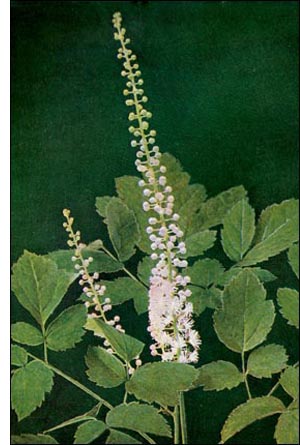
This site has followed the growing safety concerns over black cohosh here and here.
Now, The Medicines and Healthcare Products Regulatory Agency of the U.K. will issue new labeling regulations with warnings. And the European Medicines Agency (EMEA) and its Committee on Herbal Medicinal Products have issued a public statement that warns of the potential connection between herbal medicinal products containing black cohosh root (Cimicifugae racemosae rhizome) and hepatotoxicity.
There is no well-established dose of coenzyme Q10. One review listed a range of doses from 75 mg to 360 mg per day to treat high blood pressure. And the suggested doses for other conditions fall within this range.
In Japan, the medicinal dosage of CoQ10 is 30 mg/day, but it’s more commonly taken as a dietary supplement at 100 mg to 200 mg daily.
For the past year Japan’s Ministry of Health, Labour and Welfare has worked to get control of this situation. In the absence of sufficient dosing data, the following actions are likely to be implemented.
Require manufacturers and distributors to confirm the safety of the dose in long-term use
Provide consumers with relevant warnings or cautions
The food and supplements ingredients market will grow by 5.8% annually to $15.5 billion in 2010, according to new research from Ohio-based analyst The Freedonia Group.
“However, because of outsourcing trends, the US will relinquish its longstanding top position in the global production of nutraceutical ingredients to China within the next few years.”
Two thoughts on this.
Considering the growth and size of this market, isn’t it time to insist on large scale clinical trials to prove their worth?
Considering the lack of quality control in the chinese herbals industry, does this mean we can look forward to poorer quality controls and greater contaminants?
Here’s a quote to consider. “From beta-blockers to magnesium [Mg], — serendipity has guided migraine research. We may seem to have come a long way but migraine therapeutics, particularly preventive or prophylactic therapy, remains purely empirical.”
OK, what is the status of using magnesium to prevent migraine?
A couple of weeks ago I posted general considerations for stopping smoking. A couple of hours ago I posted on exercise and smoking cessation. Let’s round out the topic with acupuncture and smoking cessation.
The bottom line. The literature does not support using acupuncture (or acupressure, laser therapy, and electrostimulation) in this way. There are just too many problems in the design and implementation of the studies to permit reliable conclusions.
The American Cancer Society agrees with this conclusion, but let’s look at one studyreviewed by the American Cancer Society.
 The New York Times Magazine published a travelogue by a San Francisco woman who spent time In India as an “ayurveda tourist.” The goal of the trip was to “immerse [herself] in ayurveda, the 3,500-year-old herb-based healing tradition that still flourishes in the daily life of India.”
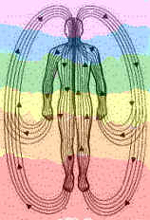 Polarity is one of many new age holistic health
 Making the rounds this morning is a Newswire release from MD Anderson Cancer Center about Cherie Perez. She’s a research nurse who teaches aromatherapy to cancer patients during their treatment at the Cancer Center. You can read it
 The Washington Post has an
 Two studies published this summer showed positive health effects of curry. One looked at brain function, the other at the colon.
 The INTERHEART study reviewed case histories from more than 27,000 people in 52 countries. They
 Chinese cotton growers were among the first farmers to plant genetically modified (GM) cotton to resist bollworms (photo). Now, the substantial profits they reaped for several years by saving on pesticides have eroded.
 In a previous post I
 Thinking of starting yoga? Can’t get past the jargon? Maybe this will help.
 An article in Yoga Journal
 The latest issue of Functional Foods & Nutraceuticals
 Calcium intake in North America is substantially below recommended amounts. Now, bottlers of water think they have the solution. And they have a study for support.
 This site has followed the growing safety concerns over black cohosh
 There is no well-established dose of coenzyme Q10. One review listed a range of doses from 75 mg to 360 mg per day to treat high blood pressure. And the suggested doses for other conditions fall within this range.
 The food and supplements ingredients market will grow by 5.8% annually to $15.5 billion in 2010, according to new
 Intravenous