A study of 61,000 adult women in Sweden reports that eating fatty fish lowers a woman’s risk of kidney cancer. Fatty fish included salmon, herring, sardines, and mackerel. Lean fish included cod, tuna, and sweet water fish.
A previous post reported the American Heart Association’s (AHA) position that soy as a dietary factor has unproven or uncertain effects on cardiovascular disease.
Now, a review of 42 well-designed clinical trials from 1982 through 2004 reports the following positive effects about soy.
Here’s a report on dietary calcium from the 2006 International Osteoporosis Foundation meeting in Toronto. (You can download the abstract book and go to abstract P696MO.)
Among 183 healthy postmenopausal Caucasian women, those who took just dietary calcium, or a combination of dietary calcium with supplements, showed better effects on bone as measured by bone mineral density (BMD) than people who took calcium supplements alone.
A 5-year study in postmenopausal women has shown that taking 1 gram per day of calcium citrate has a positive effect on bone in postmenopausal women.
These results support an earlier study where taking at least 1.7 grams of calcium citrate daily had a protective on bone in postmenopausal women who were not also taking hormone therapy. However, calcium supplements don’t seem to reduce hip fracture. And there is an increased risk of kidney stones.
Of course, in order to get any benefits, you have to take the treatment. And that’s a challenge for many women.
About 4 out of 10 women stop taking their calcium tablets. Perhaps it’s time to place greater emphasis on dietary sources of calcium?
Dr. Patricia Grimm practices nursing as a psychiatric consultation liaison at the St. Joseph Medical Center in Towson, Maryland. A few years ago I interviewed her, and she provided useful insight into the value and contributions of massage in healthcare.
If you are skeptical of the contribution of massage to healthcare, or if you are just looking for a well-reasoned rationale for massage, go here to read the complete article.
A recent post here summarized the risks associated with lead blood levels. It’s more toxic than was previously believed. And if you take Ayurvedic medicine, it’s important to be aware of the risks you are exposed to.
In addition to Ayurvedic medicines, certain traditional or folk medications used in East Indian, Middle Eastern, West Asian, and Hispanic cultures contain lead. The “logic” supporting the addition of lead to medicine was summarized in an earlier post.
Now it’s reported that lead is more toxic than we thought. People with lead blood levels well below those previously considered safe (less than 10 mcg/dL) are at increased risk for heart attack and stroke.
A previous post summarized the favorable results from a study of the probiotic, Bifidobacterium infantis 35624 in patients with irritable bowel syndrome (IBS). Medscape has a review of IBS that includes a favorable assessment of the role of Bifidobacterium infantis 35624.
The author, Dr. Philip Schoenfeld from the University of Michigan concludes that tegaserod (Zelnorm) is the treatment of choice.
His thoughts regarding Bifidobacterium infantis 35624.
Two companies in Germany, BASF and Organo Balance, are collaborating to develop products based on probiotics that, if successful, could be marketed to improve dental hygiene.
In an earlier post, the effectiveness of butterbur (Ze 339) was reviewed and found to be as effective as the antihistamines, citirizine (Zyrtec) and fexofenadine (Allegra) to treat the runny nose; sneezing; congestion; and irritation in the nose, eyes, throat, and ears associated with allergic rhinitis.
Now, here are the results of a survey of 580 patients with seasonal allergic rhinitis treated with an average of 2 tablets of Ze 339 daily for 2 weeks.
When sunscreen is applied, its UV filters reduce the amount of UV radiation that penetrates the skin. Over time however, the filters themselves penetrate below the surface of the outer layer of skin, leaving the body vulnerable to UV radiation.
In fact, when commonly used sunscreens (octylmethoxycinnamate, benzophenone-3 and octocrylene) are abasorbed, they actually generate reactive oxygen species (ROS) that cause oxidative damage. This leads to skin damage and increases in the visible signs of aging, according to researchers at the University of California, Riverside.
In people with type 2 diabetes (sometimes call non-insulin dependent diabetes), psychological therapy (ie, counseling, cognitive behavior therapy, or psychodynamic therapy) contributes to improved long-term diabetes control and psychological distress. But it doesn’t seem to help with weight control or blood glucose concentrations.
A review of published clinical trials in patients with type 1 (insulin dependent) diabetes concludes that psychological treatments can improve blood sugar control in children and adolescents. Success in adults is another matter, however.
“The main voices in favor of DHEA as a miracle drug are those who are selling it or who make a good living selling books or programs advocating ‘natural cures’.” That’s the conclusion from the Skeptics Dictionary. But look for yourself, and you will agree.
Here is another reason to be skeptical of DHEA [dehydroepiandrosterone].
Johrei (pronounced Jo-ray) is a non-touch healing method similar to reiki. It involves channeling of “universal healing energy” to influence the health of another person. Three studies in the past 15 months have attempted to correlate subjective changes with other objective outcomes.
Smart dietary habits are associated with reduced rates of heart attack, cancer, stroke, diabetes, and hypertension. Medscape has published a series of reviews with recommendations.
The bottom line?
Unhealthy diet contributes to 7 of the top 10 causes of death in the U.S.
Healthy dietary choices reduce the rates of many diseases
The benefits from a positive lifestyle could add up to 10 years to your life
No dosage of dietary supplements containing ephedrine alkaloids is safe, and the sale of these products in the United States is illegal and subject to FDA enforcement action.
This ruling by the Court of Appeals for the Tenth Circuit in Denver overrules an earlier decision by the District Court in Utah.
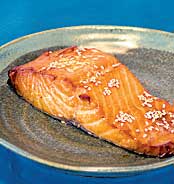 A study of 61,000 adult women in Sweden reports that eating fatty fish lowers a woman’s risk of kidney cancer. Fatty fish included salmon, herring, sardines, and mackerel. Lean fish included cod, tuna, and sweet water fish.
 A previous
 Here’s a
 Dr. Patricia Grimm practices nursing as a psychiatric consultation liaison at the St. Joseph Medical Center in Towson, Maryland. A few years ago I interviewed her, and she provided useful insight into the value and contributions of massage in healthcare.
 A recent post
 A previous
 In
 Two companies in Germany, BASF and Organo Balance, are collaborating to develop products based on probiotics that, if successful, could be marketed to improve dental hygiene.
 Two studies published in the British Medical Journal provide a little more support for using acupuncture to treat chronic low back pain.
 When sunscreen is applied, its UV filters reduce the amount of UV radiation that penetrates the skin. Over time however, the filters themselves penetrate below the surface of the outer layer of skin, leaving the body vulnerable to UV radiation.
 AARP has a nice
 Johrei (pronounced Jo-ray) is a non-touch healing
 Smart dietary habits are associated with reduced rates of heart attack, cancer, stroke, diabetes, and hypertension. Medscape has