The Oncology Nursing Society has posted a table that summarizes CAM studies on the treatment of nausea and vomiting in cancer patients. The studies were published between 1988 and 2005.
The average person consumes 25 to 50 mg of quercetin a day. In this double-blind study, 20 cyclists took 1,000 mg of quercetin a day or placebo for five weeks.
In her book,The Natural History of Medicinal Plants, Dr. Judith Sumner states, “Now, about 40% of all medicinal prescriptions in the United States contain at least one plant-derived ingredient, and European physicians routinely recommend to their patients herbs such as chamomile and coneflower.”
Here’s a report from India that gives insight into the extensive work being done by just one group of researchers to identify new drugs from plants.
These researchers observed an association between anxiety disorders and substance abuse. They also observed that substance abusers tend to have poor dietary habits.
Arnica (Arnica montana) is used in herbal medicine for relief of bruises, stiffness, and muscle soreness.
Here’s a study that looked at the potential for homeopathic arnica to reduce swelling and pain following 3 different operations in patients who required knee surgery.
The details.
Prior to surgery, 300 patients were given a homeopathic dilution of arnica or placebo.
300 patients received one of 3 operations (arthroscopy, artificial knee joint implantation, and cruciate ligament reconstruction).
More arnica (or placebo) was given after surgery.
The researchers used knee circumference as the measure of arnica’s effectiveness.
When measured 2 days following surgery, significantly less swelling was seen only in the 57 patients who had the cruciate ligament reconstruction.
It’s not clear to me why it worked in one group but not in the other two.
Using soy foods to replace foods high in animal protein that contain fat and cholesterol might help improve cholesterol levels and confer benefits to cardiovascular health in postmenopausal women.
Lipids Online has a good summary of a study just published in the journal, Menopause.
In one California fertility clinic acupuncture is standard therapy for 85% of women. Now, three clinical trials published this year report an improved rate of pregnancy among women undergoing in vitro fertilization and acupuncture.
The Physicians’ Information and Education Resource (PIER) was developed by the American College of Physicians (ACP). It includes tools designed by the Ambulatory Care Quality Alliance (AQA) that are intended to help improve preventive health services and patient outcomes in asthma, coronary artery disease, diabetes, depression, falls, and heart failure.
Interestingly, the PIER modules include information on CAM, as well as ethical and legal issues, and procedures for screening and prevention. PIER is available online to members of the American College of Physicians. This is good because attention to CAM by ACP enhances its perceived worth among its members.
Policosanol is available in the United States as a nutritional supplement with claims that it lowers cholesterol levels. It has been covered extensively on this blog.
With the increase in combination therapy to control hypercholesterolemia, its now been tried and failed when used in combination with atorvastatin (Lipitor).
There’s really not enough evidence to be certain of the risk to benefit ratio in elderly patients. But what is known is summarized in a Cochrane review.
Generalized anxiety disorder (GAD) is characterized by chronic anxiety and exaggerated worry and tension even when there is little or nothing to provoke it.
Based on the results of clinical studies, psychological therapy based on cognitive behavioral therapy (CBT) principles is effective treatment for (GAD) — at least short-term.
Agitated behavior occurs in nearly half of patients with dementia. It can be the difference between a person qualifying for different levels (and cost) of nursing home care.
The problem is that the nursing staff is limited in using drugs to control it.
Now, the results of a small study at the National Yang-Ming University in Taipei, Taiwan suggest that acupressure might be a useful alternative.
Did you know that when it debuted in 1911, Crisco, the queen (oops; sexist reference) of trans fat products, was hailed as a healthful alternative to butter and lard.
Times have changed, and Crisco has eliminated trans fats from its formula.
This doesn’t automatically mean it’s healthy. We’ll see if the change is for the better.
The American Medical Association (AMA) has adopted a resolution that promotes education of medical doctors and medical students on the “benefits, risks, and efficacy” of CAM.
Aquaculture supplies about one-third of the fish and shellfish sold today. Now, advances in this field are making aquaculturists more sensitive to the welfare of farmed fish in their final days and the potential for stress to exert an adverse effect on the quality of seafood.
A recent study in The Lancet medical journal found that over the long term, it appears that taking folic acid improves cognitive function (eg, perception, memory, judgment, and reasoning) in older adults.
 The Oncology Nursing Society has posted a table that summarizes CAM studies on the treatment of nausea and vomiting in cancer patients. The studies were published between 1988 and 2005.
 Quercetin
 s?
 In her
 Medical students have a long-standing interest in learning more about CAM.
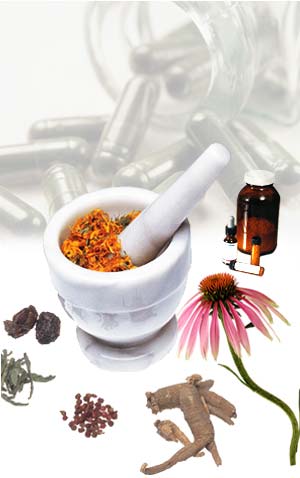 Researchers from the department of complementary medicine at the University of Exeter in the UK evaluated the results of 91 studies.
 Revista Brasileira de Psiquiatria has an exhaustive
 These researchers
 Arnica (Arnica montana) is used in herbal medicine for relief of bruises, stiffness, and muscle soreness.
 Using soy foods to replace foods high in animal protein that contain fat and cholesterol might help improve cholesterol levels and confer benefits to cardiovascular health in postmenopausal women.
 In one California fertility
 The Physicians’ Information and Education Resource (
 Policosanol is available in the United States as a nutritional supplement with claims that it lowers cholesterol levels. It has been
 Agitated behavior occurs in nearly half of patients with dementia. It can be the difference between a person qualifying for different levels (and cost) of nursing home care.
 Did you know that when it debuted in 1911, Crisco, the queen (oops; sexist reference) of trans fat products, was
 The American Medical Association (AMA) has adopted a
 Aquaculture supplies about one-third of the fish and shellfish sold today. Now, advances in this field are making aquaculturists more sensitive to the welfare of farmed fish in their final days and the potential for stress to exert an adverse effect on the quality of seafood.
 A recent