 Reviewers from the Mayo Clinic are not ready to support any single CAM option, but some warrant further study, in their opinion. Continue reading Complementary therapies for cancer-related fatigue
A 3-step program to manage belonephobia
 Many people dislike needle-sticks. But once the fear becomes persistent, excessive, and unreasonable, it’s a phobia (belonephobia, needle-phobia, trypanophobia). Although not well recognized, belonephobia affects up to 10% of people.
In a Medscape article, Dr. Mary Muscari, who is Professor and Director of Forensic Health/Nursing at the University of Scranton in Pennsylvania, discusses the signs and symptoms, diagnosis, and treatments — which emphasize CAM. Continue reading A 3-step program to manage belonephobia
Using synbiotics to lower infection rates in trauma patients
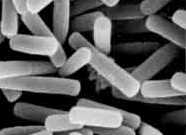 In this study of trauma patients at the University Medical Centre in Ljubljana, Slovenia, supplementing their diet with a synbiotic formula lead to fewer infections. Continue reading Using synbiotics to lower infection rates in trauma patients
Betel-quid use and heart disease
 About 600 million people chew betel-quid (Areca catechu). It’s one of the most widely used addictive substances (see map). Some believe that small doses generally lead to euphoria and increased flow of energy, while large doses result in sedation.
There are lots of chewers in Taiwan, so it’s not surprising that researchers at the Kaohsiung Medical University in Taiwan evaluated betel-quid use and its relation to heart disease. Continue reading Betel-quid use and heart disease
Is contaminated feed killing pigs in China?
Here’s an update to earlier posts about the pet food debacle. It’s relevance to CAM is that it points out (again) the endemic problem of quality control in the food industry in China, and by extension the risks that a lack of oversight and quality control pose to people who use traditional Chinese medicines.
The New York Times reports an epidemic is killing pigs in southeastern China. Continue reading Is contaminated feed killing pigs in China?
Consumer alert: Urat Madu
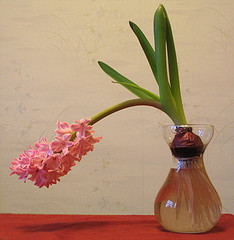 Health Canada advises consumers not to use this product due to concerns about possible side effects.
Urat Madu is a red capsule sold to treat erectile dysfunction (impotence). Continue reading Consumer alert: Urat Madu
Councilman requests city funding for Ayurvedic therapies
 Today, more than 400 firefighters and other 9/11 responders are taking 4 pills composed of up to 20 herbs twice a day. They claim to feel healthier than they did after undergoing Western remedies for their ailments.
Now, Councilman Michael McMahon is requesting funding of more than $200,000 from New York City to help pay for Ayurvedic therapies.
Now, there’s this… Continue reading Councilman requests city funding for Ayurvedic therapies
Arnica vs ibuprofen gel for arthritis pain
 Rubbing on arnica provides pain relief in people with osteoarthritis that affects their hands. Continue reading Arnica vs ibuprofen gel for arthritis pain
CAM options for symptom management in children with cancer
 Ms. Jennifer Rheingans is a nurse educator for pediatrics at Sarasota Memorial Hospital in Florida. In the Journal of Pediatric Oncology Nursing she reviews nonpharmacological therapies as a potential source of assistance for children with symptoms due to cancer treatment.
Symptoms and CAM options are listed below. Continue reading CAM options for symptom management in children with cancer
CAM options for acute low back pain
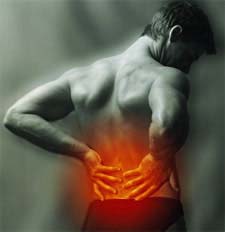 Dr. Scott Kinkade from University of Texas Southwestern Medical School in Dallas has reviewed all the options in American Family Physician.
Here’s a summary of his conclusions as they relate to CAM. Continue reading CAM options for acute low back pain
Worldwide implications of the pet food contamination debacle
I wrote about this last week. Specifically, how the exportation of contaminated ingredients from China that are used in pet food is only the tip of the iceberg. It affects CAM and mainstream medicine. And now The New York Times reports that this contamination is a world wide problem. Continue reading Worldwide implications of the pet food contamination debacle
How to apply the correct amount of sunscreen
 The correct dose of sun protection factor (SPF) as stated on a sunscreen bottle or tube is achieved if you apply 2 mg/cm2. Typically, consumers apply less than this — 0.5 to 1.5 mg/cm2 — which lowers the SPF to about one-third of that stated on the product.
Here’s a recommendation (page 5) to correct this underdosing. Continue reading How to apply the correct amount of sunscreen
MayoClinic.com reviews Airborne
 Dave in Minnesota writes, “Does it prevent colds?” Continue reading MayoClinic.com reviews Airborne
Biofeedback for fecal incontinence
 Earlier posts here, here, and here, discussed biofeedback and constipation. Here’s a study in people with incontinence where more than 70% demonstrated improvement.
The researchers start by telling us “biofeedback is well established as a treatment for fecal incontinence.” This study assessed short-term outcomes and predictors of treatment success.”
First the details.
- The researchers at the Royal Prince Alfred Hospital in Sydney, Australia reviewed 513 consecutive patients treated with biofeedback over 10 years.
And the results.
- Each outcome improved for more than 70% of patients.
- Incontinence scores decreased 32%.
- Quality of life improved by 89%.
- Maximum anal sphincter pressure increased 12 mmHg (14%).
Treatment success was more likely in women, older people, and people with more severe incontinence.
5/5/07 15:57 JR
Penn State goes nutty
A guy goes into the bar and orders a drink. Other than the bartender, there’s no one else in the place. Suddenly he hears a voice that says, “Nice suit.” Later, the same voice says, “Nice tie.” He finally asks the bartender if he just said something.
“No,” replies the bartender, “It was probably the peanuts. They’re complimentary.”
Medical News Today reports on 2 studies about nuts from Penn State University. Continue reading Penn State goes nutty
Acupuncture during lithotripsy
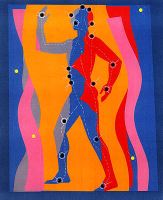 Lithotripsy is a medical procedure that uses shock waves to break up stones that form in the kidney, bladder, ureters, or gallbladder.
Researchers at Yale School of Medicine studied if the combination of auricular and body acupuncture might reduce the need for sedation during lithotripsy. Continue reading Acupuncture during lithotripsy
Going on the road to introduce Ayurveda to American medical students and physicians
A 12-hour course in Ayurveda is being offered to American medical students, residents, faculty, and practicing physicians. Continue reading Going on the road to introduce Ayurveda to American medical students and physicians
Reported lack of interaction between ginseng or ginkgo biloba and other drugs
Research reported during the latest meeting of the American Society for Pharmacology and Experimental Therapeutics concludes that these herbals do not place people at risk for certain types of drug interactions.
Here are the details. Continue reading Reported lack of interaction between ginseng or ginkgo biloba and other drugs
The rationale for yoga for weight reduction
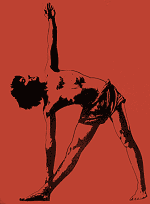 A telephone survey of more than 11,000 people revealed that about 3% had used CAM in the past 12 months for the purpose of losing weight.
Here are the most common CAM therapies. Continue reading The rationale for yoga for weight reduction
The world’s first clinical trial
 The website called Common Ground has an article about the Canadian healthcare system, CAM, and the Body Heals Conference, which will take place later this month.
As an intro, author Alan Cassels tells about the first clinical trial. Continue reading The world’s first clinical trial