Here are highlights from the 2006 conference of the American Society for Reproductive Medicine in New Orleans.
Writing in Medscape, Dr. Peter Kovacs from the Kaali Institute IVF Center in Budapest and the Albert Einstein College of Medicine in New York says, “Increasing numbers of patients ask about and/or turn to alternative medical solutions when traditional medicine fails.”
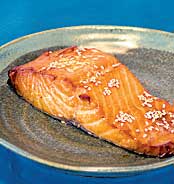
According to 2 studies summarized earlier, modifying the dietary intake of omega-3 and -6 fatty acids during early childhood does not change the risk of getting asthma later on.
Now, we have a study of fish, butter, and margarine consumption during pregnancy and development of allergy in the offspring.
An earlier entry cautioned about being overly enthusiastic about dehydroepiandrosterone (DHEA) as a miracle supplement. Now, we have evidence that it lacks any measurable anti-aging effect.
Dana Ullman (website here) disputes my statement in a recent post that there’s a dearth of evidence-based data in support of homeopathy. He suggested I review 3 articles on the treatment of childhood diarrhea.
An article in The Journal of the American Medical Association reports, “Efforts to increase or maintain free-living activity energy expenditure will likely improve the health of older adults.”
They actually correlate calories burned with longevity.
Using soy foods to replace foods high in animal protein that contain fat and cholesterol might help improve cholesterol levels and confer benefits to cardiovascular health in postmenopausal women.
Lipids Online has a good summary of a study just published in the journal, Menopause.
In one California fertility clinic acupuncture is standard therapy for 85% of women. Now, three clinical trials published this year report an improved rate of pregnancy among women undergoing in vitro fertilization and acupuncture.
There’s really not enough evidence to be certain of the risk to benefit ratio in elderly patients. But what is known is summarized in a Cochrane review.
Fibromyalgia is a pain syndrome caused by the brain’s inability to accurately interpret pain sensations due to the presence of psychosocial and behavioral factors. About 3.7 million adult Americans are afflicted. It primarily occurs in women of childbearing age, but children, the elderly, and men may also be affected.
Because of these psychosocial and behavioral factors, complementary treatments such as cognitive behavioral therapy (CBT) are recommended here and here to optimize treatment.
Capsicum (Cayenne) is a category of plants used as spices, vegetables, and medicines. Think chili pepper, red or green pepper, bell pepper, and paprika.
In this study, capsicum plaster was applied at a classical Chinese acupoint to lessen pain in infants and children following surgery.
The results of the Advanced Cognitive Training for Independent and Vital Elderly (ACTIVE) study were summarized here recently.
Now, Dr. Sally Shumaker, professor of public health sciences and associate dean for research at Wake Forest University Medical School, writes about the study’s implications in the Journal of the American Medical Association.
The FDA is cracking down on companies that sell quinine-containing products such as Qualaquin for non-approved uses. Their concern is over the risks of quinine to treat leg cramps.
 Here are highlights from the 2006 conference of the American Society for Reproductive Medicine in New Orleans.
 Remote access to patients with chronic heart failure (by telephone or telemonitoring) has a positive effect on health and wellbeing.
 According to 2 studies
 Infant formulas are designed to lower the chances of developing allergy or food intolerance.
 An earlier
 Dana Ullman (website
 An
 Using soy foods to replace foods high in animal protein that contain fat and cholesterol might help improve cholesterol levels and confer benefits to cardiovascular health in postmenopausal women.
 There’s really not enough evidence to be certain of the risk to benefit ratio in elderly patients. But what is known is summarized in a Cochrane
 Everybody is covering this
 Fibromyalgia is a pain syndrome caused by the brain’s inability to accurately interpret pain sensations due to the presence of psychosocial and behavioral factors. About 3.7 million adult Americans are afflicted. It primarily occurs in women of childbearing age, but children, the elderly, and men may also be affected.
 Capsicum (Cayenne) is a
 The results of the Advanced Cognitive Training for Independent and Vital Elderly (ACTIVE) study were summarized
 The message couldn’t be
 Here are the results of a
 The FDA is