SpineUniverse is “a collaborative effort of medical professionals to serve the community of individuals suffering from back pain.” Their editorial board includes more than 70 members, almost all of whom are medical doctors and no chiropractors.
As you’ll see, their conclusions regarding low back pain are not surprising. Compare them to the conclusions from a recent review by faculty and PhD candidates from the Department of Health and Chiropractic, Macquarie University, Australia.
Myalgia (muscle pain or tenderness) is the most common side effect of taking statins to treat high cholesterol blood levels. It’s also the biggest reason to lower the dose or stop treatment with these important drugs.
There’s some support that the muscle-related side effects of statins could be due to a statin-induced deficiency in coenzyme Q10.
Pain is the most common symptom of rheumatic disease (mostly arthritis) in children. This review on Medscape includes cognitive behavioral therapy (CBT) and physical therapy/exercise as complementary options to other, mostly pharmacological treatments.
Here’s a study of the effectiveness of usual mainstream medical care for acute low back pain with and without the option for patients to add acupuncture, chiropractic, or massage to their treatment.
It comes from the Division for Research and Education in Complementary and Integrative Medical Therapies at the Osher Institute in Boston.
Earlier posts on this topic here and here might leave readers with the impression that the scientific literature doesn’t support glucosamine to help treat osteoporosis.
Three criteria determine drug reimbursement decisions: therapeutic value, cost effectiveness, and burden of disease. Now, an article from Erasmus University in The Netherlands questions whether it’s sufficient for a drug to meet these criteria, and proposes a 4th hurdle.
My thought about this study is that considering the academic and research “pedigree” of the authors (ie, National Institute of Mental Health, National Center for Complementary and Alternative Medicine [NCCAM], National Institute for Dental and Craniofacial Research, and Columbia University), why did they settle for such a rudimentary study design?
A spray has been developed from the major components of marijuana (cannabis), including tetrahydrocannabinol (THC) and cannabidiol (CBD) in alcohol. The formulation is sprayed under the tongue or in the cheek to relieve pain in multiple sclerosis.
Swedish massage for 8 weeks improved pain, stiffness, physical function, walking, and range of motion in a study of 68 men and women with osteoarthritis (OA) .
Importantly, the improvement was sustained for 16 weeks.
 SpineUniverse is “a collaborative effort of medical professionals to serve the community of individuals suffering from back pain.” Their editorial board includes more than 70 members, almost all of whom are medical doctors and no chiropractors.
 Myalgia (muscle pain or tenderness) is the most common side effect of taking statins to treat high cholesterol blood levels. It’s also the biggest reason to lower the dose or stop treatment with these important drugs.
 This
 Neither treatment appreciably reduced the number of days until recovery according to this
 Pain is the most common symptom of rheumatic disease (mostly arthritis) in children. This
 Here’s a
 According to a study presented at the American Society of Anesthesiologists 2007 Annual Meeting, about 1 in 4 people with chronic pain also have inadequate blood levels of vitamin D.
 Earlier posts on this topic
 Exposure to a familiar odor was associated with less crying.
 This
 Why do CAM journals publish useless studies?
 Three criteria determine drug reimbursement decisions: therapeutic value, cost effectiveness, and burden of disease. Now, an
 Let’s start by stating that neither of the above terms — Indian Head Massage, nor the trademarked term Champissage — results in an article on PubMed.
 And how they compare to the fentanyl (Duragesic) patch.
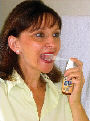 A spray has been developed from the major components of marijuana (cannabis), including tetrahydrocannabinol (THC) and cannabidiol (CBD) in alcohol. The formulation is sprayed under the tongue or in the cheek to relieve pain in multiple sclerosis.