 Dr. Desiree Lie from the University of California in Orange has reviewed the evidence for a range of conditions that are treated with melatonin.
Here are her thoughts on its use to treat insomnia. Continue reading Melatonin for insomnia
Dr. Desiree Lie from the University of California in Orange has reviewed the evidence for a range of conditions that are treated with melatonin.
Here are her thoughts on its use to treat insomnia. Continue reading Melatonin for insomnia
 Researchers from the Queen’s University Belfast, in Northern Ireland reviewed the association between lycopene and the progression of prostate cancer. Continue reading Review: Effect of lycopene on prostate cancer progression
 Researchers from McMaster University, in Hamilton, Ontario, compared surgical masks to the N95 respirator. Continue reading Using surgical masks to prevent the flu
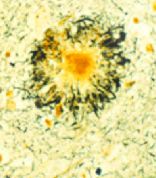 Dr. James Galvin from the Alzheimer’s Disease Research Center at Washington University School of Medicine in St. Louis, Missouri has written are review on Medscape.
Here are his thoughts on the value of nonpharmacologic strategies in support of drug treatment. Continue reading Complementary treatments for Alzheimer’s
 Researchers from the Washington University School of Medicine, in St. Louis, Missouri compared the effects of Tango, Waltz/Foxtrot, and tai chi. Continue reading Benefits of Tango for patients with Parkinson’s disease
 Researchers from the Don Gnocchi Foundation I.R.C.C.S., in Milan, Italy tell us electromyographic biofeedback (EMG-BFB) shows equivocal benefits on gait retraining after stroke.
In this study they evaluated EMG-BFB applied in a task-oriented approach to increase peak ankle power of the affected leg and gait velocity in patients with hemiparesis. Continue reading Task-oriented biofeedback improves gait in stroke patients
 Researchers from Henry Ford Health System, in Detroit, Michigan and Michigan Acupuncture, in Novi tested whether acupuncture reduces vasomotor symptoms more than the antidepressant, venlafaxine (Effexor). Continue reading Acupuncture vs Effexor to treat vasomotor symptoms in breast cancer
 Researchers from Europe studied the association of total dietary fiber with changes in weight and waist circumference. Continue reading Dietary fiber may help prevent obesity
 Researchers from the University of Missouri School of Medicine, in Columbia reviewed 8 studies and came to different conclusions than researchers at The Chinese University of Hong Kong.
Let’s compare notes. Continue reading Benefits and limits of music during colonoscopy
 Researchers from the Global Neuroscience Initiative Foundation, in Los Angeles, California reviewed the effectiveness of combined delta9-tetrahydrocannabinol (THC) and cannabidiol (CBD) extracts on spasticity in multiple sclerosis (MS). Continue reading Treating spasticity in MS with THC and CBD extracts
 I recently labeled G. biloba the “biggest loser in 2009” based on the results of The Ginkgo Evaluation of Memory (GEM) Study that was published in The Journal of the American Medical Association.”
Now, Mark Blumenthal, founder and executive director of the Austin, Texas-based American Botanical Council, has weighed with his criticism.
 Researchers from Sahlgrenska University Hospital/Östra, in Göteborg, Sweden compared high-frequency, high-intensity transcutaneous electrical nerve stimulation (TENS) vs intravenous conventional pharmacological treatment after surgical abortion. Continue reading Using TENS to treat pain after abortion
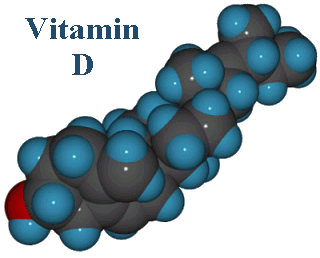 Researchers from Germany studied the effect of vitamin D on weight loss and on risk factors associated cardiovascular disease in overweight people. Continue reading Vitamin D, weight loss, and heart disease risk
 Recent studies suggest that tinnitus — a ringing or similar sensation in the ears — is caused by a rewiring of nerves in the auditory cortex (see drawing). These nerves no longer respond to intended frequencies but do become sensitive to neighboring frequencies, which leads to tinnitus.
Researchers from Germany “notched” music so it contained no energy in the same frequency range as the individual’s tinnitus frequency. Continue reading Notched music to treat tinnitus
 Not in children and adolescents according to this review by researchers at The University of Sydney, in Australia. Continue reading Any benefits of strength training in cerebral palsy?
 Researchers from the German Research Center for Environmental Health, in Neuherberg studied the association between eating fish and the risk of developing allergic diseases in adults. Continue reading Fish consumption and allergy in adults
 Temporomandibular disorders (TMD) are due to problems with the jaw, jaw joint, and surrounding facial muscles that control chewing and moving the jaw.
Researchers at San Pablo CEU University, in Madrid, Spain reviewed the published research. Continue reading Acupuncture to treat TMD?
 The inability to take food by mouth, pass gas, and have a bowel movement is a common problem that usually lasts not more than 3 days. When it lasts more than 4 days it’s called prolonged postoperative ileus. It’s uncomfortable and potentially dangerous.
Researchers from the US and China tell us that electro-acupuncture probably isn’t a useful option. Continue reading Effect of electro-acupuncture on bowel dysfunction after abdominal surgery
 Qutenza (capsaicin) 8% patch is a medicated skin patch that can be used to help relieve the pain of post-herpetic neuralgia (PHN).
This high concentration is now approved by the FDA for use as a prescription drug. And that places this complementary option for treating PHN squarely in the main stream. Continue reading Capsaicin: The biggest winner in CAM for 2009
 Some studies on distant healing for chronic pain exist, but the value of this treatment is controversial.
Researchers from Holos University, in Fair Grove, Missouri contribute a small study to the debate. Continue reading Effects of distant healing on chronic pain