Artesunate comes from qinghaosu, the sweet wormwood bush (Artemisia annua). It’s a fast-acting antimalarial drug discovered by Chinese scientists in the early 1970s.
Artesunate is often referred to as the most efficient malaria parasite killer ever discovered.
It’s in the early stages of development, but might replace drugs like Viagra (sildenafil) in coming years.
At the recent American Urology Association meeting Dr. Arnold Melman, from the Department of Urology at Albert Einstein College of Medicine in New York reported the results in 11 men who received a transfer gene called hMaxi-K.
This was a “phase 1” safety study to see if there were obvious side effects and record any response to the doses used. At the higher doses, two volunteers reported a positive response and no adverse effects.
Dr. Melman thinks gene therapy might also be effective for over-active bladder.
The Food and Drug Administration issued a statement in April that no sound scientific studies support the medicinal use of marijuana for treatment. This lead to a seemingly endless list of editorials and articles assailing the FDA for political bias – here, here, here, here, and here.
A study in northern India shows that milk fortified with specific micronutrients lowers the risk of diarrhea and acute lower respiratory illness in children.
There’s one hospital in Sweden where anthroposophic medicine is practiced. Here is a study of its effect in 60 women who received conventional breast cancer treatment with and without anthroposophic care.
An article in a recent issue of AARP The Magazine (and online) makes trivial and misleading recommendations for treating impotence (aka: erectile dysfunction [ED]).
High blood levels of the amino acid called homocysteine are thought to increase the risk for heart disease by damaging the lining of blood vessels and increasing blood clotting.
Despite this, the American Heart Association doesn’t recommend widespread use of folic acid to lower homocysteine blood levels.
“More than half of women who treat their symptoms of menopause take soy supplements or herbal products as part or all of their therapy.” states The New York Times, which reported on a recently published article in the journal Menopause.
However, the women in this online survey generally felt illinformed about proper doses and use of herbal products.
Fibromyalgia (FM) is a “chronic pain illness characterized by widespread musculoskeletal aches, pain and stiffness, soft tissue tenderness, general fatigue and sleep disturbances.” Approximately 3% to 6% of the U.S. population have FM, with women at greatest risk.
Successful treatment often requires combined therapies, and the results of this study in the The Mayo Clinic Proceedings support acupuncture in this regard.
It”s illegal for supplements to be promoted as a “treatment” for a disease. They can “support” health, or “boost” the immune system, or use other vague claims. But before any product can legally state that it can treat a specific disease it must pass US Food and Drug Administration (FDA) regulations for drugs.
The dietary supplements listed below have crossed the line by claiming to treat cancer, arthritis, fibromyalgia, and seizures.
The Centers for Disease Control has just published the latest data on the prevalence of diabetes in the US.
11% of adults aged 40 to 59 years
23% of those 60 and older have diabetes
Is it any wonder that so many CAM therapies are studied in people with diabetes?
A quick listing of CAM entries for diabetes on this blog is provided below. Or, click the button on the right sidebar to see all of the diabetes entries.
A natural substance in red wine, known as resveratrol (RSV), offsets the unhealthy effects of a high-calorie diet in mice and significantly extends their life span, according to an article published in The International Herald Tribune, and in The Washington Post.
In this study, mice fed the high-calorie diet became “tubby,” while those who got the high-fat diet plus RSV did not. The full study is online at the journal, Cell. (Vol 127, #4, November 16, 2006)
Here are the highlights of the discussion on traditional Chinese medicine (TCM) and probiotics during the recent American College of Allergy, Asthma and Immunology meeting, thanks to Medical News Today.
The entry on breast cancer at Wikipedia asserts, “Folate intake counteracts breast cancer risk associated with alcohol consumption” This is based on research at the Mayo Clinic in 2001.
 Artesunate comes from qinghaosu, the sweet wormwood bush (Artemisia annua). It’s a fast-acting antimalarial drug discovered by Chinese scientists in the early 1970s.
 A survey of more than a thousand people trying to quit smoking
 It’s in the early stages of development, but might replace drugs like Viagra (sildenafil) in coming years.
 The Food and Drug Administration issued a
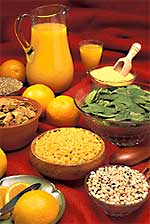 A study in northern India
 There’s one hospital in Sweden where anthroposophic medicine is practiced. Here is a
 This review concludes that spinal manipulation and acupuncture are not cost-effective for low-back pain.
 I hate these negative headlines, but there seems to be no upside to the latest survey results on obesity among Americans.
 High blood levels of the amino acid called homocysteine are thought to increase the risk for heart disease by damaging the lining of blood vessels and increasing blood clotting.
 “More than half of women who treat their symptoms of menopause take soy supplements or herbal products as part or all of their therapy.” states The New York Times, which
 Fibromyalgia (FM)
 It”s
 A natural substance in red wine, known as resveratrol (RSV), offsets the unhealthy effects of a high-calorie diet in mice and significantly extends their life span, according to an article published in The International Herald
 Who says we”re not making progress in Iraq.
 Here are the
 The entry on breast cancer at Wikipedia