Health and Clinical Excellence in England recommend that health professionals consider exercise to treat post-natal depression (aka postpartum depression).
Researchers from the University of Birmingham in the UK reviewed the evidence. Continue reading Review: Exercise to manage post-natal depression →
according to researchers at the University of Toronto, in Ontario. Continue reading Effect of religion on anxiety and stress →
according to researchers at the International Medical Center of Japan in Tokyo. Continue reading Effect of folate on depression in Japanese adults →
When a non-antidepressant agent is added, it’s “augmentation treatment.”
Examples of augmentation therapy… Continue reading Augmentation therapy for resistant depression →
here and here on the use of CAM in the US.
The findings come from a survey by the National Center for Complementary and Alternative Medicine (NCCAM). Continue reading Most common medical conditions treated with CAM →
And, Prof. Ernst says “the evidence is encouraging. Continue reading Massage therapy for cancer palliative care →
Researchers from Taiwan report that taking omega-3 fatty acids might be beneficial. Continue reading Treating perinatal depression with omega-3 →
report that most interactions are confined to a relatively small number of drug classes and supplements. Continue reading Drug-supplement interactions in perspective →
reports of benefit with cannabis, this study from researchers at the University of Toronto in Canada uncovers the downside of street cannabis in patients with multiple sclerosis (MS). Continue reading Negative effects of marijuana in multiple sclerosis →
Continue reading Modest exercise is good for chronic pain →
To confirm these findings, researchers from the University of Utah in Salt Lake City, tested blue light in people with SAD. Continue reading Treating SAD with blue light →
Harvard Women’s Health Watch has published recommendations to lower the risk of fractures due to osteoporosis.
I supplemented their recommendations with references. Continue reading Recommendations from Harvard for bone health →
according to researchers at the VA Hospitals in Ann Arbor, Michigan and Indianapolis, Indiana. Continue reading Massage to help treat pain after surgery →
review of the evidence by researchers at the University of Western Australia in Perth. Continue reading The role of CAM to treat anxiety and depression →
review , which was prepared by researchers at the Marie Curie Palliative Care Research and Development Unit in London, was published and then withdrawn.
But just labeling it peaks my interest. Continue reading WITHDRAWN: Aromatherapy and massage for cancer. →
(Hypericum perforatum) is commonly used to treat depression.
Is it more effective than placebo? Is it as effective as standard antidepressants?
Read on. Continue reading Cochrane reviews St. John’s wort →
Here’s what they found after reviewing the available research. Continue reading Lack of benefit of fatty acids in multiple sclerosis →
The strongest evidence was for cognitive behavioral therapy (CBT) to reduce psychological harm in children and adolescents following trauma. Continue reading Support for CBT following trauma in young people →
review of this topic. It is essential reading for healthcare professionals as well as family and patient caregivers.
Among other issues, it provides good perspective on the role of CAM approaches to pain management in palliative care, which I have summarized here.
Continue reading Integrating CAM into pain management at the end of life →
Posts navigation
Complementary and Alternative Medicine: Fair, Balanced, and to the Point
 The National Institutes of Health and Clinical Excellence in England recommend that health professionals consider exercise to treat post-natal depression (aka postpartum depression).
 Â Believing in God can help block anxiety and minimize stress,
 Higher dietary intake of folate was associated with a lower prevalence of depressive symptoms in Japanese men but not women,
 Here’s a follow-up to earlier posts
 Â Massage is a popular adjunct to cancer palliation.
 Perinatal depression includes major and minor depressive episodes during pregnancy or within the first 12 months following delivery.
 In contrast to the anecdotal
 The main problem is motivating people to stick with the program.
 Bright visible-spectrum light therapy is effective treatment for seasonal affective disorder (SAD). Basic research suggests that blue wavelengths approximately 470 nm account for that effectiveness.
 It’s mostly in your head.
 The Harvard Women’s Health Watch has
 Â St. John’s wort (Hypericum perforatum) is commonly used to treat depression.
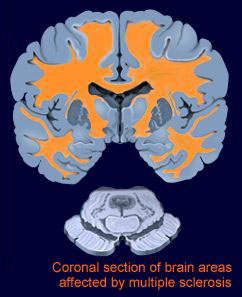 “The data available are insufficient to assess any potential benefit or harm from polyunsaturated fatty acids (PUFA) supplementation,” according to researchers from the Istituto Nazionale Neurologico Carlo Besta in Milan, Italy.
 Â Many treatment options were reviewed.
 Dr. Perry Fine — an anesthesiologist from the University of Utah in Salt Lake City — has published an excellent