Dr. Kathleen Kendall-Tackett is a health psychologist and a board certified lactation consultant from the University of New Hampshire in Durham. Her work focuses on family violence and perinatal health.
As summarized here, JELIS is the acronym for “Japan EPA Lipid Intervention Study.” It showed that adding eicosapentaenoic acid (EPA) — an active component of omega-3 fatty acids — to low-dose statin therapy lowered the risk for certain major problems involving the heart.
The National Healthy Mothers, Healthy Babies Coalition has summarized the recommendations from official groups, worldwide. Their website should be essential reading for pregnant, breastfeeding, and postpartum women, and women thinking of becoming pregnant.
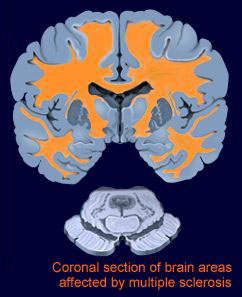
Hillary Freeman has multiple sclerosis (MS). She says, that within weeks of “regularly incorporating portions of salmon, mackerel, and sardines into my meal plans, the tingling and numbness I experienced on a daily basis subsided.”
Now, research on omega-3 fatty acids (containing eicosapentaenoic acid [EPA] and docosahexaenoic acid [DHA]) conducted at Oregon Health & Science University in Portland and presented during the American Association of Naturopathic Physicians annual meeting appears to provide a rationale for her experience. Continue reading Growing support for omega-3 benefits in multiple sclerosis→
My pharmacist tells me that the prescription strength omega-3 fatty acid product called Omacor is having its name changed. Continue reading Omacor becomes Lovaza→
Researchers from Chang Gung University College of Medicine in Taiwan reassessed the results (meta-analysis) from 10 double blind, placebo-controlled studies in more than 300 patients with mood disorders treated with omega-3 PUFAs for at least 4 weeks.
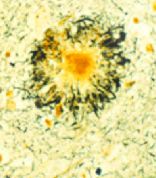
Omega-3 fatty acid supplements might slow the cognitive decline (eg, perception, memory, judgment, and reasoning) in some people with very mild Alzheimer’s disease.
Dr. Jennifer Malinowski, who is Assistant Professor of Pharmacy Practice at Nesbitt School of Pharmacy and Nursing in Pennsylvania, reports a patient who experienced an 75% increase in LDL (bad) cholesterol while taking 9 grams of fish oil capsules per day to lower her triglyceride levels. Obviously, it’s not desirable for LDL to go up.
These recommendations, from a group of experts, take a narrow view of Alzheimer’s disease. They focus on early detection and the use of existing prescription drugs.
That’s fine as far as it goes, but what about those with advanced Alzheimer’s? Why not develop a more comprehensive approach?
Dr. Philip Calder from the Institute of Human Nutrition at the University of Southampton, United Kingdom has written a scholarly review on this relationship.
Elevated triglyceride blood levels are a common finding in people with HIV. And the levels tend to get higher during treatment with highly active antiretroviral therapy (HAART).
A new study shows the effectiveness of taking omega-3 fatty acid supplements in these patients.
The INTERMAP study (INTERnational collaborative of MAcronutrients and blood Pressure) examines correlations between nutrients and worldwide patterns of blood pressure.
The Guardianreports and Clayton Cramer’s blog has summarized the research on a potential link between an omega-3 fatty acid deficiency and increased violence.
 Dr. Kathleen Kendall-Tackett is a health psychologist and a board certified lactation consultant from the University of New Hampshire in Durham. Her work focuses on family violence and perinatal health.
 As summarized
 The National Healthy Mothers, Healthy Babies Coalition has
 MayoClinic.com has posted a
 Hillary Freeman has multiple sclerosis (MS). She
 My pharmacist tells me that the prescription strength omega-3 fatty acid product called Omacor is having its name changed.
 This
 Relatively high doses of omega 3-rich fish oil
 Researchers from Chang Gung University College of Medicine in Taiwan
 Omega-3 fatty acid supplements might slow the cognitive decline (eg, perception, memory, judgment, and reasoning) in some people with very mild Alzheimer’s disease.
 Phenylketonuria (PKU) is a genetic
 Dr. Jennifer Malinowski, who is Assistant Professor of Pharmacy Practice at Nesbitt School of Pharmacy and Nursing in Pennsylvania,
 There’s growing
 Elevated triglyceride blood levels are a common finding in people with HIV. And the levels tend to get higher during treatment with highly active antiretroviral therapy (HAART).
 The INTERMAP study (INTERnational collaborative of MAcronutrients and blood Pressure) examines correlations between nutrients and worldwide patterns of blood pressure.
 The FDA regulations will affect supplements makers and be published in a few weeks, according to an
 The Guardian