It started January 19th, but it’s never too late to join in.
Here are several summaries posted over the past 2 years related to food preferences and the risk of allergy in infants. Continue reading Food allergy and intolerance week
It started January 19th, but it’s never too late to join in.
Here are several summaries posted over the past 2 years related to food preferences and the risk of allergy in infants. Continue reading Food allergy and intolerance week
 Riboflavin (vitamin B-2) was originally recognized as a growth factor in 1879 and named vitamin B-2 according to the British nomenclature system.
Here’s what we know today. Continue reading Background on vitamin B-2
 Exercise, or simply expending energy through an activity that is a regular part of a person’s lifestyle may provide survival advantages, according to National Institute on Aging. The challenge is that about 75% of Americans over the age of 75 years live sedentary lives.
Here’s an innovative way to meet that challenge.
Continue reading An innovative way to get elderly people to exercise
 Vitamin D treatment during infancy might protect from the development of type 1 diabetes, according to this review of the medical literature by researchers from the Central Manchester and Manchester Children’s University Hospitals in the UK. Continue reading Does vitamin D reduce the risk of diabetes in infants?
 Â Apitherapy is the use of bee products such as honey to prevent or treat illness and promote healing.
Researchers at Justus-Liebig-University in Giessen, Germany conducted a survey of beekeepers. Continue reading Apitherapy: Experience of German Beekeepers
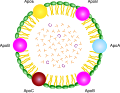 Nephrotic-range proteinuria is defined as urinating more than 3.5 grams of protein per day. That’s 25 times the normal amount, and is the primary indicator of the nephrotic syndrome — a group of diseases that damage the kidneys’ filtering system.
Researchers at the Glasgow Royal Infirmary in the United Kingdom looked at the effect of omega-3 fatty acids. Continue reading Omega-3 and the nephrotic syndrome
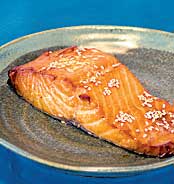 Â Researchers at Hopital La Colombiere in Montpellier, France tell us, “The observed health benefits of fish consumption in the elderly could be related not only to the increase in omega-3 fatty acid intake but also to other nutrients such as selenium.” Continue reading Are the benefits of eating fatty fish due to selenium?
 Since fortification of flour with folic acid started 10 years ago in the US, efforts have been taken to fortifying flour with vitamin B-12.
So, how prevalent is B-12 deficiency? Continue reading Prevalence of vitamin B-12 deficiency
 It’s an important issue when planning clinical studies of CAM.
Researchers from the David Geffen School of Medicine at the University of California, Los Angeles address this issue for a study of acupuncture in the relief of post-chemotherapy fatigue in breast cancer patients. Continue reading How many patients for an acupuncture study?
 Researchers from the Norwegian University tell us, “The benefits of animal-assisted therapy (AAT) for humans with mental disorders have been well-documented using cats and dogs.”
But what about farm animals? Continue reading Farm animals help treat mental disorders
 Here’s a follow-up to earlier posts here, here, and here on the use of CAM in the US as surveyed by the National Center for Complementary and Alternative Medicine (NCCAM). Continue reading Most commonly used CAM in the US
Here’s a follow-up to earlier posts here and here on the use of CAM in the US.
The findings come from a survey by the National Center for Complementary and Alternative Medicine (NCCAM). Continue reading Most common medical conditions treated with CAM
Here’s a follow-up to an earlier post on the use of CAM in the US in 2007 as surveyed by the National Center for Complementary and Alternative Medicine (NCCAM). Continue reading Most commonly used natural products
 Â Researchers from Peking University People’s Hospital in Beijing reviewed studies concerning the effects of omega-3 fatty acids on the risk of dying in patients with coronary heart disease. Continue reading Omega-3 in patients with coronary heart disease
 Â Dr. Aaron Michelfelder from the Loyola University Chicago Stritch School of Medicine in Maywood, Illinois has published a review of soy.
Here’s a summary of what we know about soybeans. Continue reading Soy pros and cons
 Â Massage is a popular adjunct to cancer palliation.
And, Prof. Ernst says “the evidence is encouraging. Continue reading Massage therapy for cancer palliative care
 Researchers from Northwestern University, in Chicago studied the effects of treadmill exercise and resistance training. Continue reading Benefits of exercise for claudication
 Trying to eliminate caffeine from your diet? Chances are you’ll have to try harder. Here’s a comparison of the caffeine content in a variety of coffees.
 The Cochrane Collaboration has reviewed the evidence and submitted its findings. Continue reading Review: Chinese herbals for hyperthyroidism
“Combining omega-3 fatty acids and a statin* is a safe and effective way to improve lipid levels and cardiovascular prognosis beyond the benefits provided by statin therapy alone†concluded researchers in this recent Mayo Clinic Proceedings review. Continue reading The heart benefits of omega-3 fatty acids