Here’s a series of quotes from the October (Volume 12, 2006) editorial in Alternative Therapies in Health and Medicine that I think contrasts the points of view between alternative and mainstream medicine today. Is the alternative perspective too esoteric to be of practical value? Or is the mainstream approach (for chronic diabetes for example) destined to come up short? Or is the answer somewhere in the middle?
According to Eric Jacobs, a senior epidemiologist and vitamin specialist with the American Cancer Society, “There is no vitamin or mineral supplement proven to reduce the risk of cancer.”
A string of negative results summarized in an Associated Press story are depressing.
A review of observational studies has concluded that higher selenium concentrations in blood are associated with a lower risk of heart disease and vice versa.
But the most important statement in the report is the next one.
Garlic supplements are one of the most popular herbal products in the U.S. Garlic has been described as a wonder food. It reportedly lowers cholesterol, prevents dangerous blood clots, reduces blood pressure, prevents cancer, and protects against bacterial and fungal infections.
Holy nutraceutical, Batman!
Yet, when ConsumerLab tested 16 brands of garlic supplements, they found that one product lacked any of a key garlic compound. Another had less than 1% of the expected amount of this compound. In all, 8 of the 16 products failed testing.
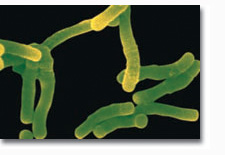
There have been lots of posts here on probiotics and their effects in a wide range of infections of the GI tract. Probiotics are an appealing concept given their favorable safety profiles.
Now, a summary of clinical trials has been published.
Look at the list of posts on this site, and it becomes apparent that acupuncture has a problem showing that it’s effective treatment. People looking for any sign of effectiveness can conclude that acupuncture has a role in treating this or that disease, while those who are more skeptical — well, you know.
? This graph shows the consistent year-to-year increase in the number of randomized clinical trials in CAM based on a MEDLINE search between 1982 and 2002. There has also been an increase in the number of systematic reviews and META analyses during the same period.
The information can be found online at Complementary and Alternative Medicine in the United States, which is a publication of The National Academies Press.
Any time there is a change in the availability of a statin drug to treat high lipid blood levels, discussions of potential options to these prescription drugs abound.
As Zocor (simvastatin) goes off patent, here is my contribution to the discussion: red yeast rice.
For as long as I’ve followed the ConsumerLab.com website, I don’t remember them ever testing a supplement and reporting that the contents of all brands tested contained what was on the label.
Now, they report that among 12 zinc lozenges and supplements tested, all contained the amounts listed on the label. But some of the lozenges did not provide a dosage known to be effective for treating colds.
Here in Orange County New York with its “black earth’ and proud agricultural heritage there are festivals this time of year honoring just about every food you grow in the ground or herd on the range.
My town, Monroe, has its cheese festival (although no one actually sells cheese). And the local newspaper lists many more, with the notable exception of beets. This is especially strange considering how close we are to the Borscht Belt.
It’s not merely a matter of “the more the merrier” for therapeutic probiotic bacteria.
Preliminary evidence reported here and here supports the value of the probiotics Bifidobacterium infantis 35624 in treating irritable bowel syndrome (IBS). Now, a study in more than 350 women with IBS reports that the dose of B infantis 35624 has an effect on the ability to improve symptoms.
The international trend toward using a simpler “traffic light” nutrient labeling system was discussed here earlier. It tells consumers at a glance if food contains high (red), medium (orange), or low (green) levels of sugar, salt, fat, and saturated fat.
Now, a survey of 200 people in the November issue of the American Journal of Preventive Medicine shows just how much the current system needs to be overhauled.
This blog has chronicled the lipid-lowering effects of policosanol, which lowers LDL (bad) cholesterol levels by 20% to 30%. Its mechanism of action differs from statins. However, it’s close enough that for safety, I would be cautious taking policosanol and a statin at the same time. One-A-Day Cholesterol Plus contains policosanol.
Now, a new study reports that policosanol has a positive effect on recovery in patients with ischemic stroke. This might be an overstatement, but let’s take a closer look.
A side effect of treatment with antipsychotic drugs is increased weight, which leads many patients to stop taking their medicine. In fact, up to 80% of patients on antipsychotic medication gain a significant amount of weight.
Now, a study shows that early behavioral intervention prevents much of the weight gain associated with antipsychotic drug therapy.
The movement to ban trans fats in restaurants and fast food outlets picked up more support earlier this week. The New York City Board of Health voted to move forward with plans to prohibit the city’s 20,000 restaurants from serving food that contains more than a minute amount of trans fats.
The next steps are a public hearing on October 30th and a final vote in December. The board is authorized to adopt the plan without the consent of any other agency. So, it’s likely that life in NYC will be come a bit healthier by 2007.
You can track back to other related posts starting here.
9/26/06 23:22 JR
Complementary and Alternative Medicine: Fair, Balanced, and to the Point
 Here’s a series of quotes from the October (Volume 12, 2006) editorial in Alternative Therapies in Health and Medicine that I think contrasts the points of view between alternative and mainstream medicine today. Is the alternative perspective too esoteric to be of practical value? Or is the mainstream approach (for chronic diabetes for example) destined to come up short? Or is the answer somewhere in the middle?
 A
 Garlic supplements are one of the most popular herbal products in the U.S. Garlic has been described as a
 There have been lots of posts
 Look at the
 ? This
 For as long as I’ve followed the ConsumerLab.com
 I love the
 Â People with HIV/AIDS commonly take herbals and vitamins, often without the knowledge of their doctor.
 Here in Orange County New York with its “black earth’ and proud agricultural heritage there are festivals this time of year honoring just about every food you grow in the ground or herd on the range.
 The international trend toward using a simpler “traffic light” nutrient labeling system was discussed
 This blog has
 The movement to ban trans fats in restaurants and fast food outlets picked up more support earlier this week. The New York City Board of Health