 Professor Ernst and colleagues from the Universities of Exeter and Plymouth in the UK report significant benefit in symptom control and physiologic outcomes from hawthorn extract when included in the treatment for chronic heart failure. Continue reading Benefits of hawthorn to treat heart failure
Category Archives: Cochrane Library
Acupuncture to reduce nicotine withdrawal symptoms
 Researchers at Wonkwang University in Iksan, South Korea report it’s not better than placebo.
But they’re still optimistic. Continue reading Acupuncture to reduce nicotine withdrawal symptoms
A review of suxiao jiuxin wan as treatment for angina pectoris
 Suxiao jiuxin wan is a mixture of herbs that is used in China along with western medicine to treat angina.
This Cochrane review concluded that the evidence does not support its use. Continue reading A review of suxiao jiuxin wan as treatment for angina pectoris
We don’t know if zinc prevents diabetes or not
 A review of the literature by the Cochrane Collaboration concludes there is no evidence that zinc can prevent type 2 diabetes.
In fact, there was little to review. Jaybee comments that the revised title to this post more accurately describes the state of the knowledge. I agree. Continue reading We don’t know if zinc prevents diabetes or not
Should probiotics be used to treat antibiotic-associated diarrhea?
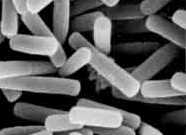 Although there is insufficient evidence to recommend probiotics routinely, Lactobacillus GG or Saccharomyces boulardii appear to be the most effective, according to this Cochrane review.
Here are the details.
Continue reading Should probiotics be used to treat antibiotic-associated diarrhea?
Reviewing elemene to treat lung cancer
 Elemene is an extract from the ginger plant and an antitumor drug, which is approved to treat cervical cancer and cancer of the lung, liver, and brain in China.
There is some evidence that it kills lung cancer cells in the lab. Here is a Cochrane Library review of the data on lung cancer in humans. Continue reading Reviewing elemene to treat lung cancer
The status of acupuncture to treat migraine
 Several years ago, a Cochrane review concluded, “Overall, the existing evidence supports the value of acupuncture for the treatment of idiopathic headaches. However, the quality and amount of evidence are not fully convincing.”
In the past year, 2 studies and another literature review have provided further support for acupuncture to reduce the risk of migraine. Continue reading The status of acupuncture to treat migraine
Defining the benefits of glucosamine for osteoarthritis
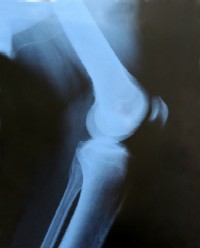 Earlier posts on this topic here and here might leave readers with the impression that the scientific literature doesn’t support glucosamine to help treat osteoporosis.
Considering it’s one of the most commonly used supplements, it’s worth another look. Continue reading Defining the benefits of glucosamine for osteoarthritis
Is there any justification to take high doses of vitamin C?
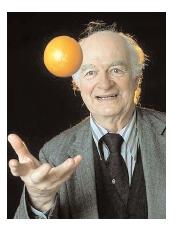 Let’s see what the Cochrane Collaboration reveals. Continue reading Is there any justification to take high doses of vitamin C?
Positive news for echinacea and the common cold
 Here is an update to the Cochrane Review of echinacea summarized here in July.
Their consensus was that taking echinacea after the onset might shorten the cold, but does not prevent the onset of the common cold. Even at this, the experts were skeptical.
Now another analysis of clinical trials has come to a different conclusion.
Continue reading Positive news for echinacea and the common cold
Soy formula vs cow’s milk formula to reduce allergies in infants and children
 Infant formulas are designed to lower the chances of developing allergy or food intolerance.
But do they?
Continue reading Soy formula vs cow’s milk formula to reduce allergies in infants and children
Food for thought: Antioxidants might increase mortality
That’s right. Treatment with beta-carotene, vitamin A, and vitamin E might increase mortality. The potential roles of vitamin C and selenium on mortality need further study.
These are the findings from the latest literature review and analysis published in The Journal of the American Medical Association (JAMA).
Continue reading Food for thought: Antioxidants might increase mortality
Should older hospitalized patients participate in exercise programs?
There’s really not enough evidence to be certain of the risk to benefit ratio in elderly patients. But what is known is summarized in a Cochrane review.
Continue reading Should older hospitalized patients participate in exercise programs?
Using behavioral therapy to treat generalized anxiety disorder
 Generalized anxiety disorder (GAD) is characterized by chronic anxiety and exaggerated worry and tension even when there is little or nothing to provoke it.
Based on the results of clinical studies, psychological therapy based on cognitive behavioral therapy (CBT) principles is effective treatment for (GAD) — at least short-term.
Continue reading Using behavioral therapy to treat generalized anxiety disorder
Capsicum plaster to control pain following inguinal hernia repair in children
 Capsicum (Cayenne) is a category of plants used as spices, vegetables, and medicines. Think chili pepper, red or green pepper, bell pepper, and paprika.
In this study, capsicum plaster was applied at a classical Chinese acupoint to lessen pain in infants and children following surgery.
Continue reading Capsicum plaster to control pain following inguinal hernia repair in children
FDA warns against using quinine to treat leg cramps. Options, please?
 The FDA is cracking down on companies that sell quinine-containing products such as Qualaquin for non-approved uses. Their concern is over the risks of quinine to treat leg cramps.
What’s the risk?
Continue reading FDA warns against using quinine to treat leg cramps. Options, please?
Garlic for prevention of pre-eclampsia?
 Pre-eclampsia is a serious complication of pregnancy. It occurs in up to 8% of women who experience increased blood pressure and protein in the urine. It’s possible that garlic may lower blood pressure and help reduce the risk of pre-eclampsia.
Or, maybe not.
The role of exercise in smoking cessation
A literature review by Dr. Guy Faulkner from the University of Toronto reveals that adding exercise to standard care (counseling and/or nicotine replacement therapy) increases short-term smoking abstinence.
Unfortunately, the evidence is not good for long-term abstinence. A Cochrane review concluded, “only one of 11 trials offered evidence for exercise aiding smoking cessation at a 12-month follow up.”
But wait, there’s more.
More criticism of NCCAM
 Earlier this year a study published in The New England Journal of Medicine reported, “saw palmetto did not improve symptoms or objective measures of benign prostatic hyperplasia.” The results were interesting in light of the fact that the weight of the medical literature supports the value of saw palmetto for this condition.
Salt water to treat cystic fibrosis
The Blogs are abuzz today with talk of nebulized hypertonic saline to treat cystic fibrosis (CF). Glenn Reynolds at Instapundit has a comment and links to Dean Barnett of SoxBlog who reports his experience with saline from a patient’s perspective. The historical perspective on the treatment is interesting as well.
Saline is not new therapy, but it has assumed a higher profile since publication of a study in The New England Journal of Medicine early this year. The authors concluded, “Hypertonic saline preceded by a bronchodilator is an inexpensive, safe, and effective additional therapy for patients with cystic fibrosis.” The accompanying editorial (summarized on Medscape) was less impressed.
Recently, the Cochrane Collaboration reviewed the results of nine trials of nebulized hypertonic saline for CF. The reviewers concluded it “improves mucociliary clearance in short-term clinical trials and appears to increase lung function compared to control.” However, “In comparison to recombinant deoxyribonuclease it may be less effective at improving lung function after three months.”
Maybe so, but Dean’s perspective is encouraging. “This seems like if not a miracle, something damn close to it. For years good people, the world’s best, have been pouring their hearts, souls and money into finding effective treatments for CF and generally coming up with very little. And all of a sudden, a super-promising new treatment comes along. And it’s salt water!”
7/9/06 09:56 JR