“The data available are insufficient to assess any potential benefit or harm from polyunsaturated fatty acids (PUFA) supplementation,” according to researchers from the Istituto Nazionale Neurologico Carlo Besta in Milan, Italy.
GW Pharmaceuticals has announced that its major study of Sativex in 339 patients with central neuropathic pain due to multiple sclerosis (MS) failed to provide adequate pain relieve in patients who had failed conventional therapy previously. Continue reading Cannabis drug fails in neuropathic pain due to MS→
In their article published in InsideMS, Dr. Allen Bowling and Tom Stewart caution, “It’s not clear if omega-3 fatty acids really improve multiple sclerosis (MS).”
However, there is a scientific rationale for this supplement and some hints of effectiveness.
Hillary Freeman has multiple sclerosis (MS). She says, that within weeks of “regularly incorporating portions of salmon, mackerel, and sardines into my meal plans, the tingling and numbness I experienced on a daily basis subsided.”
Now, research on omega-3 fatty acids (containing eicosapentaenoic acid [EPA] and docosahexaenoic acid [DHA]) conducted at Oregon Health & Science University in Portland and presented during the American Association of Naturopathic Physicians annual meeting appears to provide a rationale for her experience. Continue reading Growing support for omega-3 benefits in multiple sclerosis→
A spray has been developed from the major components of marijuana (cannabis), including tetrahydrocannabinol (THC) and cannabidiol (CBD) in alcohol. The formulation is sprayed under the tongue or in the cheek to relieve pain in multiple sclerosis.
The Oncology Nursing Society has posted a table that summarizes CAM studies on the treatment of nausea and vomiting in cancer patients. The studies were published between 1988 and 2005.
“The main voices in favor of DHEA as a miracle drug are those who are selling it or who make a good living selling books or programs advocating ‘natural cures’.” That’s the conclusion from the Skeptics Dictionary. But look for yourself, and you will agree.
Here is another reason to be skeptical of DHEA [dehydroepiandrosterone].
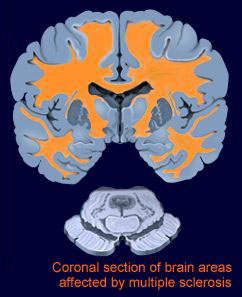 “The data available are insufficient to assess any potential benefit or harm from polyunsaturated fatty acids (PUFA) supplementation,” according to researchers from the Istituto Nazionale Neurologico Carlo Besta in Milan, Italy.
 Respiratory muscle strengthening programs are either inspiratory or expiratory and typically use handheld devices.
 GW Pharmaceuticals has
 In preparation for the upcoming weight management
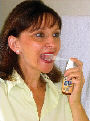 A spray has been developed from the major components of marijuana (cannabis), including tetrahydrocannabinol (THC) and cannabidiol (CBD) in alcohol. The formulation is sprayed under the tongue or in the cheek to relieve pain in multiple sclerosis.
 The Oncology Nursing Society has
 “The main voices in favor of DHEA as a miracle drug are those who are selling it or who make a good living selling books or programs advocating ‘natural cures’.” That’s the
 When tai chi is adapted to the needs of patients with multiple sclerosis (MS), the slow, gentle movements help improve muscle tone.