Alternative & Complementary Therapies has a review of biofeedback by Dr. Sala Horowitz. In it she includes a table that rates the value of biofeedback to treat selected conditions based on the available research.
Dr. Susan Levy reviewed charts for 284 patients at the Regional Autism Center, which is associated with The Children’s Hospital of Philadelphia. She found that 32% of the children were using CAM.
The Miami Herald reports that the Florida Comprehensive Assessment Test (FCAT) is a pressure-packed time for kids.
To address this need, companies offering a yoga curriculum and teacher training have cropped up nationwide, according to the article, with some adding academics to the stretches.
The American Academy of Child and Adolescent Psychiatry (AACAP) has published a new Practice Parameter report on attention-deficit hyperactivity disorder (ADHD). The Practice Parameter represents AACAP’s views on evaluating and treating ADHD.
“The range of what we think and do is limited by what we fail to notice. And because we fail to notice that we fail to notice, there is little we can do to change until we notice how failing to notice shapes our thoughts and deeds.”
Yes, they teach CAM at osteopathic and allopathic medical schools.
This survey concludes we need less advocacy and more reliance on evidence-based medicine (ie, combining research evidence with clinical expertise and patient values).
I am not sure where the news is in this statement, but researchers in Toronto just published the results of a study that concluded, “Mild emotional stress or sadness can reactivate depressive thinking in patients with a history of depression, which may increase the risk of relapse.”
Probably of greatest interest is the finding that those who received antidepressant medication alone showed a poorer response following an event that caused a sad mood than people who received cognitive behavioral therapy.
“The data that we have now is they don’t seem to work,” said Dr. Sean Hennessy, a University of Pennsylvania epidemiologist and one of the experts who testified to the FDA today.
Dr. Kathleen Kendall-Tackett is a health psychologist and a board certified lactation consultant from the University of New Hampshire in Durham. Her work focuses on family violence and perinatal health.
Temporomandibular joint (TMJ) dysfunction involves face pain, clicking sounds, and limited movement of the jaw. About 33% of the population has it; fewer need treatment.
This study suggests that cognitive behavioral therapy plus biofeedback is cost-effective treatment.
Researchers from the Free University in Brussels used hypnosis to treat 28 patients who failed to respond to conventional treatments. It was either added to ongoing treatment or used alone. Continue reading Hypnosis to treat alopecia areata?→
Using a cognitive behavioral therapy (CBT) appears more effective than “present-centered” therapy (talking about current problems) to treat female military veterans and active duty women with post-traumatic stress disorder (PSTD).
Clinical Practice Guidelines for the diagnosis and treatment of low back pain have been published in the Annals of Internal Medicine by the American College of Physicians and the American Pain Society.
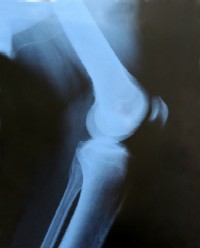 Following total knee replacement, patients must perform exercises several times a day. It’s a painful part of recovery.
 Alternative & Complementary Therapies has a review of biofeedback by Dr. Sala Horowitz. In it she includes a table that rates the value of biofeedback to treat selected conditions based on the available research.
 Dr. Susan Levy reviewed charts for 284 patients at the Regional Autism Center, which is associated with The Children’s Hospital of Philadelphia. She found that 32% of the children were using CAM.
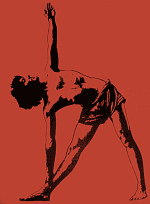 The Miami Herald reports that the Florida Comprehensive Assessment Test (FCAT) is a pressure-packed time for kids.
 The American Academy of Child and Adolescent Psychiatry (AACAP) has published a new Practice Parameter report on attention-deficit hyperactivity disorder (ADHD). The Practice Parameter represents AACAP’s views on evaluating and treating ADHD.
 What’s this got to do with CAM?
 “The range of what we think and do is limited by what we fail to notice. And because we fail to notice that we fail to notice, there is little we can do to change until we notice how failing to notice shapes our thoughts and deeds.”
 Yes, they teach CAM at osteopathic and allopathic medical schools.
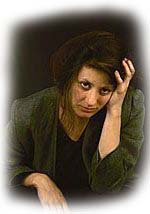 I am not sure where the news is in this statement, but researchers in Toronto just published the results of a
 “The data that we have now is they don’t seem to work,”
 This study concludes, “Mindfulness meditation may complement medical disease management by improving psychological distress and strengthening well-being in patients with RA.”
 The Cancer Integrative Medicine Program at Rush University Medical Center focuses on dealing with the emotional, psychological, and spiritual effects of cancer.
 Dr. Kathleen Kendall-Tackett is a health psychologist and a board certified lactation consultant from the University of New Hampshire in Durham. Her
 A
 Temporomandibular joint (TMJ) dysfunction involves face pain, clicking sounds, and limited movement of the jaw. About 33% of the population has it; fewer need treatment.
 Researchers from the Free University in Brussels
 Exposure to a familiar odor was associated with less crying.
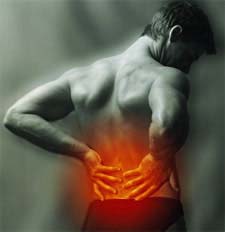 Clinical Practice Guidelines for the diagnosis and treatment of low back pain have been
 A