 Specifically, we’re talking about women with lung cancer and people with diabetes.
First, women with lung cancer.
Continue reading Two surveys of CAM use in people with health care problems
Specifically, we’re talking about women with lung cancer and people with diabetes.
First, women with lung cancer.
Continue reading Two surveys of CAM use in people with health care problems
 More data from the University of California, San Francisco in support of CAM in the care of cancer patients.
Continue reading Using massage and acupuncture to help control symptoms after cancer surgery
 Peripheral neuropathy is the most common neurological complication in HIV, and it’s often associated with antiretroviral therapy. Patients experience muscle weakness and atrophy, pain, and numbness.
Here’s what people use to manage the discomfort. Continue reading Self-care for peripheral neuropathy in HIV/AIDS
Researchers at Osher Institute at Harvard investigated the effectiveness and cost-of-care based on patients’ choice of acupuncture, chiropractic, or massage therapy compared with usual care to treat acute low back pain.
 You might have read about the study where acetaminophen (Tylenol, paracetamol), nonsteroidal anti-inflammatory drugs (eg, ibuprofen; Advil and Motrin), and aspirin were associated with development of high blood pressure.
What should you do if you take these drugs regularly and have high blood pressure?
Continue reading Pain medicine and the risk of high blood pressure: Other options
 The Oncology Nursing Society has posted a table that summarizes CAM studies on the treatment of nausea and vomiting in cancer patients. The studies were published between 1988 and 2005.
Here’s a summary of their findings.
Continue reading Evaluating CAM to treat nausea and vomiting in cancer patients
Medical students have a long-standing interest in learning more about CAM.
Here’s what they think at Georgetown University School of Medicine in Washington, DC.
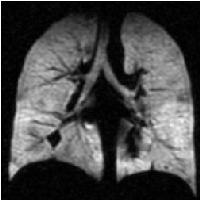 During the most recent meeting of the American College of Chest Physicians Dr. Paul Blanc from the University of California at San Francisco reported that half of all people with asthma use CAM.
Here are the highlights from Medscape.
Here is a profile of CAM users among patients with cancer who live in Washington State. The data come from an insurance survey. So, it’s limited to what people submit for reimbursement.
 A survey of more than a thousand people trying to quit smoking reveals those treatments most commonly used and most often perceived to be effective.
I listed them here with a brief comment on the scientific support.
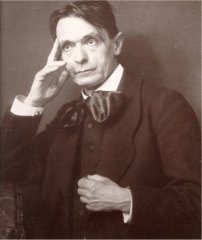 There’s one hospital in Sweden where anthroposophic medicine is practiced. Here is a study of its effect in 60 women who received conventional breast cancer treatment with and without anthroposophic care.
Continue reading Quality of life in women with breast cancer receiving anthroposophic care
 Legislation has been submitted in Ontario, Canada to regulate acupuncture and traditional Chinese medicine. This is the culmination of an ongoing process that started in Canada in 1994. The proposed legislation would create a self-governing regulatory college, and restrict the practice of acupuncture to members of the profession who would be able to use title, doctor.
In North America, it’s the latest event in the growth of acupuncture, which was virtually unknown here until 1972 when China opened its doors to the West.
Continue reading The growth of acupuncture and traditional Chinese medicine in North America
 Feeling tired, overwhelmed, stress out? Maybe more physical contact with the baby is the answer.
A study of the effects of baby massage on mothers? mood status concluded ?- as we would have guessed — baby massage has a positive effect on the mood status of the mothers.
 In an earlier post it was concluded that lavender oil treatments might be helpful for treating insomnia in adults. Children with autism often have sleep difficulties. But this latest study suggests it does not appear that their sleep patterns are altered by this treatment.
Here are the details of the study. Do you agree with the conclusions?
Continue reading Might aromatherapy massage improve sleep in children with autism?
Dr. Patricia Grimm practices nursing as a psychiatric consultation liaison at the St. Joseph Medical Center in Towson, Maryland. A few years ago I interviewed her, and she provided useful insight into the value and contributions of massage in healthcare.
If you are skeptical of the contribution of massage to healthcare, or if you are just looking for a well-reasoned rationale for massage, go here to read the complete article.
9/20/06 20:35 JR
 According to the distributor’s website, “Raindrop combines the art of aromatherapy with the techniques of Vita Flex and massage in the application of essential oils to various areas of the body to bring structural and electrical alignment.” A description of the treatment is described here.
Structural and electrical alignment?
Get serious.
Making the rounds this morning is a Newswire release from MD Anderson Cancer Center about Cherie Perez. She’s a research nurse who teaches aromatherapy to cancer patients during their treatment at the Cancer Center. You can read it here.
Since my background is based in traditional medicine, the involvement of this prestigious medical center sparks my interest to learn more about aromatherapy. I start by looking for structure.
It turns out, there are lots of ways to use oils.
Here, from Psychology Today are the five common types of aromatherapy.
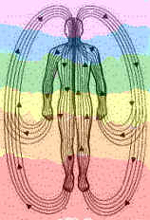 In the Polarity model, “health is experienced when energy systems function in their natural state,” according to the “American Polarity Therapy Association (APTA).
Sounds good. And in a study of 15 women undergoing radiation therapy for breast cancer there was a statistically significant improvement in cancer-related fatigue and health-related quality of life.
Continue reading Polarity therapy and radiotherapy-induced fatigue
 Most of the benefits reported with Reiki are based on the personal experiences of those who receive treatment and those who administer it.
Several years ago I met Michael W. Smith, a Reiki (pronounced “ray-key”) master in practice at the Women’s Place at Carroll County General Hospital in Westminster, Maryland. I interviewed him and later wrote two articles.
The first was an edited transcript of our conversation covering the basics of Reiki.
The second article describes the effect of reiki on a woman with Alzheimer’s disease. It also compares Reiki to touch therapy and massage.
Taken together, they are, if I say so myself, a good way to begin to understand this form of complementary therapy.
8/11/06 00:25 JR