Researchers at Harvard Medical School, in Boston surveyed the nation about CAM use for back pain. Continue reading Perceived benefit from CAM in people with back pain →
Ernst sees encouraging evidence for some treatments .
But does it matter? Continue reading CAM use among US adolescents →
Continue reading Massage reduces distress in cancer patients →
Continue reading Survey of American medical students about CAM →
Let’s compare these findings by Prof. Ernst and colleagues to CAM use in other countries. Continue reading Prevalence of CAM use in England →
surveyed the use of CAM in a large group of Dutch patients with spinal cord injury. Continue reading CAM for spinal cord injury pain →
reviewed the research. Continue reading Massage patients with HIV/AIDs →
evaluated massage, humor therapy, and relaxation/imagery for reducing distress associated with pediatric stem cell transplantation. Continue reading CAM for children undergoing stem cell transplants →
perspective . Continue reading Complementary therapies for patients with leukemia →
They studied the potential of massage at bedtime to reduce their use. Continue reading Might massage reduce the use of sedative-hypnotic drugs at bedtime? →
Researchers from The Ohio State University in Columbus reviewed its effectiveness. Continue reading Does sports massage affect recovery from exercise? →
Ernst and colleagues from Peninsula Medical School in the UK have reviewed the evidence.
Are your ready? Continue reading Review of massage to treat depression →
Researchers from the University of Washington, in Seattle put it to the test . Continue reading Massage for generalized anxiety disorder →
study presented during the 7th annual conference of the American Psychosocial Oncology Society, caregivers achieved some of the same results as professional practitioners. Continue reading Benefits of massage given by a caregiver →
study by researchers at the University of Iowa in Iowa City, massage reduced delayed onset muscle soreness by almost half. Continue reading Using massage to reduce pain after exercise →
reviewed the implications for pharmaceutical care. Continue reading Impact of medications on massage →
Here’s a summary of his most recent research, and an overview of the past 3 years. Continue reading Self-hypnosis and biofeedback for spinal-cord injury pain →
reviewed the options for caregivers of patients with dementia. Continue reading Non-drug treatments for dementia →
Posts navigation
Complementary and Alternative Medicine: Fair, Balanced, and to the Point
 Back pain is the second most common reason patients seek ambulatory medical care in the United States.

 Swedish massage in hospitalized oncology patients enhances their course of treatment, according to researchers at the Memorial Health University Medical Center in Savannah, Georgia.




 Researchers from Temple University in Philadelphia, Pennsylvania tell us, “Despite known adverse effects, sedative-hypnotic drugs are widely used in institutional settings serving the elderly.”
 Prof.
 In this
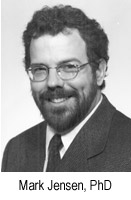 Dr. Mark Jensen (photo), who is Professor and Vice Chair, Department of Rehabilitation Medicine at the University of Washington, in Seattle has published a series of studies on this topic.
 Researchers from the University of Leeds, in the UK