Homeopathy is at odds with two powerful trends in today’s culture: sooner is better than later, and the more the better. First, homeopaths claim that patients need at least one month of active treatment for every year of illness. Second, treatments are undertaken using minute concentrations (1:50,000) of remedies.
Then, there is one more difference from conventional mainstream medicine that poses a problem for practitioners and researchers of homeopathic treatments.
Here is a list of herbal medicines with documented effectiveness as pain relievers. The source of this information summarizes the dose, route of administration, conditions treated, and safety information.
“I have had acupuncture because I can get angry and I hate that feeling,” says Hannah (age 16 years), “you know, when you get really hot and out of control with your temper. I find it easier now to stay in control. I would tell anyone to have acupuncture if they have the chance.”
It’s easy to be critical of ayurveda ? a “natural healing system” developed in India. The immediate problems, from a Western perspective, include lack of standardization and reported toxicity (particularly lead poisoning).
But there’s more. “The problem lies in the crisis of confidence both within and outside the ayurvedic community, and it is here that the future efforts need to be concentrated in order to effect a revitalization.”
A while ago I posted on a study that showed no difference in outcome between traditional Chinese acupuncture and sham acupuncture. Both interventions were a positive addition to physiotherapy and anti-inflammatory drugs.
Now, a study of sham acupuncture in adults with arm pain shows no difference compared to placebo tablets — neither worked.
But that’s just phase 1 of the study. Now it gets interesting.
With so many people traveling to China, it’s worthwhile to report drug warnings by the Hong Kong Department of Health. Earlier this week (see “News Bulletin” and click the August 3rd report), the public was advised not to buy or take a Chinese herbal preparation called as Beijing Jiannan Zhongyi Hospital Zhongyao Pei Fang Ke Li.
Giovanni Maciocia is Italian, not Chinese. Regardless, he is a respected practitioner of acupuncture and Chinese herbal medicine. And he has the ability to speak to westerns about Chinese medicine in a way that cuts through the mystique.
Three quotes from his book, “The Safety of Chinese Herbal Medicine” provide a different perspective than is typical among those who practice or are treated with Western medicine.
I make no judgment, right or wrong. It’s just different, and should be considered in any evaluation or critique.
“They’re big and plentiful, and just about ready to pick,” says my local newspaper here in Orange County, New York.
Thanks to all the heat and rain this year, it’s likely to be a banner apple crop.
As you prepare to pick your own, here’s a comprehensive article on the health benefits of apples. It’s nicely organized into clinical (real life) effects on cancer, heart disease, asthma, and diabetes, and other effects based on laboratory experiments. And that’s only the first half of the article!
I go to the nursing home to visit my mother who is 90 and has Alzheimer’s disease. I walk into the lounge where the patients sit. Titanic is playing on the TV. Nobody looks interested. Most are sleeping — or maybe they’re sedated.
That night, as I’m reading, voil?, the value of art therapy in patients with Alzheimer’s disease becomes clear.
The advertisement claims that policosanol (or polycosanol) — a pure extract of sugar cane wax — has been the subject of many clinical trials, even more than most pharmaceutical drugs. And it has outperformed some of popular prescription drugs.
But the positive studies have been primarily sponsored by one company in Cuba and conducted by one research center in Havana.
Preliminary evidence, in the August issue of Diabetes indicates that “berberine displays beneficial effects in the treatment of diabetes and obesity at least in part via stimulation of AMPK [AMP-activated protein kinase] activity.”
The University of Pennsylvania Schools of Medicine and Nursing will sponsor a symposium on September 19th and 20th. It’s titled “Herbal Medicine: Perception, Practice, and Rational Use” Looks like an excellent program. Herbaphiles in the Philadelphia area might want to attend.
It’s possible to purchase 35% hydrogen peroxide over the Internet and use it to treat AIDS, cancer, emphysema, and other serious and life-threatening diseases. But is it a good idea?
What is the value in avoiding dust mites and increasing omega-3 fatty acids in a child’s diet — especially in children at high risk of developing asthma because of a family history? Lots of research has gone on down under to answer this question. It’s part of the CAPS trial (Childhood Asthma Prevention Study).
In 2004, a study in patients with chronic stable congestive heart failure (CHF) showed that supplementation with l-arginine taken by mouth prolongs exercise duration. It was thought this might be due to nitric oxide-induced dilation of blood vessels in peripheral areas of the body.
It involves more than providing diagnostic and treatment expertise. Today, meeting patients’ needs includes using electronic tools that make it easier for everyone to communicate.
After just posting about the benefits of the Mediterranean diet for Alzheimer’s disease yesterday, imagine my surprise to wake up this morning to another study about the benefits of the Mediterranean diet … this time for erectile dysfunction in men with the metabolic syndrome.
Minnesota has instituted a pay-for-performance program for all state-paid healthcare plans. The program sets standards for quality of care in diabetes, hospital stays, preventive care, and cardiac care. Bonuses will be paid to healthcare providers who increase quality and performance.
 Homeopathy is at odds with two powerful trends in today’s culture: sooner is better than later, and the more the better. First, homeopaths claim that patients need at least one month of active treatment for every year of illness. Second, treatments are undertaken using minute concentrations (1:50,000) of remedies.
 Here is a list of herbal medicines with documented effectiveness as pain relievers. The
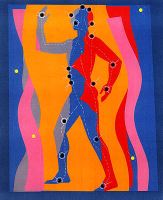 “I have had acupuncture because I can get angry and I hate that feeling,” says Hannah (age 16 years), “you know, when you get really hot and out of control with your temper. I find it easier now to stay in control. I would tell anyone to have acupuncture if they have the chance.”
 It’s easy to be critical of ayurveda ? a “natural healing system”
 When tai chi is adapted to the needs of patients with multiple sclerosis (MS), the slow, gentle movements help improve muscle tone.
 With so many people traveling to China, it’s worthwhile to report drug warnings by the Hong Kong Department of Health. Earlier this week
 Giovanni Maciocia is Italian, not Chinese. Regardless, he is a
 “They’re big and plentiful, and just about ready to pick,”
 I go to the nursing home to visit my mother who is 90 and has Alzheimer’s disease. I walk into the lounge where the patients sit. Titanic is playing on the TV. Nobody looks interested. Most are sleeping — or maybe they’re sedated.
 The advertisement
 ? Permission to reprint articles published on The C.A.M. Report should be emailed to jr@medcomres.com.
 Preliminary
 The University of Pennsylvania Schools of Medicine and Nursing will sponsor a symposium on September 19th and 20th. It’s titled “Herbal Medicine: Perception, Practice, and Rational Use” Looks like an excellent program. Herbaphiles in the Philadelphia area might want to attend.
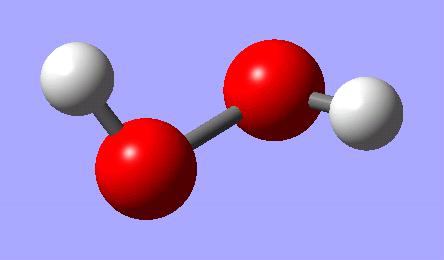 It’s possible to purchase 35% hydrogen peroxide over the Internet and use it to treat AIDS, cancer, emphysema, and other serious and life-threatening diseases. But is it a good idea?
 What is the value in avoiding dust mites and increasing omega-3 fatty acids in a child’s diet — especially in children at high risk of developing asthma because of a family history? Lots of research has gone on down under to answer this question. It’s part of the CAPS
 In 2004, a
 After just