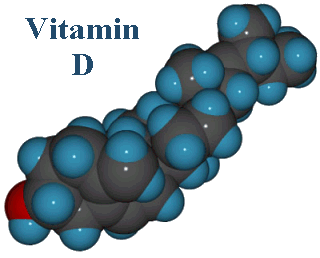
 Current recommended daily intakes of vitamin D are 200 international units (IU) for younger adults, 400 IU for those aged 51 to 70 years, and 600 IU for those older than 70 years.
Reviewing elemene to treat lung cancer
 Elemene is an extract from the ginger plant and an antitumor drug, which is approved to treat cervical cancer and cancer of the lung, liver, and brain in China.
There is some evidence that it kills lung cancer cells in the lab. Here is a Cochrane Library review of the data on lung cancer in humans. Continue reading Reviewing elemene to treat lung cancer
Stem cell fast food: Nightmare or savior?
 In Popular Science, here’s a fascinating article about meat grown on factory racks for human consumption.
Think of it as Spam for the 21st century.
Chewing gum to reduce caloric intake
 NewsWise reports that research presented during the 2007 Annual Scientific Meeting of The Obesity Society, supports the role of chewing gum as an easy, practical tool for weight management. Continue reading Chewing gum to reduce caloric intake
The Great US Homeopathy Debate
Coming to the University of Connecticut on October 25th. Continue reading The Great US Homeopathy Debate
The place for acupuncture in treating tennis elbow
 Physicians from the Family Medicine Residency of Idaho in Boise have published a review of the treatment of lateral epicondylitis (tennis elbow) in American Family Physician.
Several CAM options are discussed. Let’s focus on acupuncture. Continue reading The place for acupuncture in treating tennis elbow
Homeopathy for ADHD: Two perspectives
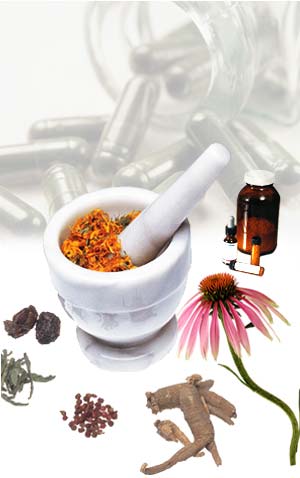 There’s interest in homeopathy’s potential as a non-pharmacological treatment for attention deficit/hyperactivity disorder (ADHD).
Here are both allopathic and homeopathic perspectives of the evidence. Continue reading Homeopathy for ADHD: Two perspectives
Remember, dietary supplements can’t actually claim to treat or cure anything
That’s why phrases like “boosts you immune system” and “enhances (insert organ of choice) health” are popular. They don’t mean anything.
However, when you make unsubstantiated claims (eg, treat, cure), the FDA gets annoyed. For example? Continue reading Remember, dietary supplements can’t actually claim to treat or cure anything
Should you avoid drinking cranberry juice while taking warfarin?
 A review published in the journal Pharmacotherapy warns that drinking large amounts of cranberry juice while taking the blood thinner, warfarin (Coumadin) might increase the risk of bleeding.
How much cranberry juice do you have to drink?
That’s not clear.
Continue reading Should you avoid drinking cranberry juice while taking warfarin?
No more OTC meds to treat colds in children younger than 6 years old?
 “The data that we have now is they don’t seem to work,” said Dr. Sean Hennessy, a University of Pennsylvania epidemiologist and one of the experts who testified to the FDA today.
But what about CAM as an alternative? Continue reading No more OTC meds to treat colds in children younger than 6 years old?
Treating primary dysmenorrhea with Chinese herbal medicine
 The Cochrane Library tells us, “Conventional treatment for primary dysmenorrhea (PD) has a failure rate of 20% to 25% and may be contraindicated or not tolerated by some women. Chinese herbal medicine (CHM) may be a suitable alternative.” Continue reading Treating primary dysmenorrhea with Chinese herbal medicine
Ayurvedic herbs used to treat schizophrenia
 The Cochrane Library reviewed the literature and found 3 small studies. Continue reading Ayurvedic herbs used to treat schizophrenia
Soy plus probiotic/prebiotic to lower cholesterol levels
 Soy reportedly lowers LDL (bad) cholesterol blood levels a little, while the data on probiotics are mixed.
Would it help to combine them? Here’s a study that tries. Continue reading Soy plus probiotic/prebiotic to lower cholesterol levels
Acupuncture and pregnancy rates following in vitro fertilization
 Acupuncture appears to be a common complementary option in fertility clinics.
This study from the Robert Wood Johnson Medical Center in Camden, New Jersey concludes, “Acupuncture performed twice weekly during the follicular and luteal phase does not seem to improve pregnancy rates following in vitro fertilization-embryo transfer (IVF-ET).” Continue reading Acupuncture and pregnancy rates following in vitro fertilization
When trans fats don’t really matter
 Hardee’s has added the new Country Breakfast Burrito to its menu.
There’s nothing complementary about it, except to warn everyone its here. Continue reading When trans fats don’t really matter
New review of acupuncture safety
 A reader noticed that the link was bad, so I added a new link to the article. “Acupuncture is a very safe treatment in the hands of competent practitioners.”
That’s the conclusion from 2 surveys of acupuncturists in the UK.
Is there a role for meditation in treating rheumatoid arthritis?

2007 Guidelines for Preventing Cardiovascular Disease in Women
 How many of these recommendations from the American Heart Association relate to complementary lifestyle changes discussed on this blog?
Continue reading 2007 Guidelines for Preventing Cardiovascular Disease in Women
Atkins: An effective alternative to the ketogenic diet for epilepsy
 Among patients with epilepsy who follow a ketogenic diet, complete seizure control after 2 years is achieved in 24% — a 90% reduction in seizures is achieved in 52%. Unfortunately, only about 50% of patients (often children) can stay with the diet.
Now, a study reported during the annual meeting of the American Epilepsy Society concludes that seizure control with the Atkins diet is a possible alternative.
Continue reading Atkins: An effective alternative to the ketogenic diet for epilepsy
The status of acupuncture to treat migraine
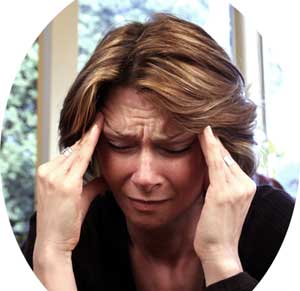 Several years ago, a Cochrane review concluded, “Overall, the existing evidence supports the value of acupuncture for the treatment of idiopathic headaches. However, the quality and amount of evidence are not fully convincing.”
In the past year, 2 studies and another literature review have provided further support for acupuncture to reduce the risk of migraine. Continue reading The status of acupuncture to treat migraine