 The U.S. Department of Health and Human Services reports that the ongoing decline in the use of marijuana among young people (age 12 to 17) continued in 2005. The report is here, and a news article is here.
My summary of the results is here.
 Around 1990, two studies here and here suggested that artificial sweeteners had little satiating capacity compared to glucose or sucrose. It raised the question, if they didn’t make you feel full (or keep you feeling full) compared to sugar, how could they help lose weight?
This is the source of the rumor that artificial sweeteners cause weight gain.
A decade later, the controversy was resolved.
 As a Chinese herbal, it was sold over-the-counter as Salt Spring Herbals Sleep Well Dietary Supplement capsules. But, it contained estazolam, a habit-forming sedative, sold by prescription only in the U.S. under the trade name, ProSom.
Now, the distributor’s website says, “Despite assurances from our supplier that the formula was all natural herbs, to our shock, disappointment and concern we have been advised by Health Canada that laboratory testing indicates the presence of ? estazolam.”
The distributor advises, “If you have unused product we ask that you send it back to us no later than October 1st for a full refund of postage, outbound and return, as well as $1.00 per capsule plus GST. Refunds will be issued by October 15th.”
Continue reading Sleep Well Herbals, “shocked” over estazolam recall
 Everybody in the west knows that lead is toxic, right? We spend lots of money removing lead paint from the walls of old houses. So, what is the logic that justifies adding lead to ayurvedic medicines?
Dr. Annapoorna Chirra from the Department of Medicine at UCLA has the answer.
The New York Times Magazine published a travelogue by a San Francisco woman who spent time In India as an “ayurveda tourist.” The goal of the trip was to “immerse [herself] in ayurveda, the 3,500-year-old herb-based healing tradition that still flourishes in the daily life of India.”
As might be expected of a San Franciscan writing in NYT, she managed to insert a dig at Dick Cheney, but not once in 2900 words mentions the problem of lead poisoning associated with ayurvedic medicines.
Guess you have to pick your poison. But if she can’t do it, I will.
Continue reading Lead poisoning and ayurvedic medicines
 Chinese cotton growers were among the first farmers to plant genetically modified (GM) cotton to resist bollworms (photo). Now, the substantial profits they reaped for several years by saving on pesticides have eroded.
The reason, according to Cornell University researchers is that other pests are attacking the GM cotton.
 The food and supplements ingredients market will grow by 5.8% annually to $15.5 billion in 2010, according to new research from Ohio-based analyst The Freedonia Group.
“However, because of outsourcing trends, the US will relinquish its longstanding top position in the global production of nutraceutical ingredients to China within the next few years.”
Two thoughts on this.
Illustration: Natural Healing Clinic
8/22/06 17:51 JR
 The Washington Post reports, “U.S. commercial supplies of long-grain rice [were] inadvertently contaminated with a genetically engineered (GE) variety not approved for human consumption.” There’s nothing new here. The group, Californians for GE-Free Agriculture has chronicled a series of these events.
The problem is that those who plant GE crops are supposed to keep the stuff in their own fields and products and not let it mix with other non-GE foods.
What are the risks?
Continue reading Genetically engineered rice “contamination.” So what?
 Dr. Wallace Sampson rants on about traditional Chinese medicine (TCM) in the latest video editorial at Medscape. With so much going on in medicine today, why does Medscape use valuable bandwidth to restate, and promote his well-known disregard for CAM?
Is Medscape CAMophobic? Why would this organization allow Dr. Sampson to state that TCM is worthless because it was “developed in a tradition of an authoritarian culture?”
Does anybody really believe that?
 Global biotech crop acreage grew to 222 million acres in 2005 from 7 million in 1996. Except for this, and the growth of anti-genetically modified (GM) foods websites, not much has changed pro or con.
The hyperbole continues. Last Sunday protesters damaged two GM maize testing fields in France. A few days earlier, Greenpeace activists chopped a giant cross through the maize. In case you don’t get the message, that’s the universal danger sign for “contamination.”
For some perspective, here is an article I wrote 6 years ago.
 In 1995, the American Medical Student Association prepared an introductory guide to complementary medicine.
It is available online at no charge. And it’s still the first place to turn for introductory information on everything from art therapy, to osteopathy, chiropractic, chelation therapy, and more.
Continue reading The Quick-and-Dirty Guide to Complementary Therapies
 Cyclosporine (Sandimmune, Neoral) is used to prevent organ rejection following kidney, liver, and heart transplants. It may also be used to treat chronic rejection in patients previously treated with other immunosuppressive agents.
The information in this article should be valuable for people taking cyclosporine for its immunosuppressant effect, and for pharmacists and other healthcare professionals who are monitoring this therapy.
Interactions between cyclosporine and St. John’s wort and rosemary are discussed. In addition, it reviews the purported immunostimulating effects of certain herbals and herbal medicines that are potential nephrotoxins.
Illustration: University of Texas
8/11/06 20:38 JR
 Homeopathy is at odds with two powerful trends in today’s culture: sooner is better than later, and the more the better. First, homeopaths claim that patients need at least one month of active treatment for every year of illness. Second, treatments are undertaken using minute concentrations (1:50,000) of remedies.
Then, there is one more difference from conventional mainstream medicine that poses a problem for practitioners and researchers of homeopathic treatments.
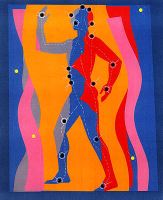 “I have had acupuncture because I can get angry and I hate that feeling,” says Hannah (age 16 years), “you know, when you get really hot and out of control with your temper. I find it easier now to stay in control. I would tell anyone to have acupuncture if they have the chance.”
Continue reading Acupuncture to treat ADHD in a secondary school
It’s easy to be critical of ayurveda ? a “natural healing system” developed in India. The immediate problems, from a Western perspective, include lack of standardization and reported toxicity (particularly lead poisoning).
But there’s more. “The problem lies in the crisis of confidence both within and outside the ayurvedic community, and it is here that the future efforts need to be concentrated in order to effect a revitalization.”
 With so many people traveling to China, it’s worthwhile to report drug warnings by the Hong Kong Department of Health. Earlier this week (see “News Bulletin” and click the August 3rd report), the public was advised not to buy or take a Chinese herbal preparation called as Beijing Jiannan Zhongyi Hospital Zhongyao Pei Fang Ke Li.
Continue reading Warning: Avoid Beijing Jiannan Zhongyi Hospital Zhongyao Pei Fang Ke Li
 Earlier this year a study published in The New England Journal of Medicine reported, “saw palmetto did not improve symptoms or objective measures of benign prostatic hyperplasia.” The results were interesting in light of the fact that the weight of the medical literature supports the value of saw palmetto for this condition.
The New England Journal of Medicine published an article in 1999 that made an erroneous association between poorer psychological outcomes in women post breast cancer surgery and their use of CAM.
Here’s the summary quote (my italics). Note the emphasis in the NEJM study on assessment before surgery, while others focus on post surgical assessment results.
“Mental health scores were similar at base line among women who decided to use alternative medicine and those who did not, but three months after surgery the use of alternative medicine was independently associated with depression, fear of recurrence of cancer, lower scores for mental health and sexual satisfaction, and more physical symptoms as well as symptoms of greater intensity.”
The problem with the study was that these 480 patients with newly diagnosed early-stage breast cancer were recruited from a Massachusetts statewide cohort of women participating in a study of how women choose treatment for cancer.
Even back then it was recognized that the response to surgery varies among women. Some experience a strong sense of loss and need time to grieve. Others need time to adjust to an altered body image. Many patients feel a sense of relief following surgery, but worries about the long-term prognosis and follow-up therapy can cause added anxiety.
More recently, investigators found that the process of “denial coping” following surgery is a powerful predictor of future health fears. They concluded that there is a need to identify the interventions that can decrease this denial, and whether this then decreases health fears in the aftermath of breast cancer surgery.
7/30/06 16:44 JR
 The trial of alternative medicine practitioner Dr. Matthias Rath started last week in Hamburg. Dr. Rath advocates a vitamin treatment to cure cancer. In this case a 9-year-old boy with bone cancer died after he [Dr. Rath] convinced the boy’s parents to use a “miracle cure” rich in vitamins and to reject conventional medical treatments.
The child’s mother, Anke Feld, tells a bizarre story of conspiracy among physicians, conventional medicine, and the pharmaceutical industry in which her son was a pawn. She believes her son “died as a result of the numerous clinical and medical errors and the negligence with which our son was treated in the different hospitals.”
Dr. Rath, whom Ms. Feld thanks for his support and guidance, is the founder of Cellular Medicine, which his website describes as a groundbreaking concept that identifies nutritional deficiencies at the cellular level as a root cause of many chronic diseases. A critical view of him is provided here.
7/28/06 15:32 JR
 Earlier this month this site discussed trans fats, including the initiative to make Chicago the first major city in the country to go trans fat free. Now, The New York Times has published an article on alderman Edward Burke and his proposal.
Chicago’s representatives are a “progressive” lot. They forbid restaurants from selling foie gras and may force cabbies to dress better. However, one major obstacle stands in the way. Mayor Richard Daley thinks it’s one rule too many. With such formidable opposition, Mr. Burke’s proposal may languish.
If you have an opinion contact the mayor at his office via facsimile: 312-744-8045. Or, send an email.
7/23/06 09:35 JR